A lot of people still think HIIT is only for fat loss or quick cardio. In reality, well planned HIIT workouts for muscle gain can help you build size, strength, and power while keeping your sessions short and focused.
Below you will learn how HIIT can build muscle, how to structure your week, and what to eat and supplement to actually see results, not just feel exhausted.
Understand how HIIT builds muscle
Traditional lifting is still the gold standard for hypertrophy, but HIIT can grow muscle in a few key ways.
High intensity intervals:
- Recruit fast twitch muscle fibers that have the most growth potential
- Create significant metabolic stress, which helps trigger anabolic hormone responses and muscle repair
- Let you accumulate a lot of hard work in a short time
A 2023 study in the European Journal of Sport Science compared high intensity circuit training to traditional strength training three days per week for eight weeks in active women. Both groups gained similar strength, lean mass, and lost fat, even though the circuit group finished workouts much faster and rested less between exercises. The big common factor was that both groups trained close to muscular failure.
Another 8 week trial in college students found that high intensity power training, using multijoint lifts with only 15 seconds of rest and around 8 minutes total work time, significantly improved upper and lower body explosive force and anaerobic power compared with traditional resistance training sessions that lasted about 40 minutes.
The takeaway for you: if you push sets hard and target enough muscle, HIIT can absolutely contribute to muscle gain, not just conditioning.
Compare HIIT vs traditional lifting for gains
You do not have to pick a side. Instead, you want to understand what each style does best so you can combine them.
Traditional strength or hypertrophy training is ideal for:
- Very targeted muscle growth
- Precise progression in weight and reps
- Longer sets with controlled tempos
HIIT style lifting or circuits are ideal for:
- Time efficient full body sessions
- Improving work capacity and explosiveness
- Burning more calories while still challenging muscle
Research comparing circuit and traditional lifting shows that both can grow muscle similarly when you push sets close to failure and train consistently three times per week. Other work on high intensity power training shows bigger boosts in explosive power and anaerobic capacity when you shorten your rests and move quickly between big lifts.
In practice, you will see the best results when you use traditional lifting as your foundation, and layer HIIT on top to boost intensity and conditioning.
Build a weekly HIIT plan for muscle gain
To make HIIT work for muscle gain, you need the right dose. Too little and nothing changes. Too much and you start losing strength, feeling run down, and stalling in the gym.
Research from Penn State and Les Mills programming suggests that the sweet spot for high intensity work is around 30 to 40 minutes per week above 90 percent of your max heart rate. That is not 40 minutes per session, it is the total time spent in that all out zone.
A simple weekly structure might look like this:
- 3 days of strength training, around 45 to 60 minutes
- 1 to 2 short HIIT sessions, 15 to 20 minutes each
- At least 1 full rest day
If you are newer to training, experts recommend building at least six months of consistent cardio and resistance work before you add intense HIIT intervals, then start with one shorter session per week and separate HIIT days by at least two nights of sleep.
Listen to your body. If your joints ache, sleep suffers, or your strength drops, you likely need less HIIT or more recovery, not more grind.
Design HIIT workouts that actually build muscle
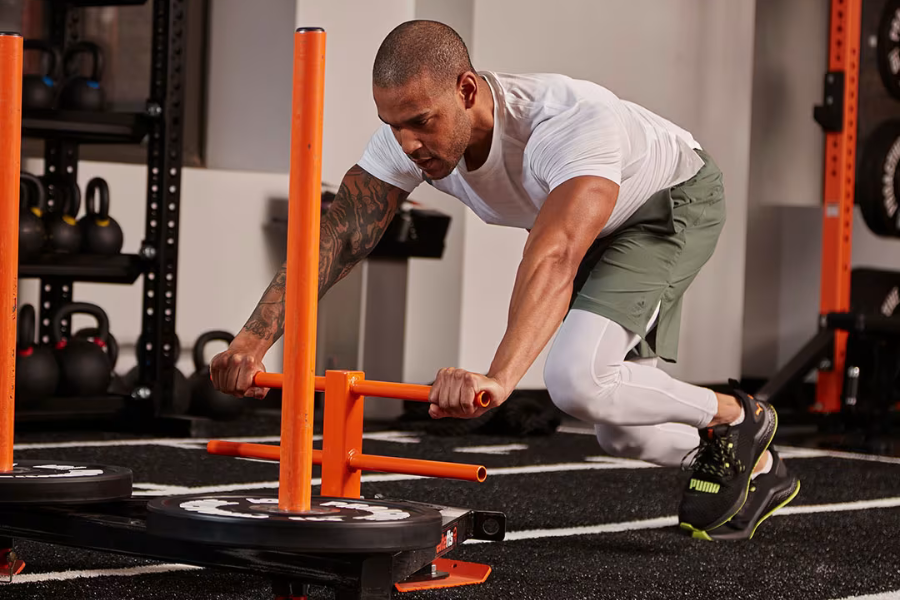
Not all HIIT is equal when your goal is size and strength. Sprinting on a bike can help, especially for your legs, but you will grow faster if you focus on resistance based intervals that hit your whole body.
Focus on big, compound movements
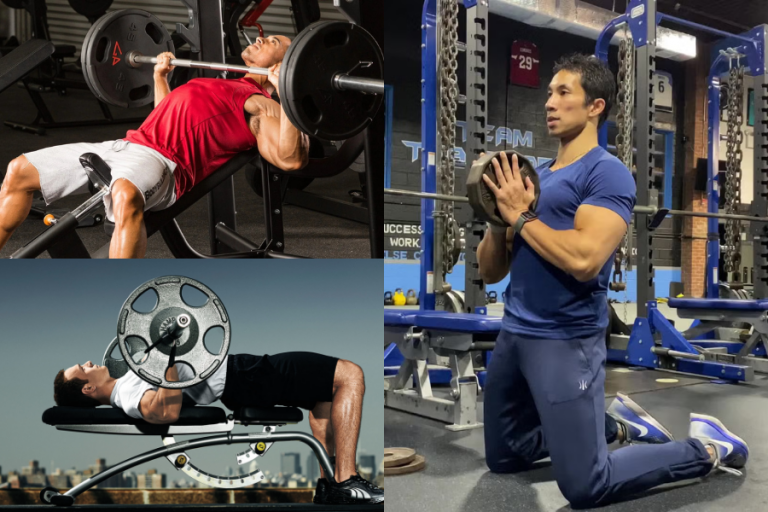
HIIT for muscle gain should revolve around multi joint exercises that let you use moderate to heavy loads:
- Squats or goblet squats
- Deadlifts or Romanian deadlifts
- Push ups or bench presses
- Rows and pull ups
- Overhead presses
- Kettlebell swings
- Lunges and jumping lunges
- Burpees and squat to press variations
A PureGym guide recommends full body, explosive moves like burpees, renegade rows, squat to overhead presses, kettlebell swings, push ups, and jumping lunges performed in 45 second intervals with 15 seconds rest, repeated for 3 to 4 rounds and lasting about 30 minutes.
You can borrow this idea, but if muscle gain is your main goal, treat each interval like a heavy set. Choose a weight that gets you close to failure in 8 to 15 reps instead of racing through sloppy movements for an entire minute.
Dial in work and rest intervals
For muscle gain, a good starting point is:
- Work: 30 to 45 seconds or 8 to 15 controlled reps
- Rest: 15 to 30 seconds between exercises
- Circuits: 4 to 6 exercises, repeated 3 to 4 times
Push each set until you are 1 to 2 reps away from failure. In research, getting close to that point has been crucial for muscle growth and strength increases in both circuit and traditional training groups.
If you cannot maintain decent form or your reps fall off a cliff, you may need longer rest periods or fewer exercises per circuit.
Sample full body HIIT muscle workout
Try this body focused HIIT session using dumbbells or kettlebells:
- Goblet squat
- Push up or dumbbell bench press
- Bent over row
- Dumbbell Romanian deadlift
- Dumbbell overhead press
- Kettlebell swing
Do 30 seconds on, 20 seconds off for each exercise. Rest 2 minutes after the full circuit. Repeat 3 to 4 times.
You can modify this by turning it into a power focused HIIT workout. Use slightly lighter weights, move explosively, and keep total working time around 8 to 10 minutes, similar to the high intensity power training protocols that boosted explosive strength and anaerobic power in college students.
Use progression and recovery to keep growing
HIIT will only build muscle if you keep challenging your body over time. This is where progressive overload and smart recovery come in.
Make your HIIT harder over time
To keep gaining size and strength, you need to gradually increase the amount of work you do. Experts like Shawn Arent, PhD, stress that you must raise load, reps, or total sets as your body adapts, whether you are doing HIIT or traditional lifting.
You might progress by:
- Adding 5 to 10 pounds to key lifts
- Doing 1 or 2 more reps per interval
- Adding one more round of your circuit
- Slightly shortening your rest once you are handling the current workload easily
Do not try to change everything at once. Choose one progression lever for a couple of weeks, then adjust again.
Rest enough between sets and sessions
You want your HIIT to be intense, not a blur of half quality sets. Mike Nelson, PhD, suggests resting long enough between sets to repeat roughly the same number of quality reps in the next set. For some, this may mean slightly longer rest than you expect.
Between sessions, separate HIIT days by at least 48 hours when you are focused on muscle gain. Research on optimal HIIT dosing notes that too much high intensity work can raise cortisol over time, increasing fatigue, joint pain, and mood issues, while an appropriate dose supports strength, immunity, and inflammation control.
Improving your general aerobic fitness outside HIIT, through easy jogging, cycling, or brisk walking, can also help you recover faster between intervals and handle more productive volume overall.
Eat and supplement for HIIT muscle gains
Your training sets the signal. Nutrition and hydration decide how well your body responds to that signal.
Pre and post workout fuel
UCLA Health recommends different strategies for cardio focused HIIT and strength sessions, but the principles are similar: avoid large amounts of fat or fiber right before you train to reduce stomach issues, and aim for a mix of carbs and protein so you have energy and can recover well.
Before HIIT or lifting:
- Have an easily digested meal or snack with carbs and some protein 1 to 3 hours before you train
- Keep fats and high fiber foods lower in that pre workout window
After training:
- Eat a meal or snack with plenty of protein plus some complex carbs when you are hungry
- There is no strict anabolic window, so focus more on hitting your daily protein target and overall calories than rushing a shake in the first 20 minutes
One study found that people doing 4 weeks of HIIT and weight training gained more lean mass and lost more fat on a higher protein intake of about 2.4 g per kg of bodyweight compared to 1.2 g per kg, although power and aerobic capacity were similar between groups. That suggests that a higher protein intake can support better body composition when you combine HIIT and lifting.
Hydration and supplements to consider
Hydration is key for intense work. Drink water throughout the day and, if your sessions are long or especially sweaty, consider a drink with electrolytes and some carbs, as UCLA Health recommends for HIIT and strength workouts.
Several supplements have research behind them for high intensity training:
- Creatine monohydrate, 5 g per day, can improve total work and peak power in intermittent cycling, and chronic creatine with HIIT has raised ventilatory threshold and critical power in young men in some trials, although not all studies show benefits, especially in women.
- Caffeine, around 3 to 5 mg per kg of bodyweight, can increase total work in early sprint intervals and may reduce perceived effort, but responses vary with training status and genetics.
- Sodium bicarbonate can boost performance in high intensity bouts by about 2 to 3 percent and improve lactate threshold over 6 to 8 weeks when combined with HIIT, but it often causes stomach issues and needs careful dosing.
- Beta alanine can raise muscle carnosine levels and may enhance high intensity performance by buffering acidity, though results are mixed, with some studies showing improved running and cycling and others no effect.
Supplements are optional. You will get most of your results from consistent training, solid sleep, and eating enough protein and calories to support muscle growth.
Know when HIIT is right for you
HIIT workouts for muscle gain are especially useful when you:
- Have limited time and need efficient sessions
- Want to build muscle while improving conditioning and power
- Prefer fast paced training to long rest periods
- Already have a base of strength and cardio fitness
On the other hand, if you are brand new to exercise, dealing with joint issues, or struggling with chronic fatigue, it makes sense to spend more time on low to moderate intensity lifting and cardio first. You can layer in short HIIT sessions later when your body is ready.
Start with one HIIT day per week, pair it with solid strength work, eat and hydrate to support your training, and track how your body feels and performs. With the right structure, HIIT can help you add muscle, not just sweat.
About the Author