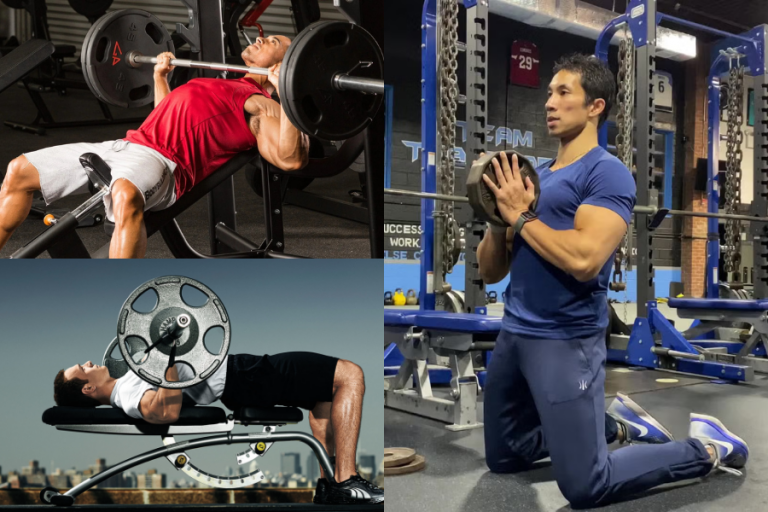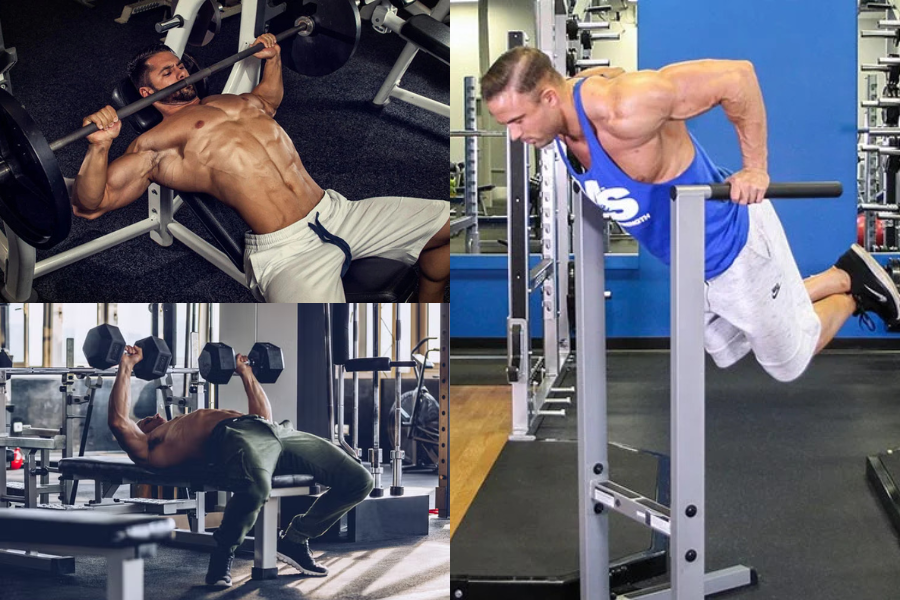
A well planned chest workout for men can change more than just how your T shirt fits. When you train your chest with smart exercise selection, good form, and enough consistency, you build strength, improve posture, and create a more balanced upper body.
Below you will find how to structure your chest training, which exercises to prioritize, and what mistakes to avoid so you get real results instead of sore shoulders and stalled progress.
Understand how your chest muscles work
Before you load up the bench, it helps to know what you are actually trying to train. Your chest, or pectoral muscles, is not just one flat slab of muscle.
You have the clavicular head (upper chest) that runs from your collarbones to about halfway down your chest. This is what adds that high, full look to your torso. Then you have the sternal head (mid and lower chest) which gives most of the width and thickness.
By changing the angle of your pressing and fly movements, you can shift emphasis between these regions. For example, an incline dumbbell press hits more upper chest, while a slight decline focuses more on the lower fibers. A good chest workout for men includes both flat and angled positions so you do not overdevelop one area at the expense of another.
Avoid the most common chest training mistakes
Many men train their chest regularly but see very little change. Often, the issue is not effort. It is the approach. If you fix these common mistakes, you will start to feel your pecs working much more in every set.
Relying only on the barbell bench press
The flat barbell bench press is a great strength exercise, but it should not be your only chest move. Overreliance on heavy, low rep benching can overdevelop your lower pecs while leaving the upper chest behind. It also increases the stress on your shoulders, elbows, and wrists, which raises your risk of injury and even pec tears if you push too hard without proper technique.
You do not have to stop benching, but it helps to treat it as one tool among many. Include dumbbell presses, incline work, and bodyweight moves so your chest grows evenly and your joints stay happier over the long term.
Neglecting your upper chest
If your training is all flat pressing and dips, your upper pecs probably lag behind. Since the upper chest is thinner and smaller, it needs deliberate attention. Otherwise your chest can look bottom heavy and your shoulders may round forward.
Prioritizing incline exercises early in your workout is a simple fix. Incline dumbbell presses or incline flyes, done for 3 to 4 sets of 8 to 10 reps, help fill out the area from your collarbones to mid chest so your torso looks fuller and more athletic.
Overusing machines and underusing free weights
Chest machines can feel convenient and secure. Yet many of the best developed chests in history were built primarily with free weights, not machines. Free weights demand more stabilizer muscle engagement, allow a more natural range of motion, and reveal imbalances between your left and right side.
You can still use machines as finishers or for variety, but try to base most of your chest workout for men around dumbbells, barbells, and bodyweight. These tools force you to control the weight, instead of letting the machine dictate the path.
Rushing through reps and chasing numbers
It is easy to fall into the trap of working the weight instead of the muscle. When you bounce the bar off your chest, arch excessively just to move more plates, or let momentum do half the work, your pecs get less tension and your ego gets more attention.
Slowing down the lowering phase, pausing briefly near the chest, and deliberately squeezing your pecs at the top of each rep keeps tension where you want it. You may need to drop the load slightly, but your chest will grow faster than if you keep adding weight with sloppy form.
Warm up properly before chest day
Skipping your warm up might save five minutes, but it can cost you progress and put you at higher risk for strains or tears. A thoughtful warm up makes your chest muscles more elastic, prepares your joints, and improves your range of motion.
Start with 3 to 5 minutes of light cardio, such as brisk walking or cycling, to increase blood flow. Then move into dynamic upper body movements: arm circles, band pull aparts, and light push ups.
Finish with 1 to 2 lighter sets of your first chest exercise. For example, if you plan to dumbbell bench press, do a couple of easy sets with lighter weights to groove the movement before you approach your working sets. This simple routine can make your heavy sets feel smoother and more stable.
A good rule of thumb: never let your first heavy set be your first real movement of the day. Earn your working sets with a short, focused warm up.
Use dumbbells to build size and stability
Dumbbells are one of the most effective tools for chest development. They let each arm move independently, which helps reduce strength imbalances between sides. You can also adjust your grip and wrist angle to find positions that feel strong and joint friendly.
Another advantage is range of motion. With dumbbells, you can usually lower slightly deeper than with a barbell, which creates a greater stretch in the pecs. More controlled stretch under load is a powerful hypertrophy driver when you do not force the range or lose shoulder stability.
Key dumbbell chest exercises for men
Below are foundational dumbbell exercises you can build a full chest session around:
-
Dumbbell bench press
Perform 3 to 4 sets of 6 to 8 reps. This is a primary strength builder for your mid chest and overall pushing power. Keep your feet planted, glutes tight, and lower the dumbbells until your elbows are just below bench level. -
Incline dumbbell press
Do 3 to 4 sets of 8 to 10 reps. Set the bench at a moderate incline, usually 15 to 30 degrees. Too steep and your shoulders take over. Focus on driving your upper arms up and in to emphasize the upper chest. -
Decline dumbbell press or low angle press
Use 3 to 4 sets of 8 to 10 reps. A slight decline or feet elevated variation can target the lower portion of the pecs and add thickness at the bottom of your chest. -
Dumbbell flyes
Perform 2 to 3 sets of 10 to 15 reps. Keep a gentle bend in your elbows and think about hugging a tree rather than locking out your arms. Flyes are about stretch and squeeze, not heavy loading. -
Dumbbell pullover
Aim for 2 to 3 sets of 10 to 12 reps. This move can stress the upper chest and serratus while also engaging your lats. Control the stretch and avoid letting the weight drift too far behind your head.
During any dumbbell chest exercise, engage your glutes and abdominals. Even while lying on a bench, your core helps stabilize your torso so your shoulders and elbows track properly.
Master body positioning for safer, stronger reps
How you set up on the bench often matters more than which bench you choose. Solid positioning improves chest activation and protects your shoulders.
Retract, do not shrug, your shoulders
One of the biggest form mistakes on pressing movements is protracting the scapula, which means letting your shoulders round forward and rise toward your ears. This shifts the load into your shoulders and arms instead of your chest.
Instead, think about pinching your shoulder blades together and gently pulling them down toward your back pockets. Maintain that position while you press. This creates a stable base, opens your chest, and lets the pecs do more of the work.
Keep your body tight from head to toe
Treat every press like a full body lift. Plant your feet firmly, squeeze your glutes, and lightly brace your abs as if someone is about to poke you in the stomach. This tension keeps your torso from wobbling, which translates to smoother pressing and less strain on your joints.
Avoid arching your lower back excessively or lifting your hips off the bench to move more weight. A small natural arch is fine, but you want your ribs down and your chest lifted through muscle activation, not through an exaggerated back bend.
Add intensity techniques without wrecking your form
Once your technique is solid and you are training consistently, you can introduce intensity techniques to push past plateaus. These methods increase the work your chest does in a short window, which can boost muscle growth when used sparingly.
Drop sets, where you reduce the weight immediately after reaching near failure and keep going, work particularly well on dumbbell presses and flyes. Partial reps near the end of a set, pauses at the bottom of a press, or isometric holds when the dumbbells are halfway down can also increase time under tension.
Use these techniques on your last 1 or 2 sets of an exercise, not on every set of the entire workout. The goal is to challenge your chest, not destroy your recovery.
Structure your chest workouts for progress
A well designed chest workout for men does not have to be complicated. You need enough total sets, a mix of compound and isolation movements, and the right order so you hit heavy lifts while you are fresh.
How many exercises and sets
For most sessions, aim for 4 to 6 total chest exercises with 3 to 4 sets each, which typically fits into a 30 to 60 minute workout. Start with compound lifts like the dumbbell bench press or incline press. Then move into targeted work like flyes and pullovers.
If you are focusing on dumbbell based sessions, a sample structure might look like:
- Dumbbell bench press, 3 to 4 sets of 6 to 8 reps
- Incline dumbbell press, 3 to 4 sets of 8 to 10 reps
- Dumbbell flyes, 2 to 3 sets of 10 to 15 reps
- Dumbbell pullover, 2 to 3 sets of 10 to 12 reps
Depending on your goals, you can add dips or push up variations at the end as high rep finishers.
How often to train your chest
Most men see good growth training chest 1 to 3 times per week. Beginners typically do well with 1 or 2 sessions a week. Intermediate and advanced lifters often progress best with 2 focused chest sessions weekly that have different emphases, for example one heavier strength day and one higher rep, pump focused day.
Training your chest twice per week with 2 to 3 days of rest between sessions is a proven sweet spot for many lifters. If progress stalls and you are recovering well, you can experiment with a third weekly session for a short phase, but watch for shoulder or elbow discomfort and adjust volume if needed.
Consistency and recovery go hand in hand. Space your chest workouts at least 48 hours apart, get enough sleep, and eat sufficient protein and total calories so your muscles have the raw materials to grow. Recommendations often suggest about 2 grams of protein per kilogram of bodyweight to support muscle gain.
Use bodyweight training for extra volume or at home
You can build an impressive chest with little or no equipment if you know how to use bodyweight movements effectively. Many men have developed a well defined chest with high volume push up and dip routines, gradually increasing difficulty through variations and added resistance.
Fundamental chest focused bodyweight exercises include:
- Standard push ups and wide grip push ups
- Elevated push ups with feet on a bench or step
- Ring or deficit push ups for greater range of motion
- Parallel bar dips or bench dips
- One arm push up progressions or explosive clap push ups
High volume approaches, such as performing several hundred push ups per day in sets, have been reported to significantly increase chest size and attract positive comments on physique. Adding resistance, like wearing a weighted vest or placing a plate across your upper back in a stable way, increases the challenge and helps drive further hypertrophy.
To get the most from bodyweight training, focus on strong muscle activation, feel the pecs working on every rep, and gradually progress difficulty or volume week to week. Rings or suspension trainers make many of these variations even more effective by allowing a deeper stretch and requiring greater stability.
Track your results and adjust over time
With consistent training, many men notice chest strength improvements within 3 to 4 weeks and visible changes between 6 and 8 weeks, assuming nutrition and sleep support your effort. If you are not seeing progress, review your basics before adding more complexity.
Ask yourself:
- Are you training chest 1 to 3 times per week with 2 to 3 days between sessions?
- Are you using mostly free weights or bodyweight, not just machines?
- Are you feeling a strong squeeze in your pecs at the top of each rep, not just moving the load?
- Are you gradually increasing weight, reps, or intensity techniques over time?
A chest workout for men that transforms your physique is less about the newest trick and more about doing the fundamentals very well, over and over. Pick a handful of proven exercises, master your form, train them hard but smart, and stay patient. Your chest, and the rest of your upper body, will reflect the work you put in.
About the Author