Discover the benefits of rowing
Rowing workouts for beginners are a great way to strengthen your entire body without straining your joints. When you row, you engage your legs, core, and arms for a total-body effort that can help you reach your fitness goals faster.
Many people find rowing gentler on their knees than running. Because you’re gliding along a rail, your joints endure less impact, making these workouts especially appealing if you’re concerned about knee health. With consistency, your endurance improves, your upper body gets stronger, and your core learns to stabilize more effectively.
Learn basic rowing technique
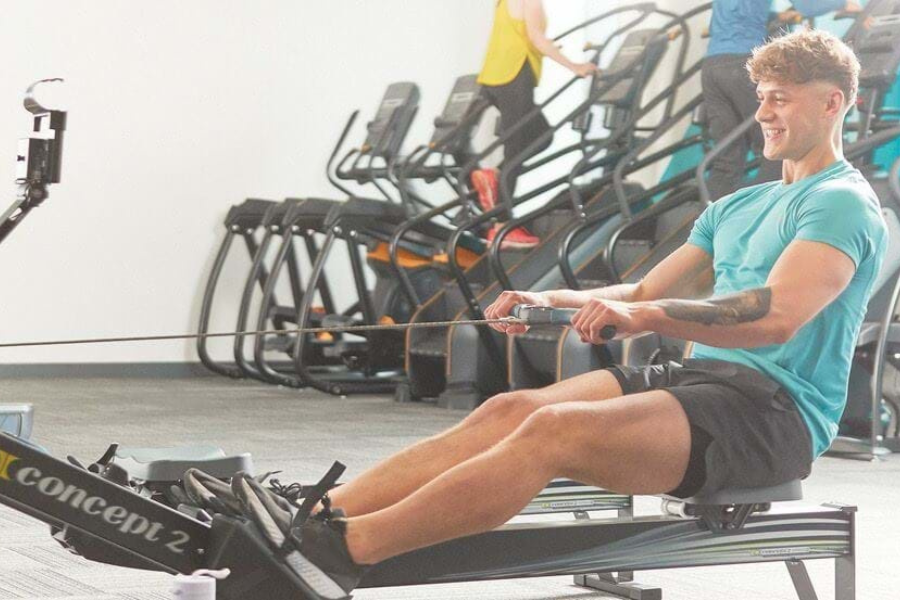
Before you start any routine, make sure you understand how to row safely. Proper form minimizes the risk of injury and ensures every stroke delivers maximum results. Here’s a simplified breakdown:
- The catch: Sit upright with your knees bent, shins almost vertical, and your arms extended forward.
- The drive: Push firmly through your legs first, then lean back slightly from the hips, and finally pull the handle toward your chest.
- The finish: Extend your elbows behind you, feeling your back and arms contract, while keeping the handle level with the bottom of your chest.
- The recovery: Reverse the movement by straightening your arms, tipping your torso forward, and bending your knees back to the catch.
Begin slowly, focusing on the sequence. With practice, you’ll develop a fluid motion that powers you through each stroke.
Warm up before every session
Even if you’re short on time, you’ll get better performance and reduce potential strain by warming up. A warmup helps wake up your muscles and loosen stiff joints, preparing your body for the pulling action of rowing.
Try a brief five-minute routine:
- A few dynamic stretches like leg swings or hip circles
- Shoulder rolls to lubricate your upper back
- Gentle rowing strokes at an easy pace
When you start rowing more vigorously, your muscles will be primed for the increased effort.
Start with interval workouts
If you’re new to rowing, intervals are an excellent way to build stamina and strength. They involve short bursts of effort followed by periods of rest or gentle rowing. This structure keeps you from burning out while helping your cardiovascular system adapt to the intensity.
Try this beginner-friendly interval session:
- Row hard for 30 seconds, pushing yourself at about 80% of your maximum effort.
- Recover by rowing lightly for 60 seconds.
- Repeat for eight rounds.
Keep track of how you feel during each interval. You’ll likely find that your legs, core, and arms adapt quickly, letting you row with greater power in subsequent sessions.
Focus on consistent pacing
Pace is crucial for communicating how hard you’re working. Many rowing machines track strokes per minute and display your speed or split time (the time it takes to row 500 meters). Understanding these metrics helps you challenge yourself in a precise way and monitor improvement over time.
Consider starting at a moderate pace that feels challenging but still sustainable. If you want a short benchmark test, row a distance of 500 meters at a comfortable speed and record your time. That initial number sets a baseline to beat in the future.
Build endurance with longer rows
After you feel comfortable managing intervals, you can add longer, steady rows to your routine. Longer sessions, ranging from 15 to 20 minutes, help you develop endurance. They also train your mind to maintain consistent technique under fatigue.
Try to keep your strokes per minute around 24 to 28, focusing on smooth, controlled pulls. When your breathing becomes labored, you can slightly ease your pace, but aim to complete the full duration. Over time, your heart and lungs become more efficient, and your distance rowed in that timeframe will gradually increase.
Add variety to keep progressing
As you get more confident on the rowing machine, variety is key for ongoing progress. It’s easy to get stuck doing the same routine, so changing things up encourages your muscles to respond in new ways. You’ll also keep your workouts fun and motivational.
For instance, you could:
- Bump up the intensity of one interval workout a week
- Incorporate a ladder workout (start with short intervals, then increase interval length before decreasing again)
- Combine rowing with bodyweight exercises, like squats or push-ups, for a more complete circuit
The goal is to push yourself slightly more than you did the week before. Consistent small increases in duration or intensity improve strength and stamina.
Track your progress over time
By monitoring your performance, you’ll see just how far you’ve come. Recording key metrics—like total meters rowed or best 500-meter split—reminds you that your workouts are paying off. Celebrate each small victory, whether it’s shaving a few seconds off your split time or feeling more stable on the seat.
If you have days when your pace feels slower than you’d like, don’t stress. Your body’s energy levels can vary. Focus on maintaining proper form and giving your best effort under the day’s conditions. The main idea is steady improvement, not a perfect session every single time.
Turn rowing into a habit
Making rowing a regular part of your fitness routine can yield impressive results faster than you might imagine. Aim to row at least two or three days a week. If possible, schedule your sessions at the same time on those days. Establishing a pattern helps your body adapt, and it also makes you less likely to skip a workout.
Your rowing time can be brief. Even 20 minutes a few times per week will gradually improve your cardio fitness, helping you stay consistent and energized for other exercises or sports you enjoy.
Key takeaways
• Rowing workouts for beginners strengthen your entire body by engaging legs, core, and arms.
• Proper technique is essential. Focus on sequence—legs, core, arms—for each stroke.
• Build a base with short intervals, then add longer endurance sessions as you get stronger.
• Track your pacing, record split times, and celebrate incremental gains.
• Treat rowing as a habit by scheduling regular sessions for consistent progress.
Try an interval workout in your next gym session and see how you feel afterward. Chances are, you’ll notice a boost in total-body strength, plus a sense of accomplishment. Keep experimenting with different rowing challenges, and soon you’ll be looking back at your beginner days with pride.
About the Author