Why shoulder training builds confidence
When you think about feeling strong and confident, your shoulders do a lot of the talking for you. Defined delts broaden your frame, improve your posture, and help almost every upper body lift you do. The best shoulder workouts for men do more than add size. They protect your joints, support daily movements, and reduce your risk of injury when you press, push, or throw.
Because the shoulder is the most mobile joint in your body, it is also one of the easiest to irritate. A smart routine balances strength work with stability and mobility so you build powerful shoulders that look good and feel good.
Know your shoulder muscles
Before you load up the bar, it helps to know what you are training. Your shoulder is not just one muscle. It is a team.
The main players are:
- Deltoids: anterior (front), lateral or medial (side), and posterior (rear). These move your arm forward, out to the side, and behind you.
- Rotator cuff: a small group of muscles that keep your upper arm centered in the shoulder socket.
- Trapezius and rhomboids: upper back muscles that stabilize your shoulder blades.
- Serratus anterior: muscles on the side of your ribcage that help your shoulder blade move smoothly.
Dr. Kade McQuivey, an orthopedic surgeon with Banner Health, notes that exercises that target the rotator cuff are especially helpful for keeping your shoulder stable and preventing injuries during overhead or repetitive movements. When you train the full shoulder girdle, you are not just chasing a bigger pump. You are building a joint that can handle heavy pressing, sports, and everyday tasks without complaining.
Warm up and protect your joints
If you want your shoulders to last, your workout starts before you touch a weight. A good warm up sends blood to the muscles, wakes up the stabilizers, and opens your range of motion.
Simple shoulder warm up routine
Spend 5 to 8 minutes here before your main sets:
-
Dynamic arm circles
Stand tall and draw small circles with your arms, gradually making them bigger. Go forward and backward for 20 to 30 seconds each. This increases blood flow and gently takes the joint through its range. -
Shoulder rolls and scapular squeezes
Roll your shoulders up, back, and down, then lightly squeeze your shoulder blades together. Think about placing your shoulders in a relaxed, strong position, not up by your ears. -
Band pull-aparts or face pulls
Using a light resistance band, pull it apart at chest height or perform face pulls. Focus on your rear delts and upper back rather than just your arms. This prepares the often neglected muscles that keep your shoulders centered. -
Overhead band press holds
Research suggests that overhead band presses, performed for two sets of 15 reps with a brief hold at the top, are effective for activating rotator cuff and scapular muscles. The tension from the band teaches your shoulder to stay stable throughout the movement.
Dr. McQuivey also recommends dynamic stretches before training and static stretching or foam rolling after. Arm circles, shoulder rolls, and follow‑up stretching support flexibility around the shoulder and elbow and help protect these joints while you exercise.
Focus on form to avoid injury
Strong shoulders come from good technique, not just heavy weights. Poor form can irritate the joint, especially when you press overhead or perform high repetitions.
Keep these form cues in mind:
- Do not lock your elbows hard at the top of presses. This keeps tension on the muscles instead of jamming the joint.
- Keep your ribs down and core tight during overhead work. Avoid leaning back, which turns a shoulder press into a risky standing bench press.
- Control the lowering phase. Eccentric strength protects the shoulder capsule and tendons.
- For throwing or swinging sports, ensure your shoulder rotation and elbow angles are comfortable and repeatable. If a movement consistently feels pinchy, adjust the path or range.
Strengthening your forearms and upper arms also supports the elbow joint and reduces the risk of strains and tendonitis from repetitive motions like sports or manual work. Think of your shoulders, elbows, and wrists as a chain. If one link is weak or misaligned, the others pay for it.
Best compound shoulder exercises for men
Compound lifts should be the backbone of your routine. They recruit multiple muscles at once, letting you move heavier loads and build overall mass and strength.
Overhead shoulder press
The overhead press is often ranked at the top of the best shoulder workouts for men, and for good reason. It primarily targets your anterior delts while also working your lateral delts, traps, triceps, and upper chest.
How to do it well:
- Stand with your feet about hip width apart.
- Grip the barbell or dumbbells at or just outside shoulder width.
- Start with your wrists stacked over your elbows and the weight near your chin.
- Press straight up while keeping your core tight and glutes lightly engaged.
- Pause briefly at the top without locking your elbows, then lower under control.
Programming tip: for size, aim for 3 to 4 sets of 8 to 12 reps at about 70 to 80 percent of your one rep max. Rest 60 to 90 seconds between sets.
Push press
The push press lets you use your legs to help drive the weight overhead. This means you can lift heavier loads and perform more reps than with a strict press, which builds power through your delts, triceps, and upper chest.
Key points:
- Dip slightly at the knees and hips while keeping your torso upright.
- Drive hard through your legs and transfer that force into the bar.
- Guide the bar in a straight line overhead rather than out in front of you.
Use the push press near the start of your workout for 3 to 4 sets of 6 to 8 reps. The heavier loading and explosive intent recruit more high‑threshold muscle fibers.
Military press
The traditional military press, usually done standing with a barbell, is a demanding full body lift. Your shoulders, core, and even your lower body have to coordinate to stabilize the weight overhead.
To keep it joint friendly:
- Stand tall with your glutes and abs braced.
- Do not let your lower back arch excessively.
- Press the bar in a slight arc so it finishes over the mid‑foot, not behind you.
You can train the military press in a 5 × 5 style for strength or with 6 to 10 reps per set for size. Dumbbell variations often show greater muscle activation and can be more forgiving on the joints, especially if you have long arms or past shoulder issues.
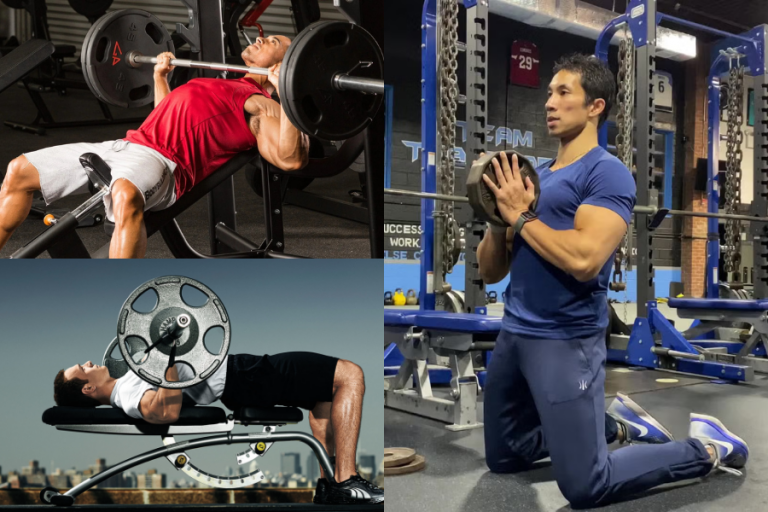
Landmine press
If straight‑overhead pressing bothers your shoulders, the landmine press is a smart alternative. Here you press a barbell that is anchored at one end, which creates a diagonal path that is easier on your joints but still hits your anterior and lateral delts hard.
Execution basics:
- Stand facing the end of the bar or in a staggered stance.
- Hold the bar at chest height with one or both hands.
- Press up and slightly forward, following the bar path.
- Keep your shoulder packed and ribcage down.
Because the angle is more natural, the landmine press is often recommended for lifters with mobility limitations or a history of shoulder irritation.
Key isolation moves for complete shoulders
Compound lifts build the foundation. Isolation exercises shape and balance your shoulders so you are strong from every angle.
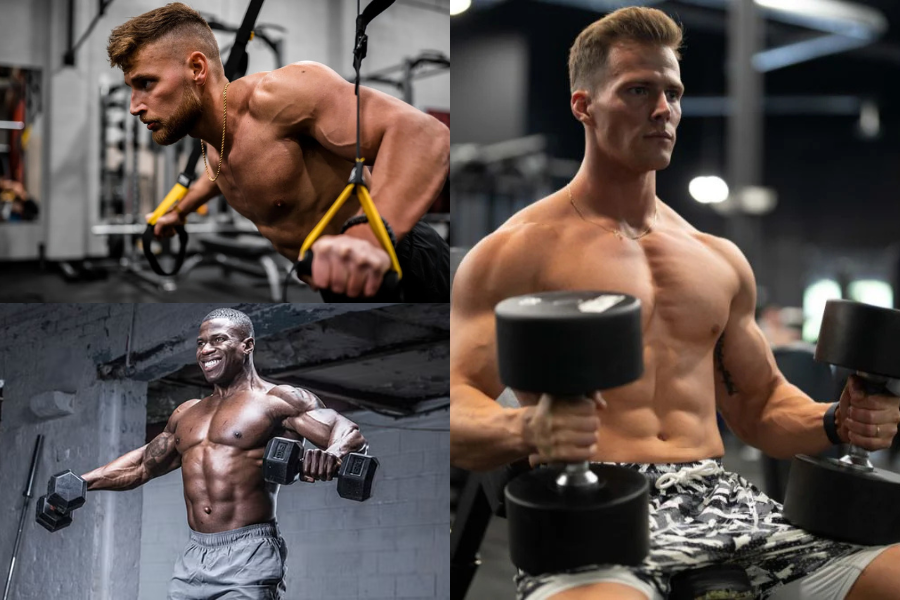
Lateral raises
Lateral raises directly target your side delts, the muscles that give your shoulders that wide, rounded look. They also help create the classic V‑taper.
Tips for better lateral raises:
- Use light to moderate weight. Your side delts respond well to 8 to 12 controlled reps.
- Lead with your elbows, not your hands.
- Stop at or just below shoulder height to keep tension on the muscle.
- Avoid swinging or using momentum. The goal is controlled time under tension.
Rear delt flys and rear delt rows
Rear delts are easy to neglect, but they matter for posture, pulling strength, and shoulder health. Rear delt flys and rear delt rows both target the back of your shoulders, along with the traps and rhomboids.
For fly variations:
- Hinge at the hips and keep your spine neutral.
- Let your arms hang slightly in front of you.
- Raise your arms out to the sides in a wide arc, focusing on squeezing the back of your shoulders.
Rear delt rows can be done with dumbbells, cables, or a bar. Row with your elbows flared slightly out instead of tucked tight by your sides. This angle shifts more work into the rear delts.
Face pulls and cable laterals
Face pulls are another excellent choice for rear delts and upper back. Using a rope attachment at face height, pull toward your nose or forehead, leading with your elbows and rotating your hands apart at the end. This external rotation pattern strengthens small stabilizers that protect your shoulder.
Bent over single arm cable laterals are a powerful way to isolate the rear delts. The cable provides constant tension and a deep stretch, and your core must work to keep you steady.
Build stability with holds and bodyweight work
Strong shoulders are stable shoulders. Isometric and bodyweight work teach your muscles to support loads across a full range of motion.
Pike holds, handstand holds against a wall, and even handstand push ups, when you are ready, build endurance and control. They challenge the entire shoulder girdle, including your rotator cuff and scapular muscles.
You do not need to start upside down. You can begin with:
- Elevated pike holds with your feet on a box and hands on the floor.
- Wall walks where you slowly walk your feet up a wall and hands closer in.
These drills complement your pressing and raising movements and help your shoulders feel more stable, not just stronger.
How to structure the best shoulder workouts for men
You do not have to do every exercise in one day. A good shoulder workout hits the front, middle, and rear delts, includes both heavy and moderate loads, and respects your recovery.
Here is a simple template you can follow 1 or 2 times per week:
-
Activation and warm up
5 to 8 minutes of dynamic mobility, band work, and light overhead band presses. -
Heavy compound press
Choose one: push press, barbell overhead press, or military press.
Perform 3 to 4 sets of 6 to 10 reps. -
Secondary press or variation
Choose one: dumbbell overhead press, Arnold press, or landmine press.
Perform 3 sets of 8 to 12 reps. -
Lateral delt focus
Lateral raises or cheat laterals followed by a lighter dumbbell push press.
Perform 3 sets of 10 to 15 reps, with controlled form on the raises. -
Rear delt and upper back
Choose one or two: rear delt rows, rear delt flys, face pulls, or bent over cable laterals.
Perform 3 sets of 12 to 15 reps. -
Optional stability finisher
Short sets of pike holds or wall handstand holds, focusing on quality breathing and steady positioning.
Across the week, aim for roughly 9 to 15 total working sets for your shoulders. Research‑informed guidelines suggest this range is a sweet spot for most lifters who want hypertrophy without overuse, especially when combined with progressive overload and proper recovery.
Quick guideline: if your performance on later sets is consistently dropping or your shoulders feel achy outside the gym, you may need to slightly reduce volume or improve your warm up and technique.
Training shoulders at home
You do not need a full commercial gym to train your shoulders effectively. A few pieces of equipment can go a long way in a home setup.
Adjustable resistance bands with handles and door anchors can cover presses, face pulls, lateral raises, and rear delt work. These tools are highlighted in many 2024 shoulder equipment roundups because they let you hit your shoulders, arms, back, and chest without taking up much space.
If you want to invest in more specialized gear, some options on the market include:
- Twister arm trainers and hydraulic arm exercisers with adjustable resistance that target your shoulders, chest, and arms.
- Shoulder press machines with adjustable seats and high weight capacities for heavy home training.
- Adjustable macebells or clubbells that challenge your shoulders, grip, and core through swinging patterns.
Whatever equipment you choose, the same rules apply. Warm up first, focus on smooth technique, control the lowering phase, and progress the load or reps gradually over time.
Putting it all together
The best shoulder workouts for men are not just about chasing a burn. They combine:
- Smart activation and warm ups that protect your joints
- Heavy compound presses for strength and size
- Focused isolation work for balanced, round delts
- Stability and bodyweight drills for long term shoulder health
Start by adding one or two of the exercises above to your next upper body day. As your shoulders grow stronger and more stable, you will notice more than just bigger delts. Your posture will improve, your lifts will feel more solid, and your everyday movements will feel easier. That is the kind of confidence you can carry well beyond the gym.
About the Author