A strong, balanced chest is about more than how much you can bench. The best men’s chest workout builds size, strength, and stability across your entire upper body, without wrecking your shoulders or relying only on one exercise. In this guide, you will learn how your chest muscles work, which exercises actually deserve your time, and how to put them together into a simple routine you can follow at the gym or at home.
Understand your chest muscles
Before you load up a bar, it helps to know what you are trying to train. Your chest is not one single block of muscle. It has different areas that respond best to different angles and movements.
The main players are:
- Pectoralis major. This is the large, fan-shaped muscle that runs across your upper chest and attaches to your shoulder and breastbone. It helps you push, pull your arms across your body, and rotate your shoulders.
- Pectoralis minor. This smaller, triangular muscle sits underneath the pec major and helps stabilize your shoulder blade as you press or reach.
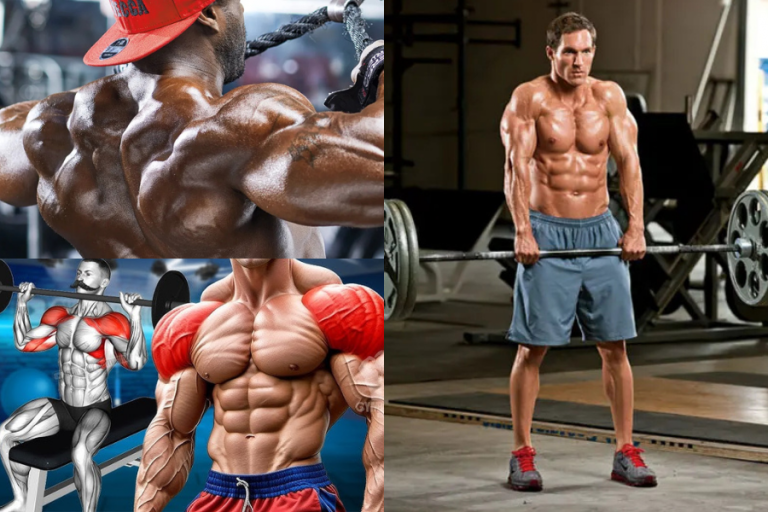
The pectoralis major has three parts, often called “heads,” with fibers running in different directions. According to the 2024 ATHLEAN-X chest training guide, these are the upper or clavicular head, the middle or sternal head, and the lower or abdominal head. When you change the bench angle or your body position, you shift emphasis between these fiber directions. That is why a well rounded plan for the best mens chest workout needs flat, incline, and decline style movements, not just one press.
Avoid common chest training mistakes
If you have been training chest for a while without much progress, you might be running into one or more classic mistakes.
Relying only on the barbell bench press
The barbell bench press is a proven strength builder and still a fundamental chest exercise, as highlighted in a 2026 guide from Men’s Health. However, when you make it your only focus, several issues can pop up. Your lower pecs can become overdeveloped compared with your upper chest, which can lead to a softer, droopy look instead of a high, squared chest.
Overuse of heavy barbell pressing can also increase strain on your shoulders, elbows, wrists, and even lead to pec tears if your technique or load choice is off. A diversified chest workout that includes dumbbells, cables, and bodyweight moves helps prevent these problems while keeping your progress moving.
Neglecting your upper chest
The upper chest runs from your collarbones down about halfway across your chest. Many lifters undertrain this area, even though it has a big impact on how your torso looks from the front and side. Prioritizing incline movements, such as the incline dumbbell bench press and low to high cable fly variations, helps build that “shelf” from your upper chest into your delts and traps.
Letting ego and momentum control the weight
Moving the bar as fast as possible with sloppy form shifts the work away from your chest and into your triceps, shoulders, and even your lower back. Bodybuilder Jay Cutler has consistently reminded lifters to “work the muscles, not the weight,” and this applies perfectly to chest day.
When you bounce the bar, rush the eccentric, or swing the dumbbells, you lower the actual tension on your pecs. Slowing down, controlling the descent, and pausing briefly at the bottom creates more muscle activation with less risk.
Ignoring warm up and shoulder position
Diving straight into heavy sets without warming up your chest is a quick way to tweak a pec or irritate a shoulder. A specific warm up that prepares your chest and shoulders improves flexibility, range of motion, and strength output. Warming up your rotator cuff and opening your chest also helps you keep your shoulders in a safer position during presses.
When you bench, think “pinch the shoulder blades together” rather than letting your shoulders roll forward. Retracting your scapula, or squeezing your shoulder blades back and down, protects your shoulder joint and places the pecs in a stronger, more engaged position. Research-based coaching consistently recommends this adjustment for better chest activation and less delt strain.
Choose the best chest exercises
The best mens chest workout is built on smart exercise choices that challenge your chest from multiple angles and with different resistance patterns.
Big compound presses
Compound movements let you use heavier weight and build overall mass and strength.
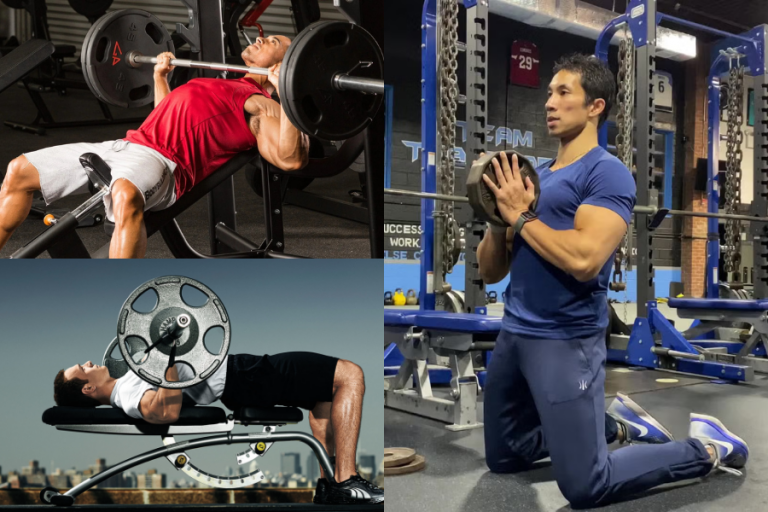
- Barbell flat bench press. Ideal for heavy overload of the mid chest. Use it early in your workout when you are fresh.
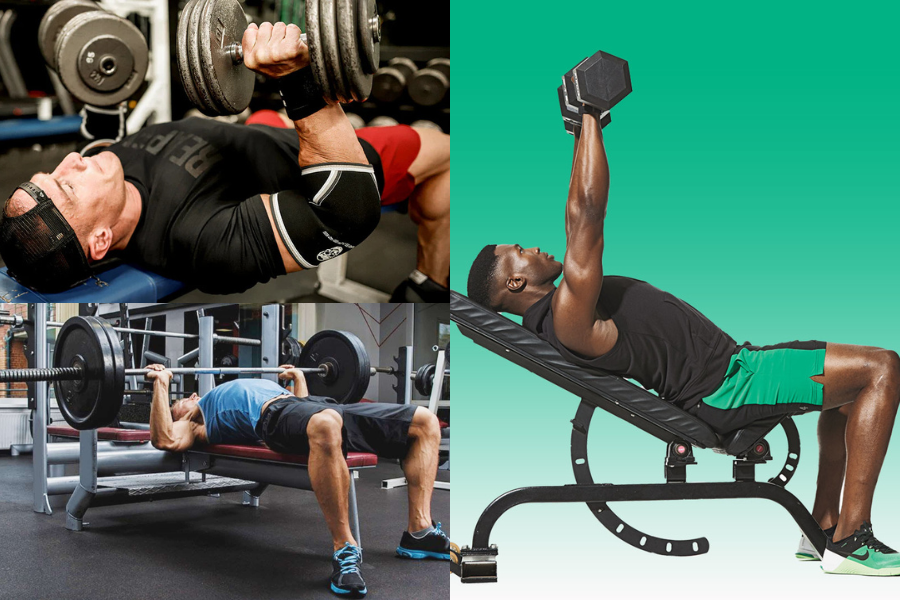
- Incline barbell or dumbbell bench press. Targets your upper chest with less shoulder stress than a flat bench at the same effort level. A typical growth range is 3 to 4 sets of 8 to 10 reps.
- One arm dumbbell bench press. Adds a stability challenge for your core and shoulders while still hammering the mid chest. This variation can also help balance out left and right side strength differences.
When you press, keep your feet planted, shoulder blades retracted, and lower the weight under control until your elbows are about 90 degrees, or just past, depending on your comfort and mobility.
Fly variations to maximize pec squeeze
Presses build mass, but fly movements help you feel the chest shortening and working across the midline of your body. Because resistance falls off near the top of many flyes, you need to focus extra on squeezing your pecs through the last part of the movement.
- Dumbbell chest fly. Use lighter weights than you would for presses. Focus on a deep stretch with a slight elbow bend, then bring the weights together by pulling your upper arms across your body, not just touching the dumbbells. Modern hypertrophy programming often suggests 3 sets of 10 to 12 reps for growth.
- Cable or band chest fly. Cables and resistance bands keep tension on your chest through the full motion and are often easier on your shoulders. They are ideal as a warm up, accessory, or finisher, typically for 3 to 4 sets of 12 to 15 reps.
Crossover patterns, like horizontal cable crossovers for the mid chest or low to high cable flyes for the upper chest, are especially effective because they work your pecs across the midline, which enhances fiber recruitment.
Dips and bodyweight presses
Bodyweight exercises can build impressive chest size and strength when you perform them correctly and progress them over time.
- Chest dips. Performed on parallel bars or sturdy surfaces, chest dips are excellent for building depth and width. Lean your torso slightly forward and let your elbows flare a bit to put more emphasis on your chest. As you get stronger, add weight with a belt or hold a dumbbell between your ankles.
- Standard push ups. Simple but effective for mid chest.
- Incline push ups. With your hands on a bench or sturdy chair, these target the lower part of the pecs and are easier than regular push ups, which makes them ideal if you are just starting out.
- Decline push ups. With your feet elevated on a bench, you put more stress on the upper chest. Aim for 3 to 4 sets of 5 to 15 reps while keeping your body in a straight line.
Advanced variations like diamond push ups, isometric or “time under tension” push ups, and explosive or plyometric push ups can all be rotated into your bodyweight chest sessions to keep them challenging. Using longer holds in the bottom position of a push up, for example, increases time under tension and can spur growth without additional equipment.
Build your gym chest workout
You can organize the best mens chest workout so that you start heavy, then move toward more focused and higher rep work. Here is a sample structure you can adapt.
Warm up (5 to 10 minutes)
Begin with a general warm up like brisk walking, light cycling, or arm circles to raise your heart rate. Follow with dynamic stretches for your chest and shoulders, such as band pull aparts, doorway chest stretches, and light push ups.
Spend a few lighter sets ramping up into your main press, for example, 2 to 3 sets of 8 to 10 reps with an empty bar or very light dumbbells, before you start your working weight.
Main working sets
You can follow a simple flow like this:
- Heavy press for strength and size
- Barbell flat bench press: 3 to 4 sets of 5 to 8 reps
- Focus on progressive overload over time, adding small amounts of weight when you can complete all your reps with solid form.
- Incline press for upper chest
- Incline dumbbell bench press: 3 to 4 sets of 8 to 10 reps
- Keep a modest incline to avoid turning it into a shoulder-dominant movement.
- Fly movement for midline activation
- Cable or band chest fly: 3 sets of 12 to 15 reps, or
- Dumbbell chest fly: 3 sets of 10 to 12 reps
- Think about hugging a wide tree, and squeeze your pecs hard at the top of each rep.
- Finisher for endurance and pump
- Push up variation of your choice, such as standard, decline, or diamond push ups: 2 to 3 sets close to technical failure
- Rest 30 to 60 seconds between sets and keep your form tight.
You can occasionally spice this up with intensity techniques like drop sets on your last fly set, partial reps at the end of a set, or brief pauses in the stretched position. Use these sparingly, no more than for one or two sets per workout, to avoid overtaxing your joints and recovery.
Train your chest effectively at home
If you do not have access to a bench and heavy weights, you can still build an impressive chest at home with bodyweight, dumbbells, and resistance bands.
Bodyweight only chest circuit
A simple no equipment chest workout, based on common home exercise guidance, might look like this for three rounds:
- 10 regular push ups
- 10 incline push ups using a sofa or chair
- 10 decline push ups with feet elevated
- 5 time under tension push ups, lowering for 3 seconds and holding briefly at the bottom
- 60 seconds of star jumps
- 30 mountain climbers
Rest 60 to 90 seconds between rounds. This combines chest training with a cardio boost and can be adjusted by reducing or increasing the reps.
Adding dumbbells or bands
With a pair of dumbbells, your options open up significantly.
You can include:
- Dumbbell flat press on the floor or a bench
- Incline or decline dumbbell press using a bench that adjusts, or by propping one end safely
- Dumbbell flies on the floor or a bench
- Dumbbell weighted dips between two sturdy chairs
For strength-focused moves, use 3 to 4 sets of 6 to 10 reps. For flies and isolation-style work, aim for 10 to 15 reps.
Resistance bands also work well for chest training at home. Exercises like banded presses, banded flyes, and resisted push ups let you challenge your chest while reducing shoulder stress, especially as the band tension increases near lockout.
If you feel most of your chest work in your shoulders or arms, lighten the load and slow down. Focus on pulling your upper arm across your body, not just moving your hands, and you will start to feel the pecs engage.
Program frequency and recovery
You do not need to train chest every day to see progress. For most men, working chest 1 to 2 times per week is plenty, as long as each session includes enough total volume and you push your sets close to fatigue with good form.
A simple starting point is:
- 10 to 16 hard sets for chest per week, split across one or two workouts
- 48 to 72 hours between sessions that heavily involve the chest
- 1 to 2 reps left in the tank on most sets, with the occasional set closer to failure on safer movements like push ups or cable flyes
Pay attention to how your joints feel. Persistent shoulder or elbow pain is often a sign that your load is too heavy, your technique needs attention, or your recovery is lacking. Small adjustments now can keep your training on track for years instead of weeks.
Putting it all together
When you step back, the best mens chest workout has a few clear traits. It trains all areas of your chest with smart exercise selection, it respects your shoulder health with proper warm ups and scapular positioning, and it uses both heavy presses and targeted flyes or push ups to build full development.
Start with a simple template, like the sample gym workout or home circuit in this guide. Stick with it for at least 6 to 8 weeks, add weight or reps gradually, and pay attention to how your chest feels during and after each session. With consistency and a little patience, you will see your chest grow stronger, fuller, and more balanced, both in the mirror and under the bar.
About the Author