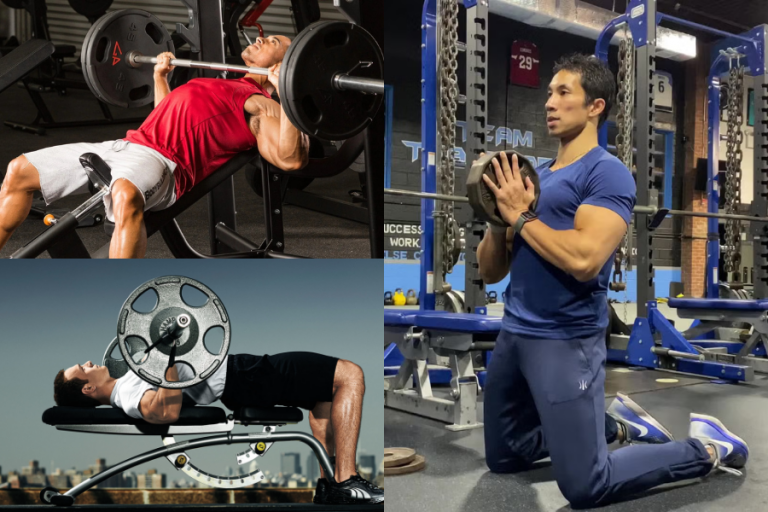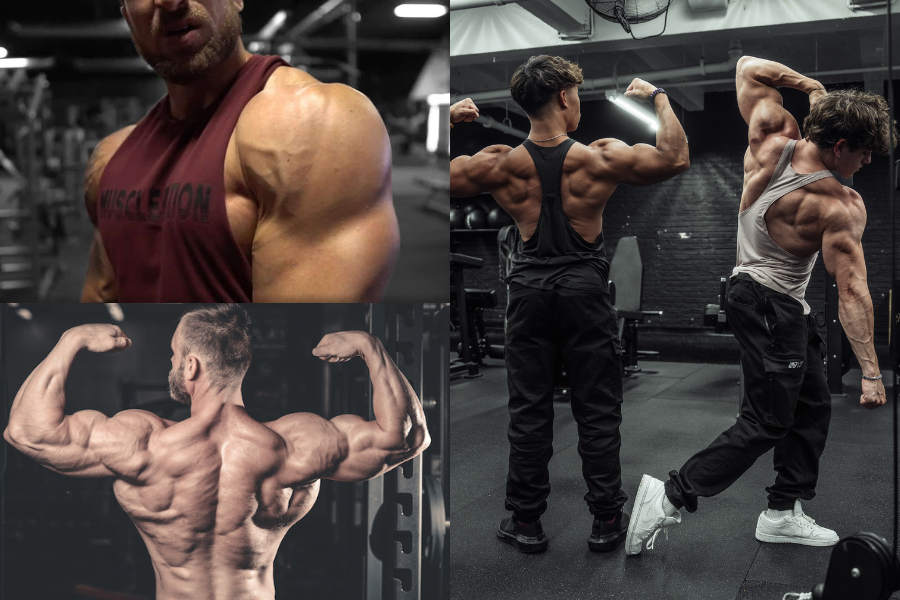
A bigger, stronger upper body starts at your shoulders. If you want a thicker frame, a more powerful press, and that wide V-taper look, you need the best shoulder workout for mass, not just random moves you saw on social media.
Below, you will learn how to train all three heads of your delts, choose the right exercises, and structure a shoulder workout that actually builds size and strength.
Understand your shoulder muscles
Before you load the bar, it helps to know what you are trying to grow. Your shoulder is not just “the deltoid.” It is a group of muscles that need slightly different angles and exercises.
Your main players are:
- Anterior delts at the front, heavily involved in pressing and front raises
- Lateral or medial delts on the side, the key to wider shoulders and a broader look
- Posterior or rear delts at the back, important for posture and overall shoulder health
- Traps and upper back, which assist many shoulder movements and add thickness
- Rotator cuff, smaller stabilizing muscles that keep the joint healthy when you press or raise your arms
The best shoulder workout for mass hits all of these, with extra attention on the lateral delts for width and the front delts for pressing power.
Use the right training ranges for mass
For shoulder hypertrophy, you want to live in the middle ground between very heavy strength work and light “toning” sets.
Research-backed guidelines point to:
- About 8 to 12 reps per set at roughly 70 to 80 percent of your one rep max for most mass work
- Total weekly volume of about 9 to 15 hard sets for the shoulders, spread over one or two sessions
- Compound lifts earlier in the workout, isolation exercises later when you are more fatigued
You also want to push your sets close to failure, usually within 3 to 5 reps of your limit. Stopping too early leaves muscle growth on the table, especially on isolation moves like lateral raises.
Start with heavy compound presses
To build big shoulders, you should start your workout with a heavy compound press. This lets you lift more weight when you are fresh, which is ideal for strength and size.
Overhead shoulder press
The overhead shoulder press is one of the best shoulder exercises for mass and upper body strength. It primarily targets your anterior delts and secondarily the medial and lateral delts, traps, triceps, and pecs. You can perform it seated or standing with dumbbells or a barbell.
Dumbbells can be especially useful if you have minor imbalances between sides. Aim for 3 to 4 sets of 6 to 10 reps. Keep your core braced, avoid over-arching your lower back, and press in a smooth, controlled path.
Push-press for extra overload
If you want to move serious weight and stimulate more overall growth, the push-press is a top shoulder exercise for mass. You use a slight leg drive to help press the bar overhead, which allows you to handle heavier loads for more reps than a strict press.
This lift does more than hit your delts. It engages your lower body, core, triceps, and upper chest, and that full body effort can help boost muscle building hormones and overall growth. Use it as your first exercise or as a heavy finisher for 3 to 5 sets of 3 to 6 reps.
Landmine press if your shoulders are cranky
If traditional overhead pressing bothers your shoulders, the landmine press is a smart alternative. You press a barbell at a diagonal angle instead of straight overhead. This reduces strain on the shoulder joint while still hammering the anterior and lateral delts and improving pressing strength.
You can perform it standing or in a half kneeling position. Half kneeling gives better stability and often less strain on your lower back. Use moderate weights for 3 to 4 sets of 8 to 12 reps per arm.
Prioritize your side delts for width
If your goal is wider shoulders, your lateral delts are the star. They contribute most to shoulder width from both the front and back. Growing them changes your silhouette fast.
Lateral raises with strict form
Lateral raises are the classic isolation move for the side delts and they still work when you do them correctly. Use a weight that you can control for at least 12 to 15 reps without swinging. Raise your arms out to your sides just above shoulder height, pause briefly, and lower with control.
To maximize muscle growth, push each set close to failure, within about 3 reps of your limit. Two or three hard sets in the 12 to 20 rep range will give your side delts plenty of work.
Behind the body cable lateral raises
For even better side delt activation, behind the body cable lateral raises are highly recommended. Starting the cable slightly behind your hips puts the muscle on a bigger stretch and challenges it when it is fully lengthened, which may lead to faster growth.
Stand side on to the cable stack, grab the low handle with your outside hand, let it sit just behind your body, then raise up and slightly out. Keep your torso upright and make your delt, not momentum, do the work. Aim for 3 sets of 12 to 15 reps per side.
If you are training your side delts twice per week, about 8 total sets for them is usually enough, especially since they also get hit indirectly in your pressing work.
Do not skip your rear delts
Many lifters hammer presses and front raises, then wonder why their shoulders round forward and feel tight. Rear delt training fixes that by balancing your pressing volume and supporting shoulder health.
Rear delt rows and flies
Rear delt rows are one of the best moves for your back shoulder. They significantly activate the rear and middle delts more than many traditional shoulder exercises. Set up with a wider than usual grip or use dumbbells, then row with your elbows flared slightly out and think about pulling “out and back,” not just “up.”
Rear delt flies, either with dumbbells or on a machine, are another great option. Hinge at your hips, keep a neutral spine, and sweep your arms out to the sides in a wide arc. Do not let your traps take over. Two to three sets of 12 to 20 reps on one or both of these exercises will go a long way.
Balancing your front and rear delt training like this promotes better posture and healthier shoulders long term.
Add smart accessories for full development
Once your heavy press and main isolation work are done, you can finish your shoulder workout with a few targeted accessory moves.
Arnold press for front and medial delts
The Arnold press is a favorite because it hits both the front and middle delts more effectively than many standard dumbbell presses. You start with the dumbbells in front of you, palms facing you, then rotate and press overhead.
Many lifters also find this pattern more joint friendly than a straight up and down press. Use moderate weights for 3 sets of 8 to 12 reps, focusing on smooth rotation and a full range of motion.
Face pulls and external rotations
Face pulls are excellent for your rear delts and rhomboids. They help stabilize your shoulder blades and counteract all the pressing you do for chest and shoulders. Pull a rope attachment to your upper face with elbows high, squeezing your upper back hard at the end.
You should also include some light external rotation work for your rotator cuff, especially if you press heavy often. A few sets with a light cable or band after your main workout can help keep your shoulders healthy so you can keep pushing for mass.
Example shoulder workout for mass
Here is how a complete shoulder workout for mass could look, based on the principles above:
-
Overhead shoulder press or push-press
3 to 4 sets of 6 to 8 reps -
Landmine press or dumbbell military press
3 sets of 8 to 10 reps -
Behind the body cable lateral raises
3 sets of 12 to 15 reps per side -
Lateral raises with dumbbells
2 to 3 sets of 15 to 20 reps -
Rear delt rows
3 sets of 10 to 15 reps -
Face pulls
2 to 3 sets of 12 to 15 reps
Keep your total hard sets for shoulders in that 9 to 15 set weekly range and spread them over one or two days. What matters more than exact frequency is your total weekly volume and your recovery.
Push most of your working sets until you are within about 3 reps of failure, especially on laterals and rear delt work, to fully activate the muscle fibers responsible for growth.
Do not forget warm up, recovery, and food
Heavy shoulder training is powerful for growth, but the joint is also delicate. A solid warm up and enough recovery are not optional.
Before you lift, use 5 to 10 minutes for:
- Light cardio to increase body temperature
- Dynamic shoulder movements in all planes, like arm circles and band pull apart variations
- A couple of very light sets of your first exercise
After training, static stretching for the chest, front delts, and lats can help maintain mobility and reduce some tightness.
Finally, you will not grow much without support from your diet. A protein rich intake and a small caloric surplus over your daily needs are key if hypertrophy is your goal. Without enough calories and protein, even the best shoulder workout for mass will only take you so far.
Putting it all together
To boost your strength and build bigger shoulders, you need a plan, not guesswork. Focus on:
- Starting with heavy compound presses like the overhead shoulder press, push-press, or landmine press
- Prioritizing your lateral delts with strict lateral raises and behind the body cable raises
- Balancing your pressing with rear delt rows, flies, and face pulls
- Training mostly in the 8 to 12 rep range at about 70 to 80 percent of your max and staying close to failure
- Hitting roughly 9 to 15 hard sets per week for shoulders with good warm ups and solid recovery
Pick one or two changes to apply to your very next workout, such as adding behind the body cable laterals or pushing your lateral raise sets closer to failure. From there, build out the full routine and let consistent training time and progressive overload do the rest.
About the Author