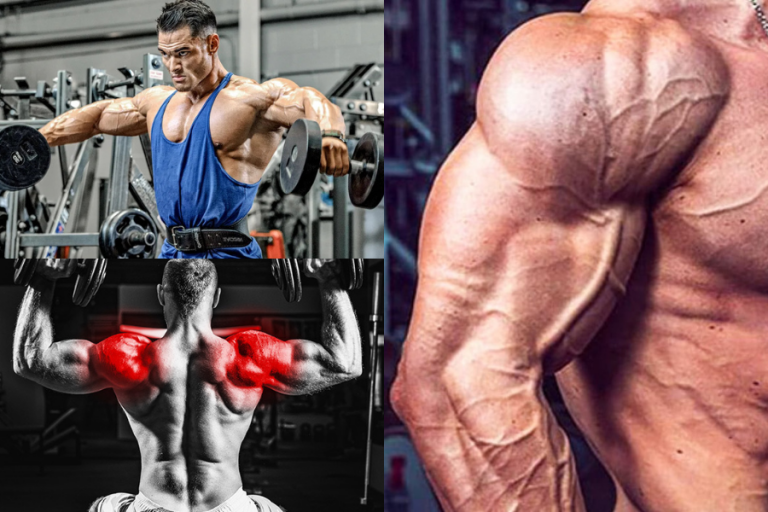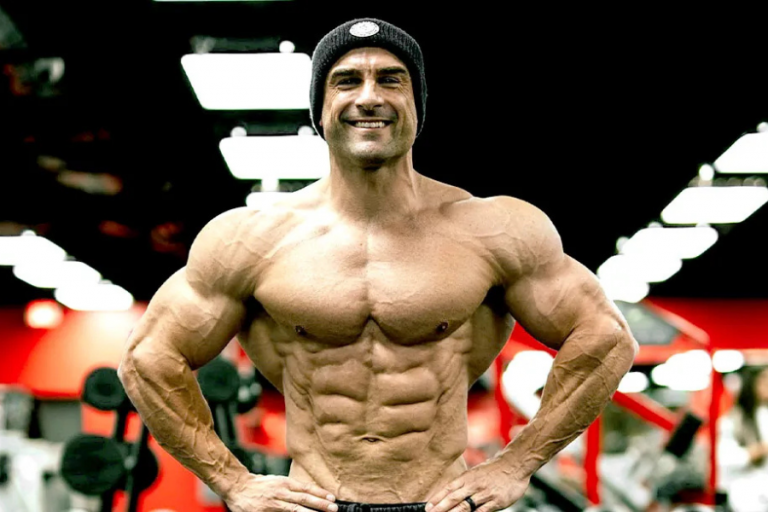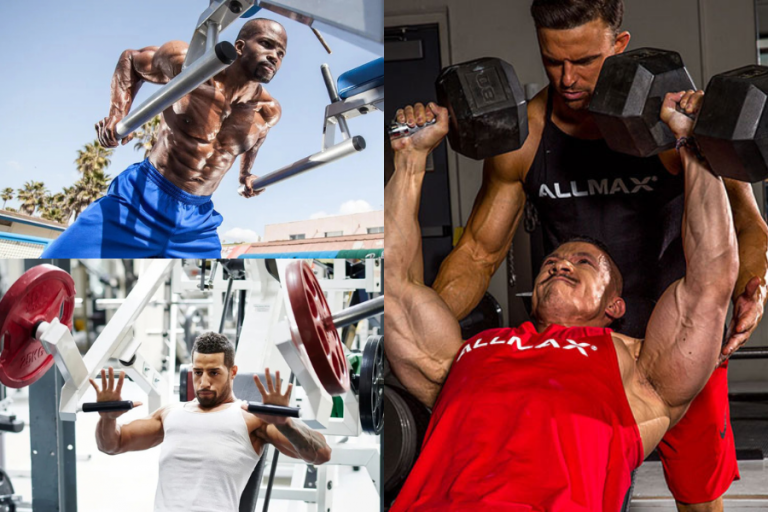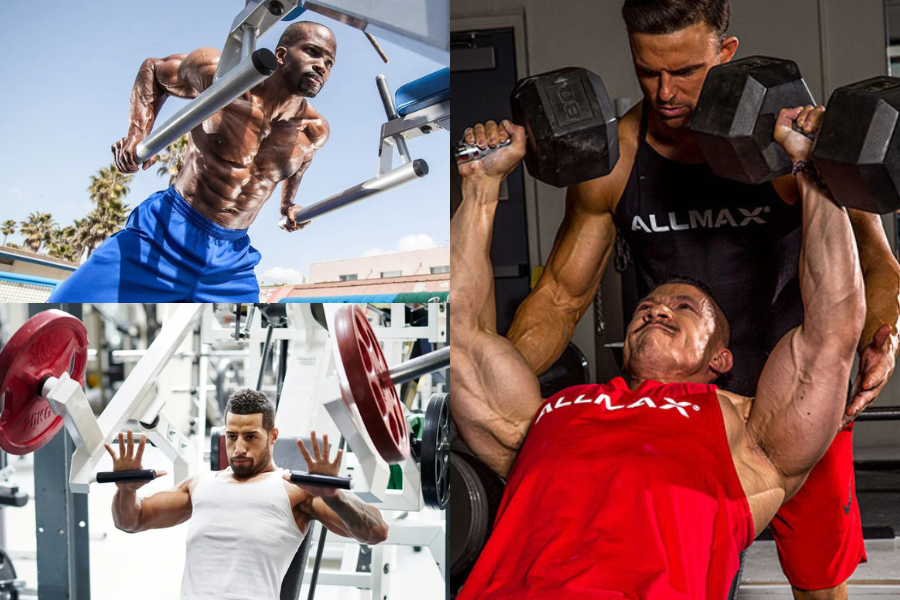
A strong, defined chest does more than fill out your T‑shirt. The best chest exercises for men help you build pressing strength, protect your shoulders, and improve your posture so you look and feel more confident in and out of the gym.
Below, you will learn how your chest works, the key moves that deserve a spot in your routine, and how to put them together into a plan you can actually stick to.
Understand your chest muscles
To train your chest effectively, you need a basic picture of what you are working.
Your main chest muscle is the pectoralis major. It has two primary regions:
- Upper chest (clavicular head) under your collarbone
- Middle and lower chest (sternal head) across your ribcage
Different angles and grips emphasize these regions. For example, incline movements and some grip variations hit the upper chest harder, while flat and decline angles target more of the mid and lower fibers.
When your goal is size and strength, research suggests you should:
- Train all three regions of the chest with exercises in different planes of motion
- Aim for at least 10 total sets per week for your chest
- Work mostly in the 6 to 12 rep range and progressively increase the load two times per week or more
These principles are summarized in Gymshark’s guide to effective chest training for men.
Focus on the six best chest builders
There are many variations, but a handful of movements deliver the most return for your time. According to Gymshark’s 2024 chest guide, the six best chest exercises for men to build strength, size, and power are:
- Barbell bench press
- Incline dumbbell bench press
- Bodyweight dips
- Incline bench cable chest fly
- Single‑arm cable crossover
- Bodyweight push‑ups
You do not need to use all of them at once. Instead, think of this list as your toolbox. In the next sections, you will see how each exercise works and when to use it.
Barbell bench press
The barbell bench press is the classic chest move for a reason. It lets you load a lot of weight, recruits your entire chest, and trains your shoulders and triceps at the same time.
You lie on a flat bench, grip the bar slightly wider than shoulder width, lower the bar to your mid chest, then press it back up. Because it is a compound lift, it should usually be one of the first exercises in your workout while you are fresh.
Gymshark highlights the barbell bench press as a top chest builder for men, noting that it primarily targets the inner and mid chest and allows greater strength gains compared with dumbbells due to the heavier loads you can lift.
If you are newer to lifting, use a spotter when possible, keep your feet planted, and focus on a controlled, full range of motion. Three sets of 6 to 12 reps is a solid starting point, increasing the weight gradually as your strength improves.
Incline dumbbell bench press
If your upper chest feels flat compared with the rest of your torso, the incline dumbbell bench press should be your priority. You lie on a bench set at roughly 30 to 45 degrees and press dumbbells from chest level to straight above your shoulders.
A 2010 study cited by Gymshark shows that incline angles in this range activate the clavicular head of the pectoralis major, or your upper chest, more effectively than a flat barbell bench. Dumbbells also give each arm its own path, which increases range of motion and helps you spot and correct strength imbalances.
Gymshark’s 2024 guide emphasizes that this move is essential if you want a well rounded chest, since it stresses the harder to grow upper fibers and supports hypertrophy. Start with lighter weights than your flat bench, keep your wrists stacked over your elbows, and lower the bells until you feel a deep but comfortable stretch.
Bodyweight dips
Dips are an underrated chest builder. When you perform them with a slight forward lean, they shift more of the load onto your chest rather than just your triceps.
You support your body on parallel bars, lower yourself until your upper arms are roughly parallel to the floor, then push back up. To emphasize your chest, lean your torso forward and avoid locking out your elbows completely so your triceps do not take over.
Many lifters report that dips with a forward lean give them more chest activation than the bench press, especially when they keep constant tension by not fully locking out at the top. If full bodyweight dips are too tough, use an assisted dip machine or loop a resistance band under your knees for support.
Cable fly variations
Cable flys provide constant tension on your chest throughout the movement, which is ideal for muscle growth. Two variations are particularly effective:
- Incline bench cable chest fly
- Single‑arm cable crossover
With the incline fly, you set a bench between two cable stacks, attach low pulleys, and perform a hugging motion up and in. This places more tension on the upper chest. With the single‑arm crossover, you stand sideways to the cable and sweep your arm across your body, which targets the inner and lower chest.
Varying the angle of the cables, such as pulling from high to low or low to high, helps you emphasize different areas of the chest. Gymshark notes that these angles are useful for targeting specific regions effectively while keeping the muscles under load for longer.
Use lighter to moderate weight, slow the eccentric (lowering) phase, and focus on feeling your chest stretch and contract rather than chasing heavy loads.
Push‑up progressions
Push‑ups remain one of the best chest exercises for men because you can do them almost anywhere and you can scale the difficulty. They train your chest, shoulders, triceps, and core in a single move.
A standard push‑up involves placing your hands just outside shoulder width, bracing your core, lowering your chest toward the floor, and pressing back up. Gymshark recommends them as an effective bodyweight exercise that works the upper, mid, and lower chest depending on variations.
You can progress push‑ups in several ways:
- Incline push‑ups: hands on a bench or box to make them easier, a great place to start
- Decline push‑ups: feet on a bench or box to emphasize the upper chest
- Diamond push‑ups: hands close together in a diamond under your chest to hit the inner chest and triceps
- Isometric push‑ups: hold the bottom position for up to 15 seconds to increase time under tension
- Explosive push‑ups: push up with enough force for your hands to leave the ground and clap before landing
Gymshark notes that incline push‑ups are especially good for beginners since they slightly reduce the load, while decline and explosive versions are better once you have built a base of strength.
Upper chest specific moves
If your goal is a more complete, squared look through the upper chest, you can add a few targeted options to your routine.
Reverse grip bench press
The reverse grip bench press uses a supinated, or underhand, grip on the bar. This grip shifts emphasis from the mid chest to the upper chest and also brings the biceps into play.
Research summarized in the Journal of Strength & Conditioning Research and referenced by Gymshark indicates that this variation increases activation in the clavicular fibers of the pec major and can reduce shoulder strain for some lifters. Because the grip feels unfamiliar, start with lighter loads and always use a spotter or safety bars.
Low to high cable fly
The low to high cable fly is another excellent upper chest move. You begin with the cables set low near hip level, then sweep your hands upward and together toward shoulder or eye level.
A 2022 study by Schütz and colleagues, cited by Gymshark, found that this pattern produces greater shoulder joint moments and mechanical tension on the clavicular fibers, which supports hypertrophy in the upper chest. Keep your elbows soft, avoid shrugging your shoulders, and think about drawing a wide arc up and in.
Decline push‑ups for upper chest
Although the name suggests lower chest, decline push‑ups actually shift more load toward your upper chest and front shoulders, especially when your feet are elevated on a bench or step.
Gymshark recommends decline push‑ups as an effective equipment free way to mimic the incline press pattern at home or when traveling. Aim for 3 to 4 sets of 5 to 15 reps, focusing on a straight body line and a controlled tempo.
If you consistently combine incline pressing, targeted flys, and bodyweight moves, you will build a balanced upper chest that improves your posture, supports overhead lifting, and prevents the bottom heavy look that comes from only flat benching.
Sample chest workouts you can use
You do not need an overly complicated plan to see progress. Here are two straightforward sample sessions based on the research and recommendations from Gymshark and Men’s Health UK.
Gym based chest workout
Use this when you have access to barbells, dumbbells, and cables.
- Barbell bench press
- 4 sets of 6 to 8 reps
- Rest 90 seconds
- Incline dumbbell bench press
- 3 sets of 8 to 10 reps
- Rest 60 to 90 seconds
- Incline bench cable chest fly
- 3 sets of 10 to 12 reps
- Rest 60 seconds
- Single‑arm cable crossover
- 2 sets of 12 to 15 reps per side
- Rest 45 to 60 seconds
- Push‑ups (any variation)
- 2 sets to near technical failure
- Rest 60 seconds
This setup gives you heavy compound work first, then finishes with isolation and high tension bodyweight moves for a strong pump.
At home chest workout
When you do not have a gym, you can still build your chest with smart push‑up variations.
- Incline push‑ups
- 3 sets of 10 to 15 reps
- Standard push‑ups
- 3 sets of 8 to 12 reps
- Diamond push‑ups
- 3 sets of 8 to 15 reps
- Decline push‑ups
- 3 sets of 5 to 12 reps
- Isometric push‑up holds
- 3 to 4 reps, each hold 15 seconds
Rest 45 to 60 seconds between sets. Men’s Health UK also highlights bodyweight options like hands elevated press‑ups, typewriter press‑ups, and band resisted press‑ups as effective ways to build size and definition at home with little or no equipment.
How to grow your chest faster and safer
Good exercise selection is only part of the story. You also need to think about progression, recovery, and technique.
Aim for at least 10 total working sets per week for your chest. For many men, that means training chest two times per week with 4 to 6 quality sets per session. Stay mostly in the 6 to 12 rep range with moderate weights and gradually add reps or weight over time, as suggested by Gymshark’s hypertrophy recommendations.
Men’s Health UK describes a 28 day chest plan that alternates heavy strength work, such as 10 sets of 6 reps on the barbell bench press, with higher rep dumbbell movements and stretching focused sessions like incline dumbbell presses and flyes. They also stress taking at least two rest days after each intense chest workout so your muscles can recover and grow.
You do not need to copy that exact plan, but you can borrow the principles:
- Push heavy occasionally in a safe, controlled way
- Use higher rep isolation work to drive blood into the muscle
- Rotate movement angles to stress different chest fibers
- Take rest days seriously, especially after hard sessions
Finally, always prioritize form over ego lifting. Use a spotter on barbell bench where possible, maintain a full but comfortable range of motion, and stop sets when your technique breaks down.
Putting it all together
To get the most out of the best chest exercises for men, pick 3 or 4 from different categories, train them twice per week, and commit to steady, small improvements in weight, reps, or control.
Over the next month, focus on:
- One heavy press: barbell bench or incline dumbbell press
- One secondary press: flat dumbbells or machine press
- One fly or cable variation for targeted tension
- One or two push‑up variations for volume and conditioning
Stay patient, track your workouts, and give your chest time to respond. With consistent effort and intelligent exercise choices, your chest will not just look stronger, it will support everything else you do in the gym.
About the Author