A strong core does more than give you visible abs. It supports your spine, improves posture, powers your lifts, and makes everyday movements feel easier. The best ab workouts for men focus on building that functional core strength first, and let the six‑pack follow as you get leaner.
Below, you will find how to train your abs smartly, the best exercises to use, and how to turn them into simple, effective routines you can stick with.
Understand what really builds visible abs
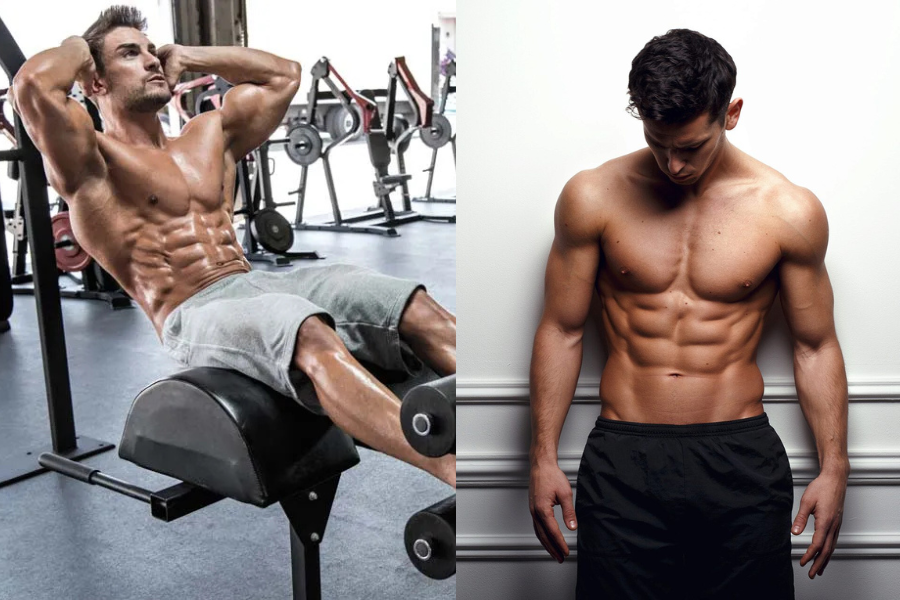
You can have strong ab muscles that never show if your body fat is too high. To actually see a six‑pack, you need two things working together: a lower body fat percentage and well‑developed abdominal muscles.
Most trainers agree that for men, ab definition typically starts to show somewhere around 6 to 13 percent body fat, depending on your genetics and how your body stores fat. Getting there requires a calorie deficit, which means eating fewer calories than you burn over time.
You do not need an extreme diet or endless cardio. What you do need is:
- A moderate calorie deficit you can stick to
- Consistent strength training that includes heavy compound lifts
- Dedicated core work 2 times per week
- Daily movement, like walking, that keeps your overall activity level high
Ab workouts are part of the picture, not the whole frame.
Focus on fat loss without burning out
If your main goal is visible abs, you will make faster progress by combining smart conditioning with strength training instead of just pounding steady‑state cardio.
A 2019 review found that people doing high‑intensity interval training, or HIIT, lost about 28.5 percent more fat than those doing moderate‑intensity exercise. HIIT can be tough on your body, so most experts recommend keeping it to about three sessions per week and giving yourself time to recover between them.
If you do not enjoy HIIT, you still have options. Ebenezer Samuel, C.S.C.S., fitness director at Men’s Health, advises bumping your general daily movement by about 10 percent, for example by walking more, taking the stairs, or adding a short walk after meals. This quieter increase in movement supports fat loss without beating up your joints or nervous system.
Think of your week like this: lift heavy a few days, move often every day, and sprinkle in some higher intensity work if you tolerate it well.
Train your core, not just your abs
When you think about the best ab workouts for men, it helps to zoom out. Your core is not only your six‑pack. It includes:
- Rectus abdominis, the “six‑pack” muscles
- Obliques on the sides of your waist
- Deep core muscles that stabilize your spine
- Lower back, glutes, and even parts of your hips
Marvin Burton of Anytime Fitness UK notes that your core is active pretty much all the time in daily life. That means a strong core makes almost every movement easier, from lifting a heavy box to swinging a golf club.
Core training:
- Improves posture, which a study in Isokinetics and Exercise Science found after men completed three hour‑long Pilates sessions per week for two months, resulting in better postural stability
- Supports heavy compound lifts like deadlifts, squats, and bench presses by helping you maintain form and protect your spine
- Helps reduce your risk of back pain, especially if you sit a lot
So while visible abs can be a motivating goal, core strength and stability should be the foundation of your training.
Avoid common ab training mistakes
A lot of men work hard on their abs but see very little progress. Often, the issue is not effort, it is approach. Watch out for these pitfalls:
You rely on crunches alone.
Simple sit‑ups and crunches have their place, but they are less effective than core exercises that use resistance tools like dumbbells and medicine balls. These add load, which you need if you want your abs to grow.
You ignore progressive overload.
Trainer Gareth Sapstead emphasizes that your abs are muscles like any other. To build them, you need to regularly increase the challenge, either through more resistance, more reps, harder variations, or slower tempo.
You lock your feet during sit‑ups.
When you anchor your feet, you tend to use your hip flexors more than your abs. That shifts work away from the muscles you are trying to train. Reverse crunches or decline crunches, where your hips move instead of your feet being locked, usually do a better job of loading your abs.
You only do twisting moves.
Rotation exercises like Russian twists are useful, but they do not replace more traditional ab training. A solid circuit combines flexion moves such as Swiss ball crunches, core moves such as resistance band rotations, and dynamic stability work like T‑planks.
You never change your routine.
Doing the same workout forever makes your body efficient, which means less stimulus to grow. Adding more challenging moves such as Swiss ball pikes, wall planks, or TRX pendulums helps you break plateaus and keep progressing.
Use the most effective ab exercises
You do not need an endless exercise library. A focused list that hits your abs from different angles is enough to build serious strength and definition.
Foundational bodyweight core moves
Plank
Planks are one of the best overall core builders because they work almost your entire trunk, including your abs, glutes, quads, and shoulders. You can hold for time or perform short, intense reps. Keep your body in a straight line and avoid letting your hips sag.
Glute bridge
Glute bridges are more than a butt exercise. They teach your core and hips to work together. When your glutes and hamstrings are strong, your lower back does not have to compensate.
Side plank
Side planks target the obliques, which help control rotation and side bending. If you want a solid, athletic waist that stabilizes well, side planks should be in your routine.
Targeted ab and oblique moves
Russian twist
Russian twists challenge both your upper and lower abs, along with the stabilizing muscles of your core. You can lift your feet or hold a weight to increase difficulty. Move with control and avoid yanking through your lower back.
Lying leg raise
Lying leg raises put a lot of work into your lower abs, along with your hip flexors and quads. They complement exercises like bridges by training the opposite motion. If you have a pull‑up bar, hanging leg raises are an even more advanced option.
Heel taps and leg lowers
Heel taps and leg lowers emphasize the lower portion of your abs without needing machines. Done slowly, they create deep fatigue and help you build control over pelvic tilt, which is key for protecting your lower back.
Side plank dips and oblique crunches
Side plank dips introduce movement into a side plank, forcing your obliques to work even harder. Oblique crunches can be done on the floor or a bench to build the side of your waist, especially if you add weight over time.
Advanced and equipment‑based core moves
Hanging leg raises
Hanging leg raises are one of the toughest ab moves you can do. They demand serious core strength and grip. Variations like hanging twisting knee raises keep them challenging even as you get stronger.
Weighted ab exercises
Once you can perform about 20 to 30 solid reps of a bodyweight exercise, it is time to add load. Weighted planks, dumbbell sit‑ups, or cable crunches all give your abs a muscle‑building stimulus. Men’s Health has highlighted this shift to added weight as a key step for ab growth.
Medicine ball and resistance band work
Moves like medicine ball slams, rotational throws, and resistance band rotations bring power and rotation into your training. These are especially useful if you play sports that involve twisting, such as tennis or basketball.
Build smarter ab workout routines
The best ab workouts for men are short, focused, and consistent. You do not need to crush your core every day. Two direct ab sessions per week, plus plenty of compound lifts, can be enough if you push yourself in those sessions.
Sample beginner ab workout (no equipment)
Perform this routine 2 times per week, with at least one rest day between sessions.
- Plank, 3 sets of 20 to 30 seconds
- Glute bridge, 3 sets of 12 to 15 reps
- Dead bug or heel taps, 3 sets of 10 to 12 reps per side
- Side plank, 2 sets of 15 to 20 seconds per side
Rest 30 to 45 seconds between sets. Focus on slow, controlled breathing and clean form.
Sample intermediate ab workout (home friendly)
Do this 2 times per week on non‑consecutive days.
- Lying leg raise, 3 sets of 10 to 15 reps
- Russian twist, 3 sets of 20 total reps
- Side plank dips, 3 sets of 10 to 12 reps per side
- Plank with shoulder taps, 3 sets of 16 total taps
You can perform this as a circuit, moving from one exercise to the next with 30 seconds of rest, or complete all sets of one move before moving on.
Higher intensity circuit approach
A more advanced method is Extinction Training, where you repeat each exercise with very short rests until you cannot perform another good rep. One popular home circuit uses:
- W‑Raise, 5 reps
- Black Widow knee slides, 45 seconds
- Butterfly sit up, 10 reps
- Seated corkscrew, 45 seconds
- Levitation crunch, 10 reps
- Sit up elbow thrust, 5 reps each side
You cycle through, resting just long enough to keep quality high, until you can no longer complete the target reps or time. This style hits every function of your abs, from flexion to rotation to stability, without needing equipment.
Train your abs like any other muscle
If you want your core to grow and strengthen, treat it like you treat your chest or legs.
Progressive overload
Increase the challenge over time. Add weight, slow the lowering phase of your reps for 2 to 3 seconds, or move to more advanced variations. Slowing the eccentric phase increases time under tension, which helps your abs grow without endless high‑rep sets.
Balanced movement patterns
Include flexion moves such as crunches or sit‑ups, stability moves such as planks, and rotational or anti‑rotation moves such as band presses or Russian twists. Static holds and dynamic movements both have value, but research suggests that dynamic spinal flexion exercises, such as sit‑ups, may be more effective than isometrics alone for muscle growth.
Compound lifts
Do not skip the big movements. Heavy front squats, deadlifts, and overhead presses work your entire core harder than most isolated ab exercises. Avoiding these limits your potential for real core strength.
Recovery
Your abs can handle frequent work, but they still need time to repair and grow. Targeted ab sessions 2 times per week, plus indirect work from big lifts and daily movement, usually strike a good balance for most men.
Combine core training with smart equipment choices
If you like training at home, a few simple tools can make your ab workouts more effective without taking over your space.
- A TRX Home Suspension Trainer challenges your entire core with bodyweight exercises that require constant stability
- An ab wheel, such as the REP Fitness Ab Roller, gives you a tough rollout variation that hits your abs, lats, and shoulders at once
- A rowing machine like the Concept2 RowErg offers a cardio workout that also heavily involves your core, and helps with posture and conditioning
- Specialized tools like the PureTorque Ab Trainer or a glute ham developer can build rotational strength and posterior chain power if you have more space and budget
You do not need every gadget, but adding even one can open up new, challenging movements that keep your core progressing.
Put it all together
If you are serious about building a strong, defined midsection, focus on three pillars:
- Get leaner through a sustainable calorie deficit and steady daily activity
- Train your entire core 2 times per week with a mix of flexion, stability, and rotation exercises, using progressive overload
- Support your ab training with heavy compound lifts that engage your trunk from every angle
Most men already have the muscles for a six‑pack. For many, the real work is lowering body fat and training the core consistently enough that, when the fat comes off, those muscles are strong and well defined.
Start with one change this week, such as adding a focused 10‑minute core circuit to two of your training days. As you get stronger, layer in more intensity and better nutrition. Your core will not just look better, it will perform better in everything you do.
About the Author