Image by Flux
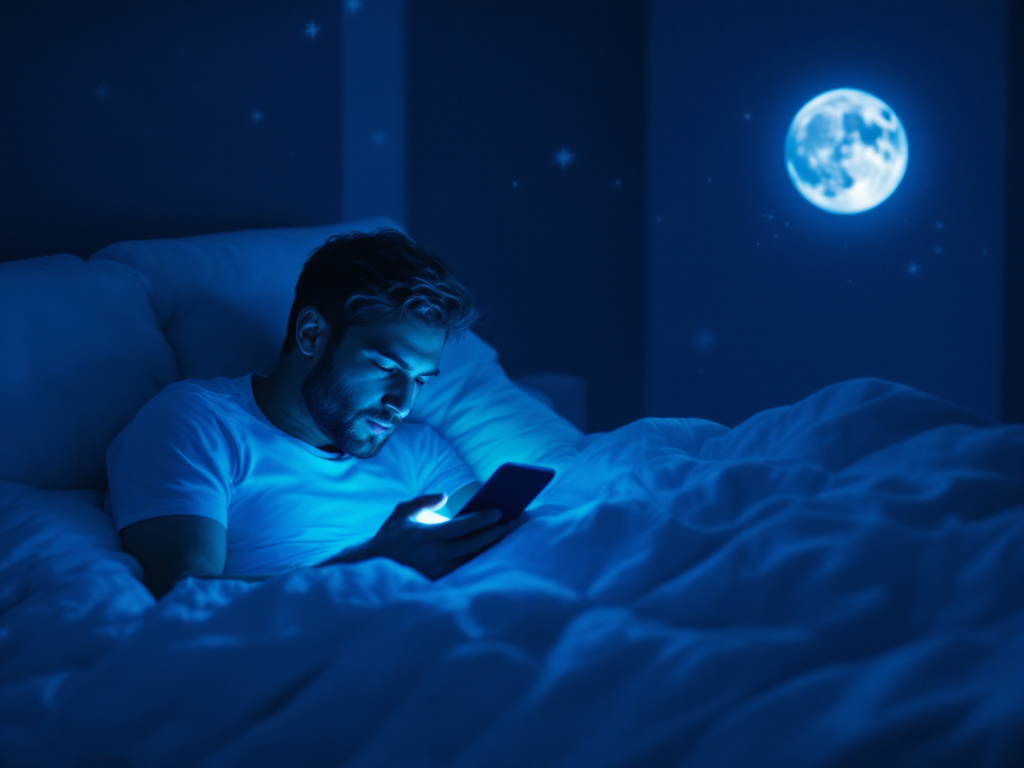
A late night scroll through your phone might feel harmless, but the blue light from your screen is not as innocent as it looks. If you are trying to improve your sleep, understanding the connection between blue light and sleep in men is one of the most practical changes you can make.
Below, you will see how blue light affects your brain, hormones, and sleep quality, and what you can realistically do about it without ditching your devices completely.
What blue light actually is
Blue light is a high energy, short wavelength type of visible light. It is not inherently bad. In fact, you get a lot of it from the sun during the day, and that is part of what keeps you alert and synced to a 24 hour day.
Your eyes contain special light sensing cells that are most sensitive to blue wavelengths, especially around 480 nanometers. Research from a Harvard affiliated team at Brigham and Women’s Hospital notes that this blue range has a powerful effect on your internal body clock and alertness (Harvard Health Publishing).
The problem starts when you keep getting that strong daytime signal at night from:
- Phone and tablet screens
- Computer monitors
- LED and compact fluorescent bulbs
- TVs and gaming monitors
These modern light sources emit more blue light than old incandescent bulbs, and they are often inches from your face in the evening, which increases your exposure (Harvard Health Publishing).
How blue light disrupts your sleep hormones
Your sleep is heavily controlled by melatonin, a hormone your brain releases in the evening. In a normal pattern, melatonin rises as it gets dark, which tells your body that it is time to wind down and eventually fall asleep.
Blue light at night interferes with this process. It sends a “daytime” signal that suppresses melatonin and pushes your internal clock later. In a Harvard study, 6.5 hours of blue light exposure in the evening suppressed melatonin for about twice as long and shifted circadian rhythms about twice as much compared with the same amount of green light (Harvard Health Publishing).
Healthline summarizes it simply. Evening blue light inhibits melatonin production in the pineal gland, reduces both the quantity and quality of sleep, and disrupts your natural 24 hour sleep wake rhythm (Healthline).
If you are a man who already stays up late gaming, working, or scrolling, that nightly melatonin suppression can easily turn into a pattern of:
- Going to bed later than you intend
- Lying awake longer before you finally fall asleep
- Waking up feeling less rested, even if you get “enough” hours
Over time, you may feel like a night owl by default, even if you need to wake up early for work.
What studies show about blue light and men’s sleep
A large review of 24 studies that looked at blue light and sleep in healthy adults, many of them men in their 20s, gives a good snapshot of what really happens when you are exposed to blue light.
Here is what the researchers found (PMC Frontiers in Physiology):
- In about half of the findings, blue light decreased tiredness. You feel more awake and less sleepy.
- Sleep quality dropped in about 20 percent of the studies. In many others, sleep quality did not change much, and a few even showed an improvement.
- About one third of the studies found that blue light reduced sleep duration. Others showed no real change or even a slight increase.
- Sleep efficiency went down in roughly half of the studies, which means a greater portion of time in bed was spent awake.
- Sleep latency, or how long it took to fall asleep, increased in just under half of the studies.
At the same time, the review found that blue light exposure could improve cognitive performance, alertness, and reaction time. This is part of the reason you may feel mentally “on” at night in front of a screen, even as you are quietly sabotaging your ability to fall asleep afterward.
In other words, blue light at night may help you stay sharp in the moment, but it often does so at the expense of how quickly you fall asleep, how efficiently you sleep, and sometimes how long you stay asleep.
Think of it as borrowing alertness from your future self. You get the focus now, and you pay for it with grogginess later.
Why men might feel the impact differently
Most research on blue light and sleep involves both men and women, but many of the participants are men in their 20s and 30s, a group that often combines:
- Long work hours or late classes
- Evening gaming or streaming habits
- High daily caffeine intake
- Indoor jobs with less daytime sunlight
Taken together, these habits can magnify what blue light does to your circadian rhythm. When you rarely see bright natural light during the day and then soak in intense blue light at night, your internal clock starts to drift.
Harvard experts recommend consistent daytime exposure to natural daylight to provide a strong circadian signal that supports healthy sleep wake cycles. Without that daytime anchor, your brain is more likely to take its cue from your evening screens instead (Harvard Health Publishing).
If you feel alert at midnight and exhausted at 7 a.m., your light environment may be a bigger factor than you realize.
Health risks linked with nighttime blue light
Poor sleep is not just about feeling tired. Nighttime light exposure, including blue light, has been associated with increased risks of:
- Heart disease
- Diabetes
- Obesity
Harvard Health notes that while direct cause and effect has not been conclusively proven, the links are strong enough to treat nighttime light, especially blue light, as a potential long term risk factor (Harvard Health Publishing).
On the mental health side, chronic circadian disruption and poor sleep have been connected to higher rates of depression and mood issues. If you already struggle with mood, late night light habits could be making things harder.
How blue light affects your eyes and comfort
Beyond your sleep, blue light rich screen use at night can be hard on your eyes. North Park Ophthalmology notes that blue light from digital devices affects the circadian rhythm and can prevent you from falling asleep easily. It also contributes to digital eye strain, which may include:
- Tired, dry, or burning eyes
- Headaches after screen sessions
- Trouble falling asleep after using screens before bed
They recommend limiting screen time one to two hours before bedtime and using night mode settings to reduce blue light output, brightness, and glare (North Park Ophthalmology).
Even during the day, following the 20 20 20 rule can help. Every 20 minutes, look at something 20 feet away for at least 20 seconds. This simple habit reduces eye fatigue and can make it easier to wind down at night.
Do blue light blocking glasses really work?
You have probably seen amber tinted “blue blocker” glasses marketed as a cure for bad sleep. The research is promising, especially when you use them as part of a larger routine.
Several key points stand out:
- Healthline reports that people who wore amber glasses for three hours before bed for two weeks had significant improvements in both sleep quality and mood (Healthline).
- Other studies show that wearing blue blocking glasses in the evening keeps melatonin levels closer to what they would be in dim light, which helps restore a natural sleep signal (Healthline).
- A systematic review of 29 studies found substantial evidence that blue blocking glasses in the evening reduced sleep onset latency in people with insomnia, shift work, jet lag, and delayed sleep phase. Sixteen randomized controlled trials involving 453 patients supported the idea that blue blockers can be a useful sleep intervention (PubMed).
There is also early evidence that blue blocking glasses may help with mood regulation in some conditions, such as reducing manic symptoms in bipolar disorder, although findings for major depression and postpartum depression are less consistent (PubMed).
At the same time, experts caution that not all blue blocking glasses are created equal. A 2021 review noted that differences in what wavelengths glasses actually block and inconsistent study conditions make it hard to issue a blanket recommendation (Harvard Health Publishing).
So you can think of blue light glasses as a helpful tool, not a magic fix. They work best when you pair them with better screen and light habits, especially in the few hours before bed.
Practical steps to reduce blue light at night
You do not need a perfect routine to get better sleep. Start with a few manageable changes and build from there.
Tweak your screens
Software solutions are the lowest friction fix. Experts recommend using programs and settings that reduce blue light emissions, such as Night Shift on Apple devices or f.lux on computers, especially in the evening (Harvard Health Publishing).
When you can, also:
- Turn on “night mode” or “comfort mode” to shift colors toward warmer tones
- Drop your brightness level in dim rooms instead of leaving it on auto at full power
- Enlarge text to avoid leaning in close to the screen
According to North Park Ophthalmology, night mode settings help reduce eye strain and glare and make it easier to adjust to surrounding light, all of which support better sleep readiness (North Park Ophthalmology).
Set a screen curfew you can actually follow
You will often hear advice to avoid screens for two to three hours before bed. In an ideal world, that is great. A more realistic approach is to set a curfew that you can maintain most nights.
You might try:
- No work email or heavy mental tasks after a certain hour
- Switching from interactive screens, like games and social media, to passive, calmer content
- Replacing the last 30 to 60 minutes before bed with a book, stretching, or a simple wind down routine
Even North Park Ophthalmology suggests just one to two hours away from devices before bed to protect sleep quality (North Park Ophthalmology).
Use blue blocking glasses strategically
If you are not ready to give up evening screens, putting on blue blocking glasses 2 to 3 hours before your usual bedtime can be a solid compromise.
To get the most out of them:
- Choose lenses that clearly state the blue wavelengths they block, ideally in the 450 to 500 nm range
- Wear them consistently in the hours before bed, not just occasionally
- Combine them with lower brightness and warmer screen settings for a stacked effect
Studies show that this kind of routine can keep melatonin levels higher in the evening and shorten the time it takes you to fall asleep, especially if you have delayed sleep phase tendencies or inconsistent schedules (Healthline, PubMed).
Fix your daytime light too
You can make your nights easier by improving your days. Harvard experts recommend regular daytime exposure to natural daylight, especially if you spend most of your time indoors, so that your circadian clock has a clear “daytime” signal (Harvard Health Publishing).
You might:
- Get at least 20 to 30 minutes of outdoor light in the morning
- Take short breaks outside or near a bright window during the day
- Avoid wearing very dark sunglasses all day unless you need them for eye protection
The stronger your daytime light anchor, the more your brain understands that evening is for winding down.
Putting it all together for better sleep
Blue light is not the only factor in your sleep, but it is one that you can influence fairly easily. For most men, a realistic plan might look like this:
- Increase your natural light exposure during the day.
- Turn on night mode or blue light reduction on your devices by early evening.
- Consider blue blocking glasses for the last few hours before bed, especially if you are using screens.
- Set a screen curfew of at least 30 to 60 minutes before sleep and replace that time with a simple, repeatable wind down.
- Pay attention to how quickly you fall asleep and how you feel in the morning over several weeks, and adjust as needed.
You do not need to be perfect. Even small, consistent changes to how and when you see blue light can help you fall asleep faster, sleep more efficiently, and wake up more ready to handle your day.
About the Author