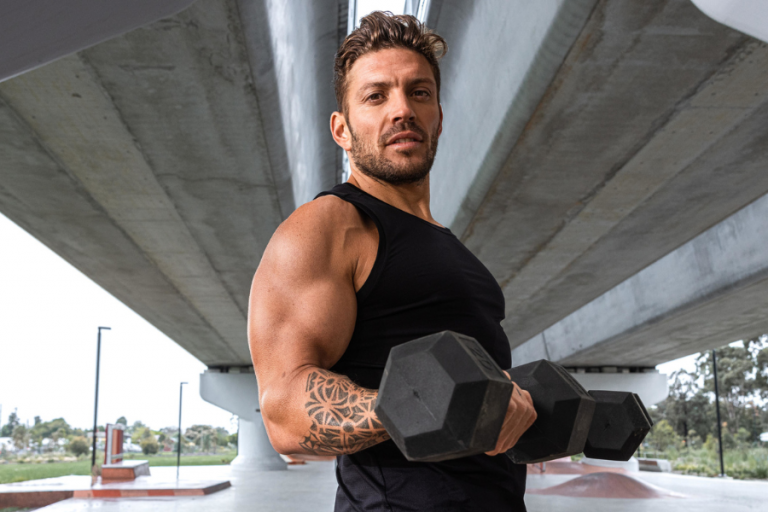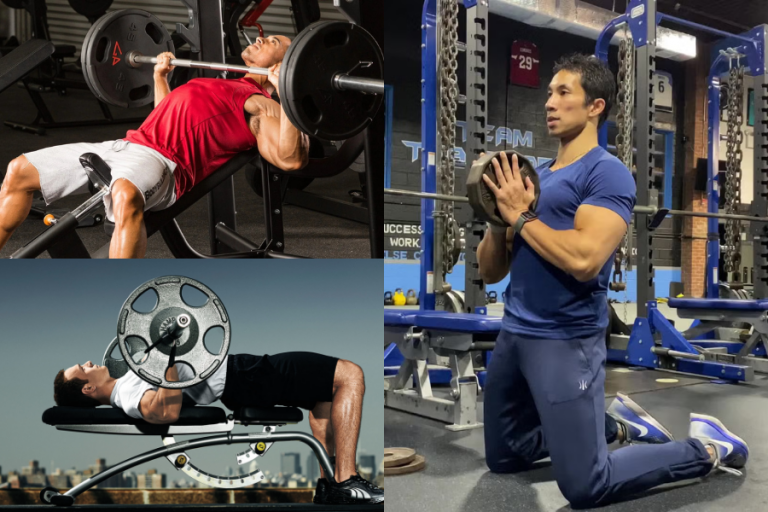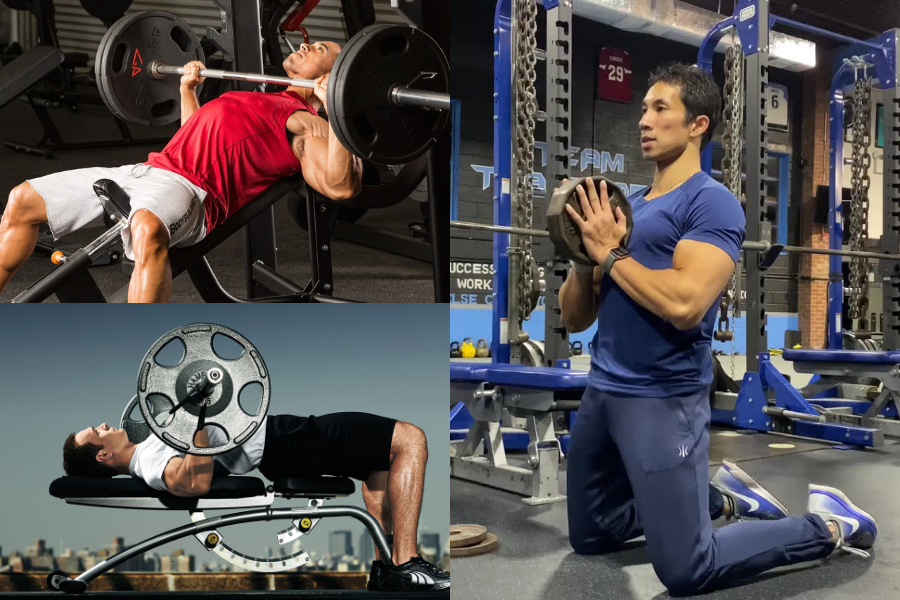
A bigger chest is not just about piling plates on the bar. The best chest exercises for bigger chest growth combine smart form, balanced programming, and the right amount of volume so your pecs actually do the work instead of your shoulders or triceps.
Below, you will learn how your chest muscles work, which exercises truly build size, how to avoid common form mistakes, and how to put everything into a simple workout plan you can follow at the gym or at home.
Understand how your chest grows
Your chest is mostly the pectoralis major, which has two main regions that you need to train.
- The clavicular head, often called the upper chest.
- The sternal head, usually referred to as the middle and lower chest.
To build a fuller and more defined chest, you want movements that hit both areas through a full range of motion and place the muscle under stretch with tension. RP Strength’s 2024 chest training guide notes that loaded stretching and large range of motion presses and flyes are especially effective for hypertrophy because they challenge more fibers across the entire pec.
For muscle growth, using loads between roughly 30 percent and 85 percent of your one rep max works well. That usually means sets of 5 to 30 reps. A solid balance is to spend about half your sets in the moderate 10 to 20 rep range, then split the rest between heavier 5 to 10 rep work and lighter 20 to 30 rep sets. This mix lets you build strength, add volume, and keep your joints happier than if you only trained heavy or only trained for high reps.
Warm up properly before chest day
Pressing heavy with cold muscles is a good way to stall your progress or get hurt. A proper warm up takes just a few minutes and can save you weeks of frustration.
Start with 3 to 5 minutes of light cardio to raise your body temperature. Then move into dynamic upper body movements like arm circles, band pull aparts, and wall slides. You want your shoulders, elbows, and upper back to move freely before you touch a bench.
Before your first working set, do 2 or 3 lighter sets of your main press. For example, if your working weight on bench press is 185 pounds, you might do:
- 8 reps with the empty bar.
- 5 reps at 95 pounds.
- 3 reps at 135 pounds.
You should finish your warm up feeling loose and a little warm in the chest, not tired. The goal is to increase blood flow and range of motion so your pecs can contract hard from the very first real set.
Get your pressing form right
You can have the best chest exercises for bigger chest gains on paper, but if your form is off, most of the tension will leak into your shoulders and arms.
Elbow angle and shoulder safety
A common beginner mistake is flaring the elbows almost straight out to the side at a 90 degree angle during dumbbell or barbell presses. This angle places a lot of stress on the front of your shoulder and can quickly lead to discomfort or nagging pain.
Aim for roughly a 45 degree angle between your upper arm and your torso. From above, your arms should form an arrow shape with your body rather than a straight line across. This position allows your pecs and lats to help stabilize the weight, reduces joint stress, and usually lets you perform more smooth, controlled reps.
Scapula position and chest engagement
Your shoulder blades should not be floating around during presses. Retracting your scapulae by gently pinching your shoulder blades together on the bench creates a stable base and puts your chest in a stronger position.
Think about pulling your shoulder blades down toward your back pockets and keeping them there while you press. This subtle change helps you avoid shrugging the weight with your shoulders and instead directs the tension into the outer, upper, and inner chest fibers.
Use full range of motion
Cutting presses short at the top or bottom might let you move more weight, but it usually does not build a better chest.
Research summarized by RP Strength indicates that full range of motion is crucial for chest growth. Deep presses to the chest with a barbell or slightly beyond shoulder line with dumbbells create a significant stretch under load. This is one of the most powerful drivers of hypertrophy and can even lower stress on some joints compared with “half reps” that overload only a narrow portion of the movement.
Aim to control the weight all the way down, pause briefly, then press back up without bouncing. If you cannot maintain a full range of motion, reduce the load until you can.
Focus on the best compound chest exercises
Big compound presses should form the core of your chest training. They let you handle more total weight and recruit the most muscle.
Barbell bench press
The flat barbell bench press is still one of the best chest exercises for bigger chest development, especially through the middle and inner chest. It also builds overall pushing strength and hits the triceps and front deltoids hard.
Use a grip just outside shoulder width. Set your feet firmly on the floor, retract your shoulder blades, and maintain that 45 degree elbow angle. Touch the bar lightly to the lower part of your chest, then press up in a slight arc toward your eyes.
Because you can load the bench press heavily, it is a good candidate for your lower rep strength work in the 5 to 10 range and for foundational sets in the 8 to 12 range.
Incline dumbbell or barbell press
If you want an upper chest that actually shows through a T shirt, incline pressing is mandatory. Many lifters find that an incline bench plus flyes did more for their upper chest definition than flat bench alone.
Set the bench to roughly 30 to 45 degrees. Higher angles turn the movement into more of a shoulder press, which is not what you want here. The key cue is to keep your forearms vertical, perpendicular to the floor, throughout the rep regardless of the bench angle. This lines up the resistance with your upper chest fibers and avoids dumping stress into the front delts.
Dumbbells offer a greater range of motion and allow you to adjust your wrist and elbow path to what feels most natural. Barbells let you go heavier and add overload more easily. You can use both across the week, for example barbell incline early in the week and dumbbell incline later on.
Dips with a forward lean
Bodyweight dips are often underestimated as a chest exercise, but with the right technique they can outwork your bench press for lower chest activation.
To shift emphasis from triceps to chest, lean your torso slightly forward, tuck your chin, and let your elbows travel a bit wider rather than staying tight to your sides. Stop just short of locking out at the top to keep constant tension on the pecs and reduce triceps fatigue.
Once you can perform solid bodyweight sets, you can build serious mass by adding weight with a belt or holding a dumbbell between your feet.
Use isolation moves to finish the job
Compound lifts are the foundation, but isolation exercises help you target specific areas of the chest, add safe volume, and improve your mind muscle connection.
Cable and dumbbell flyes
Cable flyes are an excellent choice because they keep constant tension on the chest, especially in the stretched position. By adjusting the pulley height you can emphasize different regions:
- High to low flyes for more lower and inner chest.
- Low to high flyes for more upper chest emphasis.
- Mid level flyes for overall pec development.
Dumbbell flyes on a flat or incline bench also provide a strong stretch under load, which is great for hypertrophy. Use a slight bend in your elbows and focus on opening the arms until you feel a stretch across the chest rather than the shoulders. Bring the dumbbells together smoothly over your chest, do not slam them into each other.
Stability work with dumbbell presses
Dumbbell bench presses, both flat and incline, are not just lighter versions of barbell work. They ask more from your stabilizing muscles and allow each arm to move independently. This can reduce strength imbalances and often makes it easier to actually feel your chest contracting.
Because dumbbells allow a longer range of motion and can reduce shoulder strain, they are ideal for moderate to higher rep sets at the end of a workout when your joints are warm but your nervous system is tiring out from heavy barbell work.
Balance chest work with back training
If you hammer chest and ignore your back, your shoulders will let you know. Training the back, especially through rowing patterns, balances the pressing volume and keeps your posture from collapsing forward.
A simple rule is to perform at least as many sets of horizontal rows and pulldowns or pull ups as you do chest presses each week. This approach helps keep your shoulders centered, makes your chest look bigger by contrast, and supports healthier pressing for the long term.
Add intensity carefully for faster growth
Once you have good form and a consistent routine, you can increase the challenge with smart intensity techniques instead of only chasing heavier weights.
Options include:
- Drop sets, where you reduce the weight immediately after reaching failure and continue for more reps.
- Partial reps after you can no longer complete a full range of motion rep, especially in the stretched position.
- Pauses during the lowering phase or at the bottom to eliminate momentum and force the chest to work harder.
Use these techniques sparingly, perhaps on the final set of one or two exercises per workout. The goal is to stimulate more growth, not to destroy your recovery.
You should also avoid ego lifting. When the weight is too heavy, your form breaks down, you bounce the bar, or you rely mostly on shoulders and triceps. This defeats the purpose of chest training. Choose loads that let you control every rep and feel your pecs working.
Plan your weekly chest training
You do not need to live on the bench to build a bigger chest. In fact, most lifters grow best on 2 to 4 chest focused sessions per week with enough volume and variation.
A good target is at least 10 hard sets per week for chest, spread across different exercises and pressing angles. Many lifters do well in the 10 to 20 set range as long as they recover well with sleep and nutrition.
Here is a simple example using two sessions each week:
Day 1
- Barbell bench press, 4 sets of 6 to 8 reps
- Incline dumbbell press, 3 sets of 8 to 12 reps
- Cable flyes (mid or high to low), 3 sets of 12 to 15 reps
Day 2
- Incline barbell press, 4 sets of 8 to 10 reps
- Dumbbell flat press, 3 sets of 10 to 12 reps
- Dips with a forward lean, 3 to 4 sets close to failure
Alternate exercise choices over time to reduce overuse and keep progress moving. For example, rotate in machine presses or different fly variations every 6 to 8 weeks while keeping your core structure of horizontal and incline pressing plus isolation.
Some programs also use higher volume and creative protocols like combining German volume training style sessions with tabata inspired press up work to maximize blood flow and strength over about 28 days. These approaches rely on alternating heavy barbell bench work with high rep push up variations and specific stretches to expand the pecs and can be effective if you are already comfortable with basic lifts and recover well between sessions.
Train at home when you cannot get to the gym
You can still use chest exercises for bigger chest development at home even without a full rack.
Bodyweight movements like hands elevated push ups, typewriter push ups where you shift side to side over one arm, and band resisted push ups let you build strength and crank out high rep burn sets for extra volume. Elevating your feet or using a narrower or wider hand position helps you shift emphasis toward upper or lower chest as needed.
Progress at home by slowing the tempo, adding pauses, wearing a weighted vest, or looping bands across your back and under your hands for resistance. Treat these sessions as seriously as your gym workouts and your chest will continue to grow.
Support your training with nutrition
Training provides the stimulus, but food provides the building blocks. A well structured, muscle gaining meal prep plan is essential if you want your chest work to show up as actual size and not just temporary pump.
Aim for a slight daily calorie surplus, enough high quality protein spread across your meals, and plenty of carbohydrates around your workouts to support performance and recovery. Consistency here matters as much as consistency in the gym.
Start by choosing one adjustment to your current routine, for example fixing your elbow angle on presses or adding a weekly incline day. Once that feels natural, layer in the next change. Over time, this steady approach will build the bigger, stronger chest you are after.
About the Author