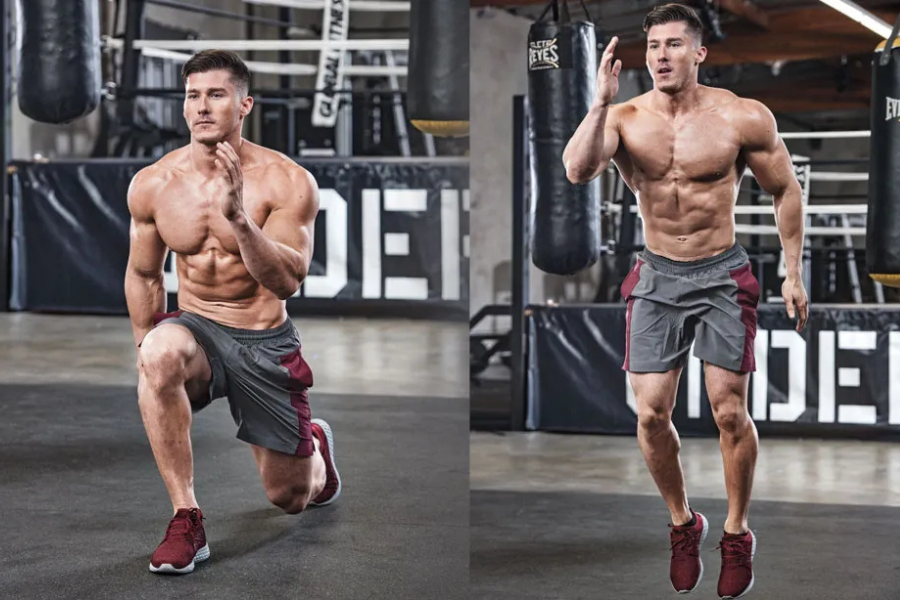
A Tabata workout looks simple on paper. You go hard for 20 seconds, rest for 10, and repeat that pattern eight times for a total of four minutes. In reality, those four minutes of Tabata HIIT workouts can feel tougher than a long run and can transform your cardio if you use them the right way.
Below, you will see how Tabata works, what makes it different from other HIIT workouts, and how you can safely plug it into your routine to build serious conditioning in a fraction of the time.
Understand what Tabata HIIT workouts are
Tabata is a specific style of high intensity interval training, not just a random mix of hard intervals. It was developed in the 1990s by Japanese scientist Dr. Izumi Tabata and his team at the National Institute of Fitness and Sports in Tokyo. The original protocol used all out bike sprints to help Olympic speed skaters improve performance.
The structure is very strict. You perform 20 seconds of intense exercise followed by 10 seconds of rest. You repeat that 20/10 pattern eight times without changing the interval length. One full Tabata lasts four minutes total. According to the Cleveland Clinic, four of these rounds with short breaks in between gives you a complete 20 minute workout.
You can build Tabata intervals around almost any movement, such as squats, burpees, push ups, kettlebell swings, or sprints. What matters most is intensity. You work at close to your maximum effort during every 20 second block.
See how Tabata differs from regular HIIT
All Tabata workouts are HIIT, but not all HIIT workouts are Tabata. You might already be familiar with HIIT classes that alternate hard work and easier recovery for 15 to 30 minutes. Tabata follows the same concept, but is more rigid and usually more intense.
Traditional HIIT gives you flexible work and rest periods. You might see formats like 40 seconds on and 20 seconds off or 1 minute on and 1 minute off. Intensity is high, but often around 75 to 85 percent of your max.
Tabata HIIT workouts use much shorter windows with a 2 to 1 work to rest ratio. You push for 20 seconds, pause for 10 seconds, and you aim for around 90 percent or more of your maximum heart rate. Because of this, Tabata is often described as one of the toughest forms of HIIT.
That strict 4 minute format is also key. The original research protocol used 7 or 8 rounds of 20 seconds of all out sprinting at about 170 percent of VO2 max, separated by 10 seconds of rest. Done four times a week for six weeks, it improved both aerobic fitness and anaerobic capacity more than longer, moderate workouts.
Learn the science backed benefits
You are not just suffering for fun. Tabata HIIT workouts deliver several proven benefits in a very short window, which makes them appealing if you are busy or want more return on the time you do spend training.
Efficient calorie burn in minutes
Short, brutal intervals ramp up your heart rate quickly and keep it high. In a small study of a 20 minute Tabata session using bodyweight and plyometric exercises, participants burned roughly 240 to 360 calories. That is similar to running around 30 minutes at a 10 minute mile pace for a 155 pound person, but in less time.
The intensity also spikes your post workout calorie burn. Because your body has to recover from near maximal efforts, it uses more oxygen after you stop. This is known as excess post exercise oxygen consumption, or EPOC, which can keep your metabolism slightly elevated for up to 24 hours.
Stronger heart and lungs
If you want better cardio without living on the treadmill, Tabata can help. In the original research, a six week Tabata style program led to a 9 to 15 percent increase in VO2 max, which is a common measure of aerobic capacity. In another study, a 20 minute Tabata style workout improved cardiorespiratory endurance more than normal exercise routines.
A review in the Journal of Physiology also suggests that low volume HIIT workouts that last under 15 minutes can improve blood pressure and cardiorespiratory fitness as effectively, and sometimes more effectively, than longer sessions.
Muscle endurance and overall conditioning
Tabata uses big compound movements that involve multiple muscle groups. Think burpees, squat jumps, thrusters, or kettlebell swings. These moves tax your legs, core, and upper body at the same time, so you are training strength endurance along with your heart and lungs.
Over time, that kind of training can help you:
- Climb stairs or hills without getting winded
- Recover faster between sets in the weight room
- Maintain power in sports that involve repeated sprints, such as basketball or soccer
You might not build maximum strength the way you would with heavy lifting, but you can absolutely build lean muscle and definition when you pair Tabata with a solid strength program and protein intake.
Choose exercises that work for you
You do not need a gym or fancy tools to get started. One of the best parts of Tabata HIIT workouts is that they work with bodyweight only or with simple equipment such as dumbbells and kettlebells.
Bodyweight options
If you have no gear, you can still create brutal and effective 4 minute blocks using moves like:
- Squats or jump squats
- Lunges or reverse lunges
- Push ups
- Mountain climbers
- Planks or shoulder taps
- Burpees
- High knees or fast sprints in place
You can perform one exercise for all eight rounds, or alternate two moves, for example squats and push ups, to spread the fatigue across different muscles.
Equipment based options
If you train at home with a few pieces of equipment or at a gym, you can plug in:
- Kettlebell swings, which hit your glutes, back, shoulders, and legs
- Thrusters with dumbbells, combining a squat and overhead press
- Bent over rows
- Step ups onto a bench or box
- Wall ball throws
- Battle rope slams
According to the Cleveland Clinic, Tabata intervals built around kettlebell swings, burpees, thrusters, squat jumps, and wall balls are especially effective because they recruit a lot of muscle mass at once.
Build a beginner friendly Tabata workout
If you are new to HIIT or have not trained hard in a while, Tabata should not be your first workout of the week. The protocol is demanding, so you want to ease in and treat it with respect.
Start with a proper warm up of 5 to 10 minutes. Use light cardio such as brisk walking or easy cycling, and add dynamic movements such as leg swings, arm circles, and bodyweight squats to get your joints ready.
Then try this beginner friendly approach:
-
Choose low impact moves
Pick exercises like bodyweight squats, modified push ups, or marching in place. Avoid jump heavy options until your joints and cardio fitness improve. -
Reduce intensity, not just time
Keep the 20 seconds work and 10 seconds rest, but work at a strong pace that does not fully wipe you out. You might be closer to 70 to 80 percent effort instead of true maximum effort, especially in the first few weeks. -
Start with fewer rounds
Try 4 or 6 rounds instead of the full 8, then add rounds as your endurance builds. Another option is to perform one 4 minute Tabata instead of doing multiple 4 minute blocks. -
Limit weekly frequency
Because of the high cardiovascular stress, many experts suggest doing Tabata HIIT workouts only 2 to 3 times per week and taking rest days or low intensity days in between to recover.
If you have any heart issues, joint problems, or you have been sedentary, check with a healthcare provider before jumping into Tabata. A review in the Journal of Physiology suggests that low volume HIIT is safe and beneficial for many people, but it still involves very intense efforts that you want to approach with clearance and common sense.
A good rule of thumb: you should not be able to hold a conversation during the 20 second work periods. If you can talk easily, you are not working at Tabata level intensity yet.
Sample 20 minute Tabata session
Once you are comfortable and cleared to work hard, here is an example of a full workout that fits into roughly 20 minutes. You can adjust exercises to suit your equipment and fitness level.
| Segment | Time | What you do |
|---|---|---|
| Warm up | 5 minutes | Light cardio and dynamic movements |
| Tabata 1 | 4 minutes | Kettlebell swings, 20 seconds on, 10 seconds off x 8 |
| Rest | 1 minute | Walk around, deep breaths |
| Tabata 2 | 4 minutes | Push ups and bodyweight squats, alternate each round |
| Rest | 1 minute | Walk around, sip water if needed |
| Tabata 3 | 4 minutes | Mountain climbers and reverse lunges, alternate each round |
| Cool down | 2 minutes | Easy walking and stretching |
In this setup, you sprint in short bursts within each Tabata, then use the one minute periods in between to bring your heart rate down slightly before the next block. The structure keeps the total time tight while still delivering a major conditioning effect.
Avoid common Tabata mistakes
Because Tabata HIIT workouts are simple, it is easy to get a few key details wrong. Paying attention to these points will keep you progressing without burning out.
Do not treat every workout like a test. You are supposed to push hard, but you are not supposed to end every session on the floor. If you find yourself dreading workouts or your performance is dropping, you may need more rest days or fewer weekly Tabata sessions.
Watch your form as fatigue builds. The last rounds are where technique usually falls apart, especially on moves like swings and burpees. If you cannot keep solid form for 20 seconds, switch to an easier variation so you do not risk injury.
Finally, remember that Tabata is not a complete fitness plan on its own. You will get the best results when you build your week around a mix of strength training, lower intensity cardio, and 2 to 3 short Tabata HIIT workouts.
Key takeaways
- Tabata HIIT workouts use eight rounds of 20 seconds of intense effort and 10 seconds of rest for a total of 4 minutes.
- They are more structured and often more intense than regular HIIT, which is why they can improve aerobic and anaerobic fitness in less time.
- You can build Tabata intervals with bodyweight moves or simple equipment such as kettlebells and dumbbells.
- Beginners should start with lower intensity, fewer rounds, and only 1 or 2 sessions per week, then progress gradually.
- For best results, pair Tabata with strength training, good sleep, and solid nutrition so your body can adapt to the high intensity demands.
If you have been stuck doing the same steady cardio for months, try replacing one session next week with a single 4 minute Tabata block. Pay attention to how your lungs, legs, and overall energy respond, and adjust from there. Over time, those short intervals can make a big difference in how strong and fit you feel.
About the Author