Rowing is a fantastic way to burn calories, challenge your muscles, and take your overall fitness to a new level. If you are looking to lose weight through cardio, rowing machine workouts for fat loss can deliver impressive results without putting extra strain on your joints. Before you jump into a routine, it helps to understand how rowing supports your goals and how to set yourself up for success.
Rowing engages your entire body, from your legs and core to your back and arms. This full-body activation leads to a higher calorie burn when compared to many other cardio exercises. Rowing is also low impact, which makes it especially appealing if you have knee or hip concerns. Read on to discover key strategies, technique pointers, and workout templates that will guide you toward steady fat loss using one of the most underrated pieces of gym equipment.
Discover how rowing boosts fat loss
You might be wondering what makes rowing so effective for shedding excess weight. For starters, every stroke works multiple muscle groups at once, and that extra recruitment of muscle tissue costs more energy. Over time, this energy demand can translate to accelerated fat burning.
Since you’re pushing with your legs, stabilizing with your core, and pulling with your upper body, rowing gives you a blend of strength training and endurance in a single motion. It also challenges your heart and lungs to deliver oxygen more efficiently, making each session an excellent cardio workout. The best part is that while you’re working hard, the seated position and fluid movement pattern keep stress on your joints manageable.
Consider how you might use rowing as part of a broader exercise program. You could row two or three times a week, mixing in strength circuits on alternate days. Rowing remains an ideal option because it raises your heart rate quickly and burns calories at a steady pace.
Set up proper rowing technique
To get the most from each session, you’ll want to master your rowing form. Taking a moment to fine-tune the basics can help prevent injuries and ensure that every stroke counts toward your goals.
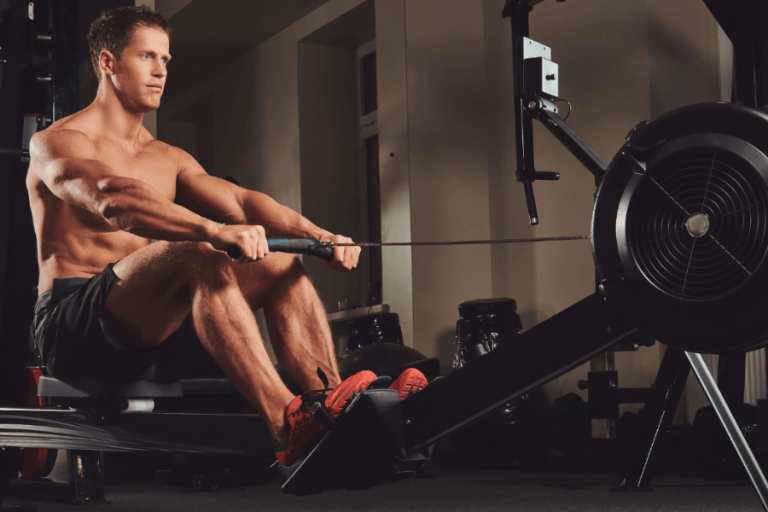
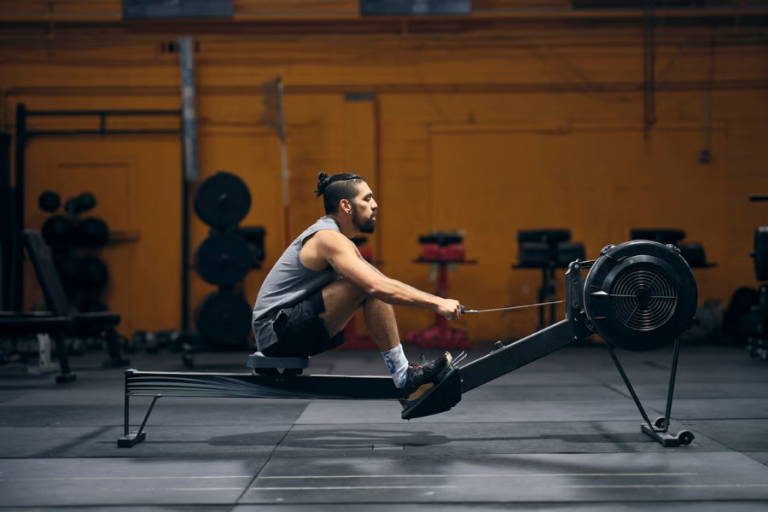
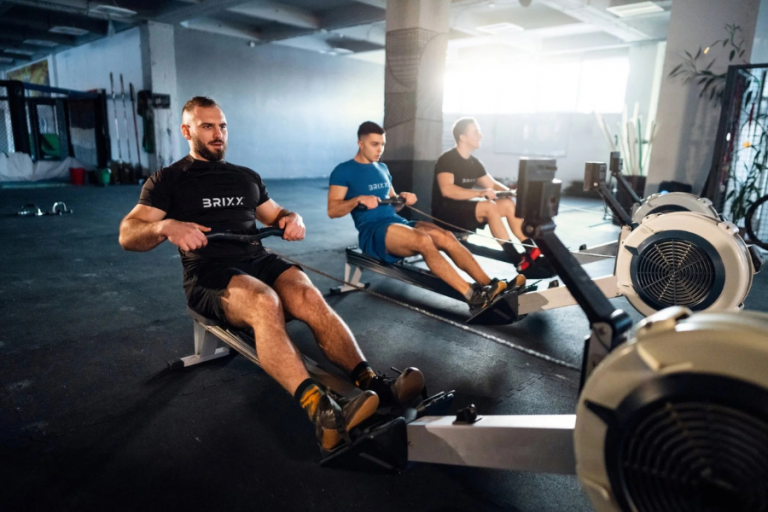
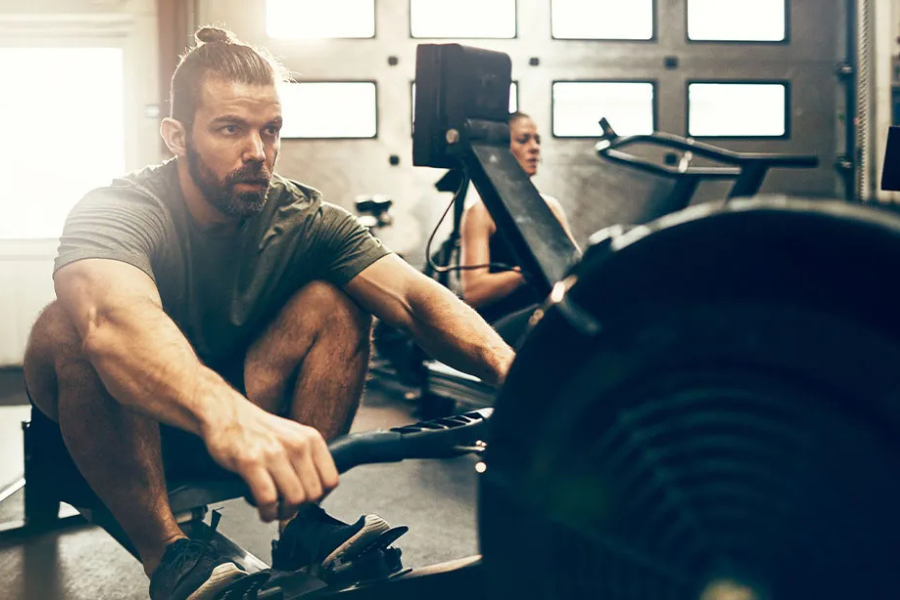
Begin by sitting tall on the rower with your feet strapped in and your knees bent. Grip the handle lightly, keeping your wrists straight. As you start each stroke, push powerfully with your legs while bracing your core. Once your legs are straight, hinge at your hips and lean back slightly to follow through with a strong pull of the handle toward your lower chest. Then do the reverse motion to return to the starting position: extend your arms, hinge forward, and bend your knees.
If you notice lower-back discomfort, pause to check that you’re generating momentum from your legs rather than slumping through your spine. A supportive posture in your core and upper body helps you maintain a smooth stroke. You’ll also want to keep your shoulders relaxed and avoid tensing up around your neck. Prioritizing technique ensures you can work harder without risking strain and sets a solid foundation for more advanced workouts.
Use interval workouts effectively
Intervals are one of the most powerful strategies for maximizing fat loss on the rowing machine. High-intensity interval training, or HIIT, alternates intense rowing bursts with short recovery periods. By challenging your cardiovascular system, intervals can help you burn more calories both during and after your workout.
A basic interval session might look like this: Row at a near-maximal effort for 30 seconds, then slow down for 60 seconds of easy rowing. Repeat for a total of 8 to 10 rounds. Choose a pace that pushes you out of your comfort zone, but not so fast that your form dissolves.
Try different time formats once you’re comfortable with shorter intervals. You can do 40 seconds on and 20 seconds off, or row a specific distance at an intense pace, followed by a gentle paddle. The more you mix it up, the more your body has to adapt, which can reignite fat-burning results when progress plateaus.
Try steady-state endurance sessions
Not every rowing machine workout for fat loss has to be an all-out sprint. Steady-state workouts, where you row at a moderate intensity for a continuous block of time, also have their place. This style builds your aerobic base and can be less taxing on your joints compared to high-intensity intervals.
Begin with 15 to 20 minutes of consistent rowing at a pace you can sustain without feeling winded. If you need breaks, slow your pace rather than stopping entirely. Over time, increase your session length in five-minute increments. Many people find that 30-minute steady-state rows several times a week help them maintain cardiovascular fitness while supporting healthy weight loss.
For a deeper challenge, aim to push your split times (the number of minutes and seconds it takes to row 500 meters) gradually downward. Keep a close eye on your breathing and form. If you notice your back rounding or you’re gasping for air, ease up slightly to regain control. Consistency in technique is what makes these longer sets beneficial and sustainable.
Include full-body strengthening moves
Although rowing itself builds muscular endurance, combining it with off-rower exercises can enhance fat loss even further. Strengthening your body alongside cardio helps you preserve lean muscle mass, which is critical for a healthy metabolism.
If you prefer an integrated workout, try adding a circuit of bodyweight moves before or after your rowing session. Push-ups, squats, and planks fit almost any routine, and they dovetail perfectly with the pulling action you get on the rower. You can also do a quick set of lunges or resistance-band exercises. These moves will help shore up areas that the rower hits less directly, giving you balanced muscle development.
You’ll find that mixing in some strength work keeps your routine interesting and boosts your muscular power on the rower. It also gives you better posture while rowing, so you can sustain longer workouts with less fatigue. If you have time, designate one or two days a week to focus on weight training or targeted bodyweight workouts. This balanced approach sets you up for greater overall fat loss and better physical performance.
Monitor and maintain steady progress
Whether you’re training at home or frequenting a gym, tracking progress is the key to staying motivated. The rower’s performance monitor gives you quick access to split times, distance traveled, and overall calories burned. Keeping a simple log of these numbers makes it easy to set goals and see how far you’ve come.
Below is a quick example of how you might record your outcomes after each session:
- Date of session
- Interval or steady-state routine performed
- Average split time or total meters completed
- Subjective difficulty rating (like 1-5)
By reviewing these details, you’ll notice trends and identify areas where you can improve. Perhaps you’ll find yourself shaving seconds off your splits every week, or completing higher total distances in the same amount of time. You might even spot signs that you need an extra recovery day or prefer shorter, more frequent sessions.
Remember that fat loss doesn’t happen overnight. It’s the result of steady improvements in your workouts and consistent attention to your nutrition and sleep. A rowing plan that challenges you continually and respects your body’s need for rest can be the perfect recipe for losing weight and keeping it off.
Take a moment to reflect on how you’ll start. You could begin with ten minutes of easy rowing each day to build confidence, or jump right into intervals if you already have a solid fitness base. The most important point is consistency. A few well-structured workouts every week will likely deliver more benefits in the long run than sporadic, high-intensity efforts that leave you exhausted.
Try one shift in your routine this week, such as adding one interval session or extending your steady-state row by five extra minutes. You might be surprised at how quickly your performance improves when you make small, intentional adjustments. Embrace the power of the rowing machine, stay patient, and watch as both your fitness and your fat loss journey gain momentum.
About the Author