A rowing machine might look straightforward, but it can be a powerful tool for improving your cardio, boosting endurance, and burning calories more efficiently. When you combine rowing with interval training—short bursts of intense effort followed by recovery periods—you unlock a workout method that challenges every muscle group while helping you push past fitness plateaus. Rowing machine interval training is especially beneficial if you want to strengthen your core, increase stamina, and work different muscle sets in a time-efficient way. If you’re ready to make the most of your rowing workouts, keep reading for practical tips and strategies that will support your progress.
Many men turn to running or cycling for cardio, but rowing can pack a stronger full-body punch in less time. By engaging your legs, core, and upper body all at once, rowing boosts your overall strength and muscular endurance. Intervals add an extra layer of challenge, forcing your heart rate higher and improving both aerobic and anaerobic capacity. Whether you’re new to rowing or looking to level up your current routine, interval training helps you work harder while still getting ample recovery.
Embrace interval workouts
Interval workouts alternate between intense rowing segments and brief breaks or slower strokes. This approach eliminates boredom, keeps your body guessing, and leads to greater cardiovascular benefits than maintaining a steady pace. You’ll see faster improvements in power output, calorie burn, and endurance. Plus, there’s a mental advantage to knowing each high-intensity push is followed by a period of rest.
Consider these benefits of interval sessions:
- Increased calorie burn in a shorter timeframe
- Better cardiovascular health by challenging both aerobic and anaerobic systems
- Improved speed, power, and stamina for other sports or activities
Intervals can be adjusted for all fitness levels. If you’re a beginner, shorter high-intensity bursts (like 15-20 seconds) are a great starting point. More experienced rowers might tackle intervals up to a minute or longer. Remember that the key is pushing yourself to near maximum effort during the work phases.
Gather what you need
Rowing machine interval training doesn’t require a massive amount of gear, but you’ll want a few essentials to stay comfortable and safe. First, choose a rowing machine that fits your home or gym environment and provides a smooth stroke. Many modern machines have monitors that track distance, time, and stroke rate, making it easier to manage intervals.
Next, wear gear that allows full range of motion through your hips, back, and shoulders. Lightweight shorts or pants, a breathable top, and supportive shoes or cross-trainers are ideal. Keep a water bottle within arm’s reach because proper hydration helps maintain performance during intense work intervals.
If your machine’s monitor includes programmable interval settings, it’s worth taking a moment to learn how to use them. Having structured intervals pre-set frees you from messing with settings mid-workout and allows you to focus on your performance. Most models let you enter a specific ratio of work time to rest time. If not, a simple stopwatch or smartphone timer also does the job.
Use correct rowing technique
Before launching into intervals, spend some time honing your form. Rowing effectively is about more than just pulling the handle. Good technique maximizes your power output and minimizes the risk of strain or injury.
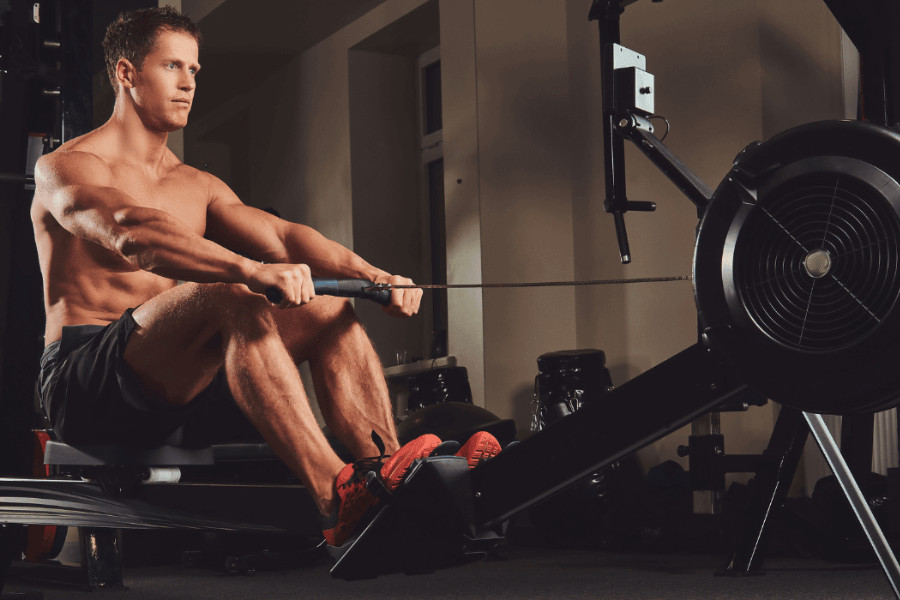
- The catch: Begin with your knees bent, arms straight, and torso slightly forward. The handle should be just in front of your shins.
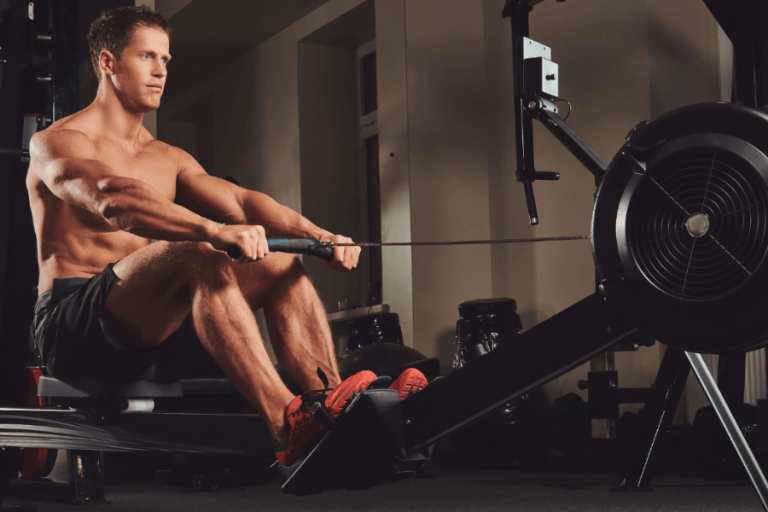
- The drive: Push through your legs first, then hinge your hips backward, and finally pull the handle toward your chest. This sequence engages large muscle groups in your legs, core, and upper body in one smooth motion.
- The finish: Lean back slightly with your legs fully extended and handle pulled in to your sternum. Keep your elbows tucked and your shoulders relaxed.
- The recovery: Reverse the motion by extending your arms forward, hinging forward at your hips, and bending your knees to return to the catch position. Go slower on the recovery than on the drive to help your muscles reset.
Focusing on proper form helps each stroke become more efficient, which is especially important when you switch to high-intensity intervals. If your technique starts to slip, scale back until you can row without compromising form.
Structure your intervals
Designing an effective interval workout for the rowing machine is about finding the right balance between high-intensity effort and rest. Your work intervals should feel challenging enough that you couldn’t sustain that pace for much longer than the allotted time. Recovery intervals let your heart rate drop to prepare for the next burst.
Here’s a straightforward structure to begin with:
• Warm-up: 5 minutes of easy rowing at a relaxed pace
• Intervals: 30 seconds of intense rowing, followed by 30 seconds of light rowing or rest. Repeat 8-10 times.
• Cool-down: 2-3 minutes of gentle rowing to return your breathing to normal
Feel free to adjust these numbers based on your fitness level. If 30 seconds of all-out rowing is too intense in the beginning, try 20 seconds instead. More advanced users can stretch the work period to 45 or 60 seconds. Over time, you’ll sense when you’re ready for longer or more frequent intervals.
Don’t forget variety. You might try pyramid intervals (20 seconds work, 20 rest, 30 work, 30 rest, 40 work, etc.) or progressive intervals that slowly lengthen the work segments. Mixing up your routine challenges your body in new ways while keeping your workouts interesting.
Measure your progress
Tracking your progress is a great way to stay motivated and gauge how interval training is improving your fitness. Many rowing machines track strokes per minute, split times (the time it takes to row 500 meters), total distance, and calories burned. Monitoring these stats helps you set tangible goals, such as lowering your average split time or increasing your total output.
You might record data in a workout journal or digital spreadsheet. Every few sessions, check how your times or total meters are trending. Even small improvements matter. If you notice your split times dropping or your stamina increasing, you’ll know you’re on the right track. On the flip side, tracking can also reveal if you’re skipping sessions or not pushing yourself enough, giving you an opportunity to adjust.
Avoid common mistakes
Rushing into rowing machine interval training can lead to burnout or injury if you’re not careful. One common mistake is starting with intervals that are too long or too intense. You want to challenge yourself, but not so much that your form collapses or you dread your next session. Begin conservatively, then progress as your body adapts.
Another mistake is overlooking rest and recovery. Intervals are demanding, so be sure to build in rest days or lighter workout sessions. This downtime lets your muscles heal and grow stronger. It also helps prevent overuse issues in your lower back, knees, and shoulders—common trouble spots if your technique is off or you’re pushing too hard.
Finally, don’t slouch on your form as you fatigue. Rounding your back or twisting your torso saps power and can strain muscles. If you notice your posture slipping, slow down and refocus on your technique.
Keep challenging yourself
Rowing machine interval training should evolve as you get stronger. When you find your current intervals less challenging, consider tweaking the work-to-rest ratio, adding an extra interval, or extending the session length. If your machine’s monitor allows you to track a heart rate, watch how quickly your heart rate recovers between intervals. Quicker recovery often indicates improved fitness and might mean you’re ready to kick things up a notch.
You can also incorporate strength moves, like alternating intervals of rowing with bodyweight exercises off the machine. For example, row intensely for 45 seconds, then hop off for a set of push-ups or squats before returning for the next interval. This combo approach enhances muscle development and keeps your heart rate high.
Pay attention to how your body responds over time. You’ll likely notice more muscle definition, better posture, and greater endurance in other activities. Rowing builds a solid aerobic base and can take your fitness to new heights when combined with careful planning and the right mindset.
Interval training on a rowing machine is one of the most effective ways to transform your cardio routine. By balancing intense effort with strategic rest, you can maximize your health gains and enjoy a workout that never seems stale. Remember to prioritize proper form, track your progress, and adjust your intervals to match your evolving fitness level. With consistency and determination, you’ll soon be reaping the rewards of rowing for a stronger, healthier body.
About the Author