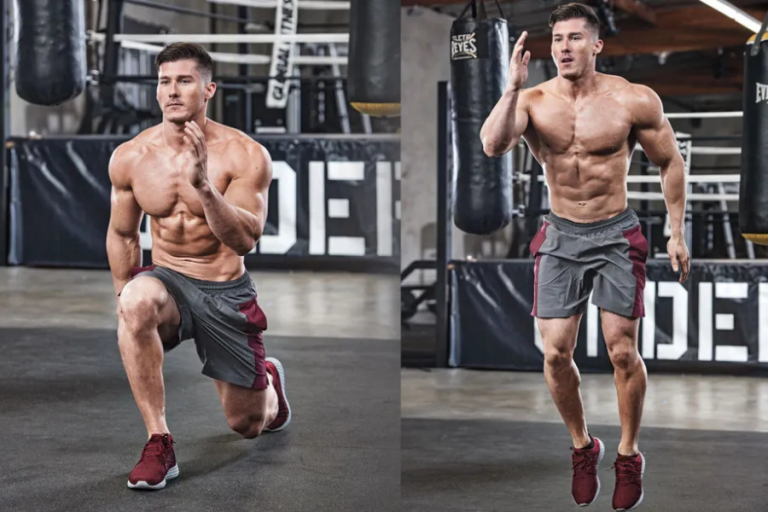
A resistance band and a few feet of space are all you need to build strong, defined abs. Resistance band ab workouts for men challenge your core without heavy weights, protect your joints, and fit easily into a busy schedule.
Below, you will learn why bands work so well for your midsection, how to use them safely, and a complete routine you can follow at home or at the gym.
Why resistance bands work for men’s abs
Your core does a lot more than just flex your spine. Its main job is to resist movement so your spine stays stable while your arms and legs move. That is exactly what resistance bands are good at training.
When you pull a band, the tension increases as it stretches. This linear variable resistance makes your muscles contract harder at the point in the movement where they usually get a break. Research and coaching guides note that this variable resistance can engage your core more effectively than many traditional bodyweight moves because the band keeps trying to pull you out of position as you move through the range.
For ab training, that means you can:
- Work your core harder without loading your spine with heavy weights
- Train stabilizing muscles like your obliques and transverse abdominis, not just your six pack
- Get a joint friendly workout that you can repeat several times per week
Resistance band ab workouts for men are also portable and inexpensive, so you can build a routine that travels with you instead of depending on a full gym.
Strength versus endurance in ab training
If you think ab training is all about heavy resistance and low reps, it helps to rethink your goal. Your abdominal muscles support your posture and protect your spine all day. That means they are built for endurance.
For most resistance band ab workouts for men, you will make faster progress if you prioritize time under tension and higher reps instead of max resistance. Several coaching guides recommend low or moderate resistance with more repetitions to match the real world job of your core.
You can still get stronger. You are just focusing on the kind of strength that helps you:
- Hold a plank without shaking
- Maintain solid posture during heavy lifts
- Stay stable and balanced during sports or physical work
A good starting point is 2 to 3 sets of 10 to 20 controlled reps per exercise or 20 to 40 seconds of work if you are holding a static position.
Choosing the right bands and setup
You do not need a big collection of equipment, but choosing bands that match your current level makes your workouts safer and more effective.
Flat loop bands and long tube style bands both work well for abs. Mini loop bands are great for moves like bridges and plank variations where you loop the band around your legs or arms. Longer bands let you set up chops, lifts, and presses that challenge your core against rotational or diagonal forces.
When you choose a band:
- Start with a light or medium band if you are new to training or new to bands
- Move to heavier bands as you can complete all reps in good form
- Make sure the band is long enough that you can set it up without having to overstretch it
You can anchor a long band around a sturdy post, squat rack, heavy piece of furniture, or a door anchor attachment. Whatever you choose, test the anchor by gently pulling on the band before you start the exercise.
Safety basics before you begin
Resistance bands are generally very safe, but you still want to respect the tension they create.
Check your bands before every workout. Look for small tears, thin spots, or cracks, especially near the ends where bands attach to handles or anchors. The research notes that inspecting bands regularly helps you avoid snapping injuries that can happen if a worn band suddenly breaks under tension.
As you move, pay close attention to how you control the band while it is lengthening. The eccentric part of the movement, when your muscles are lengthening under tension, is where a lot of strain happens. Slowly releasing tension rather than letting the band snap back reduces the risk of muscle and connective tissue injury.
A simple rule of thumb: if you cannot control the band smoothly through the full range of motion, the resistance is too heavy for that exercise today.
Key resistance band ab exercises for men
Below are core focused movements that target different areas of your midsection. You can mix and match them or use the full workout later in this guide.
1. Banded bridge
The banded bridge is a solid beginner friendly move that activates your glutes, hip abductors, and lower back stabilizers, all of which support your core.
How to do it:
- Lie on your back with knees bent and feet flat on the floor, hip width apart.
- Place a mini band just above your knees.
- Press your knees slightly outward against the band to create tension.
- Brace your abs and squeeze your glutes, then lift your hips until your body forms a straight line from shoulders to knees.
- Hold for 1 to 2 seconds at the top, then lower slowly.
Aim for 12 to 15 reps. Focus on keeping your ribs down and your core engaged so you do not over arch your lower back.
2. Mermaid twist
The mermaid twist targets your obliques while teaching you to rotate through your midsection in a controlled way.
How to do it:
- Sit on the floor with your legs folded to one side in a mermaid position.
- Anchor one end of a long band to a low point behind you. Hold the free end with both hands.
- Sit tall with your chest up and core braced.
- Rotate your torso away from the anchor, pulling the band across your body like a gentle wood chop.
- Control the rotation back to the start without letting the band yank you.
Perform 10 to 15 reps on each side. Keep the movement in your torso and avoid twisting your knees or ankles.
3. Banded dead bug
The banded dead bug is a powerful way to train the transverse abdominis, the deep muscle that wraps around your midsection and stabilizes your spine.
How to do it:
- Lie on your back with your arms extended toward the ceiling and your hips and knees bent at 90 degrees.
- Loop a light band around your feet or hold a long band that is anchored overhead so there is gentle tension.
- Press your lower back lightly into the floor and brace your abs.
- Slowly extend your right leg and left arm while keeping the other knee and arm in place.
- Move only as far as you can without your lower back lifting off the floor, then return to the starting position and switch sides.
Work for 6 to 10 slow reps per side. The goal is precision and control, not speed.
4. Banded plank walk
The banded plank walk turns a standard plank into a dynamic move that challenges your abs, shoulders, and hips at the same time.
How to do it:
- Place a mini band around your wrists. Get into a high plank position with your hands under your shoulders and your body in a straight line.
- Brace your core and squeeze your glutes.
- Step your right hand out to the side a few inches against the band, then bring your left hand to follow so you are back in shoulder width position.
- Continue “walking” your hands sideways for 3 to 5 steps, then go back the other way.
Keep your hips level and your torso as still as possible. Start with 20 to 30 seconds of work and build up.
5. Pallof press
The Pallof press is one of the best resistance band ab exercises for training your core to resist rotation.
How to do it:
- Attach a long band to a sturdy anchor at about chest height.
- Stand sideways to the anchor so the band is to your right or left.
- Hold the band close to your chest with both hands and step away from the anchor until you feel tension.
- Brace your core and squeeze your glutes, then press your hands straight out in front of your chest.
- Hold for 1 to 2 seconds and then bring your hands back to your chest without letting your torso twist.
Perform 10 to 15 reps on each side. You should feel your midsection working to keep your body facing forward.
6. Half kneeling chop and lift
These two moves train your abs and obliques through diagonal patterns that carry over well to sports and everyday tasks.
For the half kneeling chop:
- Anchor the band high above shoulder height.
- Get into a half kneeling lunge position with the knee closest to the anchor on the ground.
- Hold the band with both hands above your shoulder closest to the anchor.
- Pull the band diagonally across your body toward the hip opposite the anchor as you rotate your torso.
- Control the band back to the start.
For the half kneeling lift, reverse the direction. Anchor the band low, start with your hands near the hip closest to the anchor, then pull up and across your body.
Use 8 to 12 controlled reps for each direction and each side.
7. Resisted reverse crunch
The resisted reverse crunch focuses on your lower abs while keeping tension through your whole core.
How to do it:
- Wrap a band around your feet and hold the ends in your hands. Lie on your back.
- Raise your legs so your knees are bent at 90 degrees and your shins are parallel to the floor.
- Press your lower back into the floor and brace your core.
- Use your abs to curl your hips slightly off the floor, pulling your knees toward your chest against the band.
- Slowly lower back down until your toes lightly touch the floor.
Start with 10 to 15 reps. Avoid using momentum and keep the movement small and controlled.
Sample resistance band ab workout for men
You can turn these exercises into a simple circuit that trains your entire core in one session.
Try the following routine 2 to 3 times per week:
- Banded bridge, 12 to 15 reps
- Banded dead bug, 6 to 10 reps per side
- Pallof press, 10 to 15 reps per side
- Half kneeling chop, 8 to 12 reps per side
- Half kneeling lift, 8 to 12 reps per side
- Banded plank walk, 20 to 30 seconds
- Resisted reverse crunch, 10 to 15 reps
Perform one set of each exercise in order, then rest for about 60 seconds. Repeat the circuit 3 to 4 times depending on your current fitness level and the time you have available. As you get stronger, you can add resistance, increase reps slightly, or add another round.
Quick guideline: finish your last rep feeling like you could do 1 or 2 more with perfect form. If you feel completely spent or your form breaks down, lower the resistance or cut one or two reps.
How to progress safely and avoid common mistakes
As you get more comfortable with resistance band ab workouts for men, it is tempting to jump straight to heavy bands. Instead, think in terms of small, steady progress.
You can progress by:
- Increasing the time under tension, such as holding the extended position of a Pallof press for a few extra seconds
- Adding one or two reps per set once the current range feels easy
- Moving a step farther from the anchor point so the band starts with more tension
Watch out for these mistakes that can limit your results:
- Letting your lower back arch during dead bugs and bridges
- Rushing through reps and using momentum instead of muscle control
- Holding your breath instead of breathing steadily through each movement
Finally, remember that visible abs depend on body fat levels as well as muscle. A consistent resistance band routine, paired with smart nutrition and regular cardio, will help you build a strong core that supports better posture, balance, and performance, whether or not you are chasing a six pack.
Start by picking two or three of the exercises above and add them to the end of your next workout. Once they feel familiar, build up to the full circuit and notice how much more stable and powerful your midsection feels in everything you do.
About the Author