Image by Flux
A solid workout does not end when you rerack the weights. What you eat in the hour afterward matters just as much. The right quick post-workout snacks help you rebuild muscle, restore energy, and walk into your next session feeling ready instead of wrecked.
In this guide you will learn what actually needs to be in a post-workout snack, how much protein and carbs to aim for, and simple snack ideas you can throw together even when you are tired and short on time.
Why your post-workout snack matters
During a tough lift, run, or conditioning session, you burn through stored carbohydrates, called glycogen, and create tiny tears in your muscle fibers. That is how you get stronger, but only if you give your body the raw materials it needs to repair and rebuild.
Experts recommend that you eat a combination of carbohydrates and protein shortly after your workout to support recovery and help you move toward your fitness goals, because glycogen is depleted and muscle protein is broken down during exercise (Healthline). A balanced snack can also help you avoid the post-gym raid on highly processed foods and sugary drinks, which most health organizations suggest limiting for long-term health (MedlinePlus).
You do not need a giant meal the second you put the weights down. Think of your post-workout snack as a small, targeted refuel, especially useful when your next full meal is more than an hour away.
What makes a great quick post-workout snack
A snack that actually helps your gains covers three bases: protein, carbs, and fluids. Healthy fats are a bonus, not the main event.
Protein: repair and build muscle
Strength work breaks down muscle tissue. Protein supplies the amino acids that rebuild it. Several organizations, including the International Society of Sports Nutrition, suggest that you aim for roughly 20 to 40 grams of high-quality protein every 3 to 4 hours, and to include a serving within about 2 hours after exercise to stimulate muscle protein synthesis and support muscle growth (Healthline).
Other experts narrow this window even more and recommend 15 to 30 grams of whey protein within 45 minutes post-workout for optimal recovery (Abbott Nutrition). For a snack, landing in the 15 to 25 gram range is a practical sweet spot.
Good protein options include:
- Greek yogurt or cottage cheese
- Eggs
- Chicken or turkey
- Fish and shellfish
- Tofu, tempeh, beans, or lentils
- Whey or plant-based protein powder
Aim for at least 7 grams of protein even in a lighter snack so you actually support recovery and stay fueled after your session (EatingWell).
Carbohydrates: refill your tank
Carbs are your main workout fuel, especially for lifting, sprinting, and long conditioning sessions. After training, your muscles are hungry for carbs so they can refill glycogen stores.
Some sports nutrition guidelines suggest that pairing carbs with protein within a few hours of exercise, at roughly 0.4 grams of carbs and 0.1 to 0.2 grams of protein per pound of body weight per hour, can maximize glycogen replenishment and recovery, especially for endurance work (Healthline). For day to day training, you do not need to overthink the math. Just include a solid source of carbs in every post-workout snack.
You will get more steady energy if you focus on complex carbohydrates, such as whole grains, brown rice, legumes, sweet potatoes, and fruits like bananas, rather than sugary options that spike and crash your blood sugar (Vogue).
Fats: support hormones and reduce soreness
Fat is slower to digest than protein and carbs, but it still has a place after your workout. Contrary to popular belief, adding some fat to your post-workout meal, such as whole eggs or whole milk, does not seem to slow muscle recovery and might even support muscle protein synthesis in some cases (Healthline).
Healthy fats like those in salmon can also help reduce muscle inflammation and soreness while supporting overall recovery (Cedars-Sinai). Just keep the fat serving moderate so your snack stays easy to digest.
Hydration: the forgotten pillar
You lose fluid and electrolytes every time you train. Replacing them is non negotiable. One simple rule of thumb is to drink 2 to 3 cups of water for every pound you lose during exercise, and if your session lasts longer than an hour, a source of electrolytes such as coconut water can help replenish what you sweat out (Cedars-Sinai).
You do not have to overcomplicate your drink choice. Water plus a balanced snack will cover most everyday training.
How soon you should eat after training
If you just finished a tough lifting session or long run, aim to eat your quick post-workout snack within about 45 to 60 minutes. That window helps you take advantage of your body’s heightened ability to use protein for muscle repair and to refill glycogen stores.
Several experts interviewed on recovery suggest that a snack or meal within 45 minutes to an hour is especially helpful if your goal is building muscle or if the workout was strenuous (Vogue). For lighter activity you can comfortably wait until your next normal meal, as long as that meal still includes protein, complex carbohydrates, and fluids.
Think of timing as a sliding scale. The more intense or longer your session, the more that 1 hour window matters. If your training is shorter or easier that day, timing is less critical as long as your overall daily protein and calories are on point.
Quick post-workout snack ideas under 200 calories
You might not always want a hefty meal after lifting, especially if you train early or close to bedtime. That is where small, targeted snacks shine. Some guidelines suggest that snacks under about 200 calories can function as effective mini meals to support recovery while still helping you manage weight and blood sugar (MedlinePlus).
Here are quick options you can build into your routine.
1. Hard-boiled eggs with fruit
Two large hard-boiled eggs give you about 148 calories and around 12.5 grams of protein, plus roughly 338 milligrams of choline, which supports brain and muscle function (Everyday Health). Add a small orange or a handful of berries and you have a simple combination of high quality protein, healthy fats, and fast digesting carbohydrates.
You can boil a batch of eggs at the start of the week so you always have something ready to grab as you head out of the gym.
2. Greek yogurt with strawberries
Plain Greek yogurt is naturally high in protein and low in sugar, which makes it a reliable base for quick post-workout snacks. A serving of about 6 ounces of plain Greek yogurt with strawberries can deliver over 25 grams of protein plus fiber and vitamin C, all for under 200 calories (Everyday Health).
If you want more carbs, stir in a spoonful of oats or a drizzle of honey. If you are watching calories, keep toppings light and let the fruit do the heavy lifting.
3. Cottage cheese snack jar
Cottage cheese is one of the most underrated muscle snacks. One cup packs about 28 grams of protein and also brings sodium, which helps replace electrolytes, making it especially useful if you train in the evening and want a slow digesting protein before sleep (Abbott Nutrition).
Layer cottage cheese into a jar with chopped cucumbers, bell peppers, cherry tomatoes, and roasted chickpeas. You get protein, crunch, fiber, and carbs in a portable container you can keep in the fridge for a few days (EatingWell).
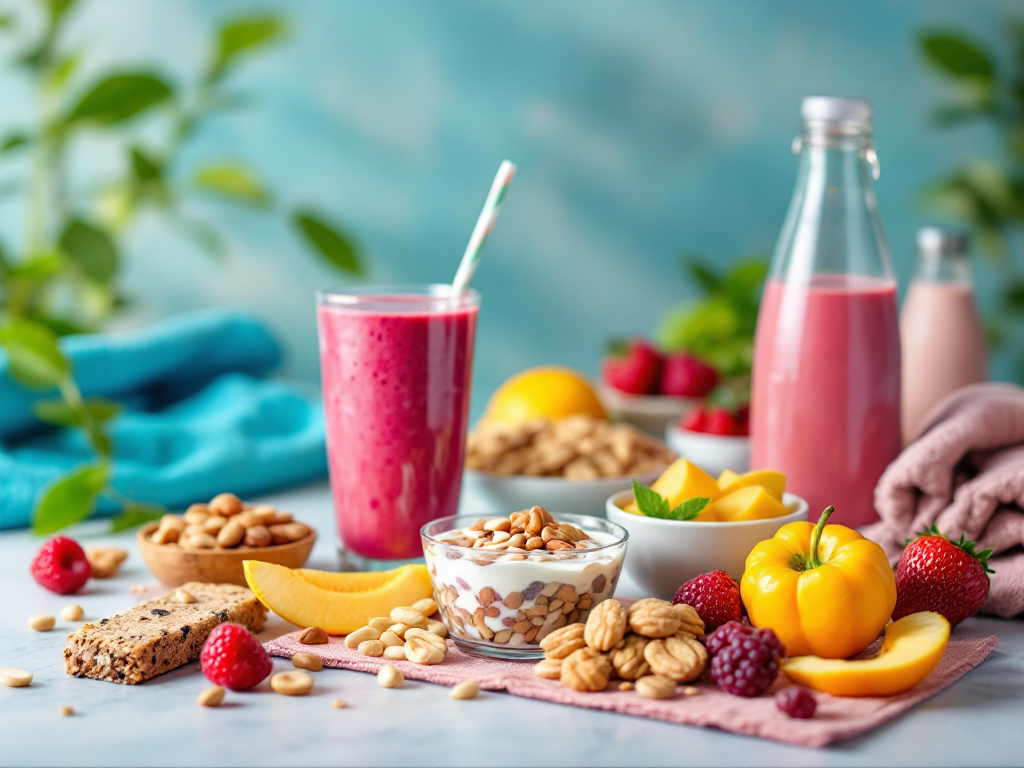
4. Fruit and yogurt smoothie
On days you do not feel like chewing much after a brutal session, a smoothie is often the easiest way to get what you need in one go. A simple blend of 1 cup frozen blueberries, 3/4 cup nonfat milk, and 1/4 cup nonfat Greek yogurt comes out to about 178 calories, with protein, calcium, and antioxidants in every sip (Everyday Health).
If your workout was longer than an hour, you can bump up the calorie and protein content by adding a scoop of whey or plant-based protein, or by including oats or a banana.
A well built smoothie can function as a complete post-workout mini meal that hits protein, carbs, and hydration in a single glass.
5. Apple slices with peanut butter
When you want something that tastes like a treat but still checks the recovery boxes, reach for fruit and nut butter. A small apple with 1 tablespoon of peanut butter gives you around 183 calories, vitamin C from the fruit, and protein plus healthy fats from the peanut butter (Everyday Health).
This combo is easy to pack for after work or after a lunchtime gym session. If you need more protein, pair it with a small carton of milk or a boiled egg.
6. Chocolate milk
Chocolate milk might sound like something from childhood, but it fits the science on quick post-workout snacks surprisingly well. An 8 ounce glass of fat free chocolate milk provides roughly 168 calories, about 8.5 grams of protein, and 318 milligrams of calcium, on top of the carbs needed to replenish glycogen (Everyday Health).
Many sports dietitians point to chocolate milk as a practical option when you need something you can buy at almost any convenience store and drink right away. Just keep portions reasonable and look for options without a long list of additives.
Higher protein options when you are really pushing it
On heavy training days you may want to lean into snacks that approach the higher end of the recommended protein range.
- Scrambled eggs in a whole wheat pita. Two large scrambled eggs give you about 13 grams of high quality protein, and when you tuck them into a whole wheat pita with vegetables you add another 6 grams of protein plus about 36 grams of carbs to refill glycogen (Abbott Nutrition).
- Grilled chicken strips with vegetables and hummus. About 16 grams of lean protein for only 82 calories from the chicken, plus carbs and fiber from the vegetables and hummus, gives you a filling but relatively low calorie option that supports muscle repair (Abbott Nutrition).
- Greek yogurt parfait with protein powder. Nonfat plain Greek yogurt starts you off with around 17 grams of protein. If you mix in whey protein powder, a little honey, dark chocolate chips, and fresh berries, you end up with a dessert style snack that still delivers a serious protein and carb punch for recovery (Abbott Nutrition).
These are perfect when you know your next full meal is several hours away or when you are in a heavy strength or hypertrophy phase.
Putting it all together for your routine
To make quick post-workout snacks work in real life, plan ahead so you are not left grabbing whatever is closest when you are starving.
You can start by picking two or three of the ideas above and rotating them through your week. Keep the ingredients stocked and prep what you can in advance, like boiling eggs, grilling chicken, or portioning out yogurt. If you train away from home, pack your snack in your gym bag or cooler so it is ready as soon as you finish.
Most importantly, pay attention to how you feel. A balanced snack that combines protein, complex carbs, and fluids within about an hour after training should leave you less sore, more energetic, and better prepared to lift heavy again. If you feel consistently drained or hungry, slowly adjust your portions upward or add a bit more carbohydrate until recovery feels solid.
Treat your post-workout snack as fuel for your next win in the gym, not just a reward for the session you finished. Over time, that small habit can make a noticeable difference in your strength, muscle, and overall health.
About the Author