A lot of what you hear about men’s sexual health focuses on quick fixes or one-size-fits-all advice. In reality, your sexual health is deeply tied to your heart, hormones, mental health, and everyday habits. Understanding the basics helps you protect your body, your confidence, and your relationships.
This guide walks you through the key facts about men’s sexual health, what is normal, what is not, and when it is smart to talk with a doctor.
Understand what “sexual health” really means
Men’s sexual health is more than erections or performance. It includes four main areas that all interact with each other:
- Sexual desire (libido)
- Arousal and erections
- Orgasm and ejaculation
- Emotional satisfaction and relationship connection
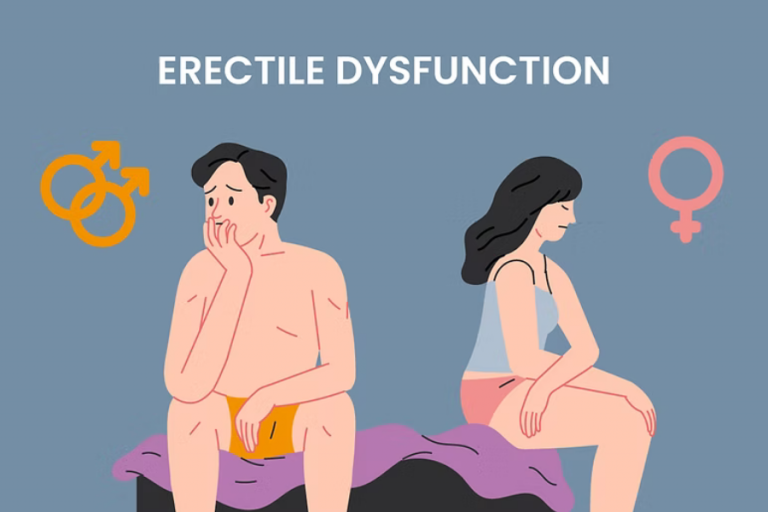
Sexual dysfunction can affect any of these areas and can happen at any stage of the sexual response cycle. Up to 31% of males experience some form of sexual dysfunction, and between 30% and 40% of people will face it at some point in life (Cleveland Clinic).
Feeling less interested in sex once in a while or having an off night is normal. Ongoing changes that last for several months are worth paying attention to and talking about.
See how erections actually work
A healthy erection is mostly about blood flow and blood vessels. When you are aroused, nerves in your penis signal blood vessels to relax so more blood can flow in and get trapped. This process depends on a molecule called nitric oxide, which helps keep blood vessels open so you can get and maintain an erection (uihc.org).
Medications for erectile dysfunction, such as Cialis and Levitra, work by boosting the effects of nitric oxide and improving blood flow to the penis (uihc.org).
Because erections rely so heavily on blood vessels, anything that harms your arteries, such as smoking, high blood pressure, diabetes, or high cholesterol, can show up first as erection problems. That is a big reason erectile dysfunction often overlaps with heart disease (JAMA Network Open).
Recognize common sexual problems in men
You might assume sexual problems are rare, but they are not. The most common issues include:
- Low libido
- Erectile dysfunction (ED)
- Premature or delayed ejaculation
- Trouble reaching orgasm
- Pain with sex
These problems can appear at any age, although they are more common after 40 (Cleveland Clinic). Many men wait months or even years to talk to a doctor about persistent changes in desire, erections, or ejaculation, even though these can be early warning signs of cardiovascular or other serious health problems (Weill Cornell Medicine).
If you notice a change that sticks around longer than a few months or starts to affect your confidence or relationship, that is a signal to have it checked.
Notice how age affects your sex life
Aging does change your sexual response, but it does not mean you are “done” with sex. Most men keep some level of sexual interest into their 60s and 70s (Mayo Clinic).
With age, you might:
- Need more time or more direct stimulation to get aroused
- Find it takes longer to get another erection after orgasm
- Notice changes in firmness or duration of erections
These shifts can be normal. What is not normal is a sudden or severe change in sex drive or erection quality, especially if it comes with fatigue, mood changes, or other symptoms. That kind of change can point to low testosterone or another medical issue that needs attention (WebMD).
Understand testosterone and libido
Testosterone plays a big role in your sex drive, energy, and mood. Levels usually start to drop after age 40 (WebMD). Low testosterone can be caused by conditions such as:
- Diabetes
- Obesity
- Kidney or liver disease
- Hormone disorders
- Testicular damage or some genetic conditions
- Excessive alcohol use
Depression, chronic stress, alcoholism, illicit drugs, fatigue, and certain medications can also drag down your sex drive (Mayo Clinic).
Sometimes the cause is reversible. For example, treating obstructive sleep apnea can restore unusually low testosterone levels and improve sex drive in some men (Mayo Clinic).
Testosterone replacement therapy can help men with confirmed low testosterone due to specific medical problems, but it is not meant to treat normal age-related decline. The FDA warns that using testosterone just for “low T” from aging can raise the risk of heart attack and stroke (WebMD). This is one more reason to work with your doctor instead of self-treating.
See the link between diet, exercise, and erections
Your everyday habits have a powerful effect on your erections and libido. Erectile function and libido are tightly connected to cardiovascular health, hormone balance, and overall fitness. Poor diet and a sedentary lifestyle can damage blood vessels, circulation, and nitric oxide production, all of which are essential for erections (Obsidian Men’s Health).
Diet patterns that support sexual health
A large study of more than 21,000 men ages 40 to 75 found that those who followed a Mediterranean-style diet or a high-quality eating pattern had a significantly lower risk of developing ED, especially if they were under 60 (JAMA Network Open). Men with the healthiest Mediterranean diet scores had about a 22% lower risk of ED if younger than 60.
The dietary pattern linked to lower ED risk emphasizes:
- Plenty of vegetables and fruits
- Nuts, legumes, and whole grains
- Fish and healthy polyunsaturated fats
- Moderate alcohol intake
- Limited red and processed meats and trans fats
Each of these components, such as high intake of vegetables, fruits, legumes, and fish, and low intake of red or processed meats and trans fats, was individually tied to lower ED risk (JAMA Network Open). The study suggests that diet quality is a modifiable risk factor for ED, independent of smoking, BMI, and physical activity.
Personalized dietary guidance that accounts for your unique physiology and sexual health goals can often support sexual function better than generic advice you find online (Obsidian Men’s Health).
Exercise as a natural performance enhancer
Regular exercise improves heart and blood circulation, which is vital for getting blood into the penis during an erection. Both cardiovascular exercise and strength training help. Targeted moves such as Kegels can strengthen pelvic floor muscles that support erection rigidity and duration (uihc.org).
Losing weight reduces inflammation and reactive oxygen species that interfere with nitric oxide, which makes erections easier to achieve and maintain (uihc.org). Specific exercise routines tailored to your health status and limitations can act as powerful natural performance enhancers, not just weight-loss tools (Obsidian Men’s Health).
Lifestyle changes in diet and exercise, especially when combined with medical treatments when needed, offer long-term benefits that improve both sexual wellness and overall quality of life (Obsidian Men’s Health).
Do not ignore stress and mental health
Your brain is a key part of your sex life. High stress levels raise cortisol and other hormones that lower libido and contribute to ED (Obsidian Men’s Health). Stress can also tighten blood vessels and reduce blood flow to the penis, which makes erections more difficult (uihc.org).
There is a strong association between ED and mental health conditions such as depression and anxiety. Treating the underlying psychiatric condition, including with mindfulness or cognitive behavioral therapy, can improve sexual function (Weill Cornell Medicine).
Medication for mental health can sometimes cause sexual side effects, but 50% to 70% of men do not experience these. Working closely with your doctor can often minimize side effects while still treating your mental health effectively (Weill Cornell Medicine).
Be cautious with sexual health supplements
You may see ads promising instant improvements from pills or powders, but most over the counter sexual health supplements are not backed by solid science. A 2015 review in The Journal of Sexual Medicine found little or no evidence that popular men’s sexual health supplements actually improve performance (Harvard Health Publishing).
The FDA does not regulate supplements as strictly as prescription drugs. Some products have been found to contain hidden pharmaceutical ingredients such as PDE-5 inhibitors, or impurities that can cause dangerous reactions (Harvard Health Publishing).
Even the supplements that do have a potential role are not risk free:
- L-arginine can help nitric oxide production, but has been linked to harm in people who have had a heart attack
- Yohimbine may increase penile blood flow, but can cause serious side effects such as high blood pressure and heart damage (Harvard Health Publishing)
On the other hand, lifestyle changes like weight loss, exercise, quitting smoking, limiting alcohol, and healthy eating have strong evidence for improving sexual function by enhancing blood flow and balancing hormones, often more effectively than supplements (Harvard Health Publishing).
Understand medical treatments and when to seek help
If you are dealing with ED, low libido, or other sexual difficulties, you have options. Treatments for ED include PDE-5 inhibitors such as Cialis, Levitra, Staxyn, and Viagra, which all work by improving blood flow to the penis. In more complex cases, surgery, vacuum devices, penile injections, or implants may be recommended (WebMD).
ED medications are effective for many men, but they are not suitable for everyone. They can cause side effects such as headache, indigestion, and back pain, and they are unsafe for men with certain heart or blood pressure issues (Harvard Health Publishing). This is why medical guidance is important.
Other conditions such as benign prostatic hyperplasia (enlarged prostate) can also affect your sex life. BPH can cause frequent and urgent urination and has been linked with worse erectile function, higher risk of premature ejaculation, and reduced sexual satisfaction. Medication and surgery can help manage severe BPH symptoms (WebMD).
Treatment for sexual dysfunction is often successful when it targets the underlying physical or psychological cause. Counseling, education, and better communication with your partner can play a key role in recovery and a satisfying sex life (Cleveland Clinic).
If a sexual problem persists for several months, or significantly affects your wellbeing or relationship, take it seriously and talk with your primary care physician or a specialist.
Put it all together: practical next steps
To support your sexual health starting now, you can:
- Pay attention to patterns, not one-off experiences. Watch for changes in desire, erections, or ejaculation that last at least a few months.
- Support your blood vessels. Move regularly, eat more plants and fish, and cut back on processed meats and trans fats.
- Check in on stress and mood. If you feel burned out, anxious, or depressed, seeking help can improve both your mental health and your sex life.
- Be skeptical of miracle supplements. Focus on proven lifestyle changes and talk to your doctor before trying any product that promises instant results.
- Get professional input early. Your doctor can screen for heart disease, diabetes, hormonal issues, or medication side effects that might be affecting your sexual function.
You do not have to accept sexual problems as “just aging.” With the right information and support, you can protect your sexual health, enjoy intimacy at every age, and use any challenges as a prompt to take better care of your whole body.
About the Author