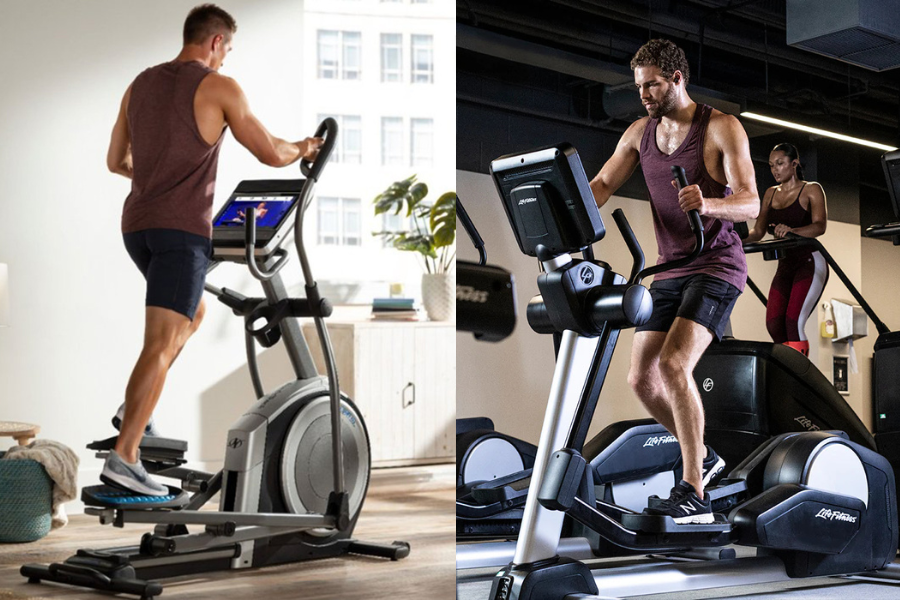
A men’s elliptical workout routine can be one of the simplest ways to get in shape without punishing your joints. Whether you are just getting started with cardio or you want a low impact alternative to running, the elliptical lets you work hard while keeping your knees, hips, and back happier.
Below, you will find easy to follow routines for different goals, plus form tips so every minute you spend on the machine actually counts.
Why the elliptical works so well for men
An elliptical trainer gives you a full body, low impact cardio workout. Instead of pounding the ground like you do when you run, your feet glide along a fixed path. This reduces the ground reaction force on your joints, which limits stress on your knees, hips, and back compared to a treadmill or pavement running.
That makes an elliptical especially useful if you have knee osteoarthritis, hip discomfort, or back issues. Experts note that it can be a primary form of cardio because it conditions your heart and lungs without the impact that often aggravates these joints.
You also engage several major muscle groups at once. Your lower body works hard, including your glutes, hamstrings, quads, calves, and even the small muscles in your feet. If your machine has moving handles and you use them correctly, you can also target your chest, back, shoulders, biceps, triceps, and core. The result is a time efficient session that builds cardiovascular fitness and muscular endurance at the same time.
How much elliptical you really need each week
You do not need to live on the machine to see results. For overall health, aim to match the general aerobic guidelines:
- 150 to 300 minutes of moderate intensity cardio per week, or
- 75 to 150 minutes of vigorous intensity cardio per week
Your men’s elliptical workout routine can hit those numbers in whatever pattern fits your schedule. For example, you might do three 1 hour easy to moderate sessions each week, or shorter higher intensity workouts that add up to 150 minutes.
If you are new to exercise, begin below these targets and gradually build up. You can start with 10 to 20 minutes per session, then add a few minutes every week until 30 minutes of moderate to vigorous effort feels comfortable.
Get your form right first
Good technique makes your workouts feel smoother and helps you avoid aches and strains. Before you focus on speed or resistance, dial in your form.
Stand tall with your chest open and your shoulders gently pulled back. Imagine a string lifting you from the crown of your head. Keep your belly button lightly pulled toward your spine so your core stays active and supports your lower back.
On the pedals, think of pushing your legs down and back, then pulling them up and forward. This full circular motion recruits your quadriceps on the front of your thighs and prevents muscular imbalances. If you only push down, you miss out on part of the movement and may overload certain muscles.
If your machine has moving handles, use them with control instead of just letting them swing. Drive and pull through your arms to involve your upper body and burn more calories. Keep a firm but relaxed grip so your forearms do not overwork.
As you get more comfortable, occasionally let go of the handles and place your hands on your hips or pump your arms at your sides. This forces your core to work harder to keep you balanced, which turns every session into a light core workout as well.
Beginner friendly 20 minute routine
If you are new to cardio or returning after a break, start here. This simple routine builds your endurance without wiping you out.
Think in terms of a rate of perceived exertion, or RPE, on a scale from 1 to 10. Level 1 feels like sitting on the couch, level 10 feels like a full sprint you can only hold for a few seconds.
Try this structure for a 20 minute beginner session:
- Minutes 0 to 5: Easy warm up at RPE 3 to 4. Use low resistance and a comfortable pace to increase your heart rate and loosen your joints.
- Minutes 5 to 15: Steady moderate effort at RPE 4 to 6. Increase resistance slightly and find a pace where you are breathing heavier but can still speak in short sentences.
- Minutes 15 to 20: Cool down at RPE 2 to 3. Lower resistance and slow your pace gradually until your breathing and heart rate start to settle.
You can follow this structure three times per week. As it feels easier, either bump up the resistance a notch or add 2 to 5 minutes to the middle steady portion.
Quick 15 minute HIIT workout for busy days
If you are short on time but want a strong cardio hit, a short high intensity interval training, or HIIT, session works well. Alternating bursts of effort with recovery periods lets you burn more in less time while keeping the overall workout manageable.
Here is a beginner friendly 15 minute HIIT style elliptical routine:
- Minute 0 to 1: Warm up at light resistance. Easy pace.
- Minutes 1 to 2.5: Moderate jog pace at RPE 5. Slightly higher resistance.
- Minutes 2.5 to 3: Fast sprint pace at RPE 8 to 9.
- Repeat the jog and sprint pattern:
- 30 seconds high intensity at RPE 8 to 9
- 1.5 minutes moderate recovery at RPE 4 to 5
Continue until you reach minute 14, then finish with:
- Minutes 14 to 15: Cool down at light resistance and easy pace.
Keep your movements smooth and controlled even during the sprints. If you feel your form slipping, reduce resistance or shorten the sprint slightly. Over time, you can increase your total HIIT duration or push your intensity closer to your limit for part of the session.
Steady 30 minute fat burning routine
If you have half an hour and want a straightforward session that supports weight management, a steady state workout is a good choice. Elliptical training at moderate intensity can burn roughly 270 to 400 calories in 30 minutes for many men, depending on your body weight and how hard you work.
Try this 30 minute outline:
- Minutes 0 to 5: Warm up at RPE 3 to 4, low resistance.
- Minutes 5 to 10: Increase to RPE 5, moderate resistance.
- Minutes 10 to 25: Maintain RPE 5 to 6. This should feel challenging but sustainable, like a strong, steady climb.
- Minutes 25 to 30: Gradual cool down back to RPE 2 to 3.
For extra muscle engagement, change direction every 5 minutes. Pedal forward for 5 minutes to hit your hamstrings and glutes more, then pedal backward for 5 minutes to shift the emphasis to your quads on the front of your thighs. Alternate this pattern during the main 15 minute block.
If weight loss is your primary goal, pair this kind of workout with consistent nutrition, enough sleep, and strength training on other days. Aiming to burn around 400 calories in a focused 30 minute interval workout and maintaining a sensible calorie deficit across your day can support a gradual 1 to 2 pounds per week loss when done safely and steadily.
Upper body focused elliptical session
You can also use your men’s elliptical workout routine to challenge your upper body a bit more. This does not replace traditional strength training, but it adds variety and extra muscle stimulus.
On a machine with moving handles, adjust the settings so your legs work a little less and your arms work more. That usually means increasing resistance and slightly slowing your leg speed so your arms have time to push and pull through the full range of motion.
Try this 20 minute upper body emphasis routine:
- Minutes 0 to 4: Warm up at easy resistance, light use of the handles.
- Minutes 4 to 8: Raise resistance slightly, then focus on driving and pulling with your arms while your legs maintain a comfortable pace.
- Minutes 8 to 16: Alternate 1 minute of strong arm work at RPE 7 with 1 minute at RPE 4 to 5. Keep your torso tall and stable.
- Minutes 16 to 20: Lower resistance and cool down.
If your elliptical does not have moving handles, you can still involve your upper body safely. While maintaining balance and control, you might:
- Hold a light medicine ball and perform gentle chest presses while pedaling.
- Use light dumbbells for controlled curls or overhead presses at a slow pace.
Keep the weights light so your form stays clean and your joints remain comfortable.
Hill and interval combo for advanced calorie burn
Once you are comfortable with the basics, you can combine hill climbs and speed intervals for a tougher workout that challenges your strength and stamina. Adjust both resistance and incline if your machine allows it, and monitor your breathing so you do not redline too early.
Here is a sample 30 minute combo session:
- Minutes 0 to 5: Warm up, low resistance and incline.
- Minutes 5 to 10: Hill climb. Raise incline and resistance to reach RPE 6 to 7. Maintain steady pace.
- Minutes 10 to 15: Low resistance sprints. Lower incline, keep resistance moderate, and alternate 30 seconds fast at RPE 8 to 9 with 1 minute easy at RPE 4.
- Minutes 15 to 20: Second hill climb. Increase incline and resistance a bit more than the first climb if you feel good. Aim for RPE 7.
- Minutes 20 to 25: Second round of sprints at moderate resistance.
- Minutes 25 to 30: Cool down at easy settings.
You can extend the hill intervals or the sprint blocks if you have more time, but keep at least 5 minutes of cool down so your heart rate comes down gradually.
How to progress your routine safely
Progress does not have to be complicated. Small, consistent changes add up. Each week, consider one of these adjustments:
- Add 2 to 5 minutes to one or two sessions.
- Increase resistance or incline by one level for part of your workout.
- Swap one steady state session for a HIIT style workout.
- Add a short backward pedaling block to hit different muscles.
If you are just starting, a smart progression is to begin with 10 minute lower body focused sessions, especially for your quads, then build up toward 30 minutes of moderate to vigorous work. You can also mix easier and harder segments within the same workout and gradually lengthen the harder portions.
Pay attention to how your body feels in the 24 hours after a workout. Mild muscle fatigue is fine. Sharp pain in your joints or lingering soreness that interferes with daily activities is a sign to scale back intensity, duration, or both.
Putting your weekly plan together
To turn these ideas into a practical men’s elliptical workout routine, start with 3 days per week and build toward 4 or 5 as your recovery allows. A sample week might look like this:
- Day 1: 20 minute beginner steady state.
- Day 2: Rest or strength training.
- Day 3: 15 minute HIIT session.
- Day 4: Rest, light walking, or mobility work.
- Day 5: 30 minute steady state or hill and interval combo.
- Day 6 and 7: Rest or active recovery.
Over time, aim to reach that 150 to 300 minutes of weekly cardio, using the elliptical as your primary tool. Combine it with strength training and a realistic nutrition plan, and you will have a balanced approach to better heart health, stamina, and body composition.
Choose one routine from this guide and try it during your next visit to the gym or your next home session. Once it feels natural, adjust the time or intensity a little. Your only job is to keep showing up and letting those small improvements stack up week after week.
About the Author