Why macronutrient distribution matters for fat loss
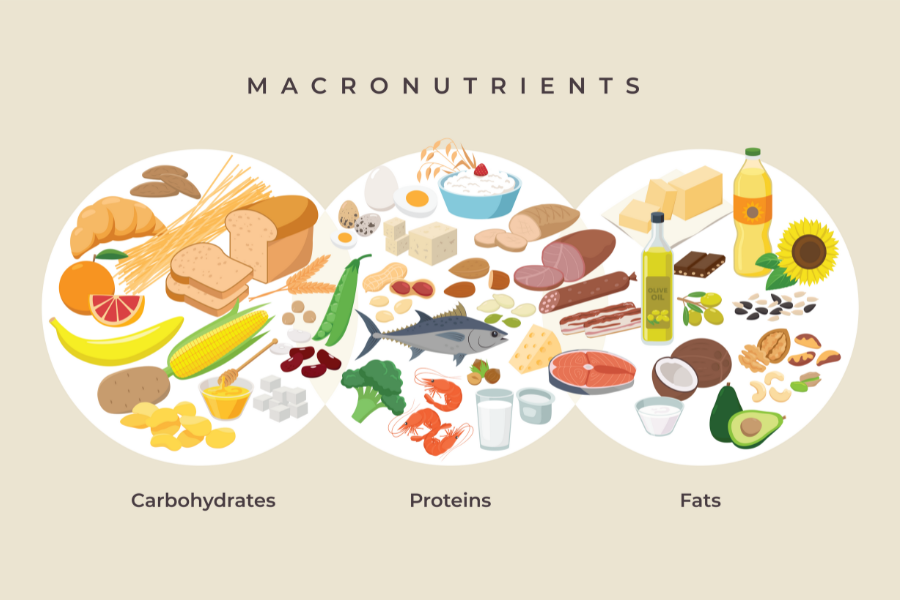
If you are focused on macronutrient distribution for fat loss, you are already ahead of the game. Instead of asking which food is “good” or “bad,” you are asking how protein, carbs, and fats should work together to help you lose body fat, keep muscle, and feel good in the gym.
You will see a lot of bold promises about low carb, low fat, or high protein diets. The truth is that you lose fat when you are in a calorie deficit, which means you consistently burn more calories than you eat, regardless of the macro split (Healthline). How you divide those calories into protein, carbohydrates, and fats decides how hungry you feel, how well you perform during workouts, and how much muscle you keep.
Start with calories, then layer in macros
Before you worry about exact macro percentages, you need a calorie target. Any macro strategy that ignores total calories will fail, even if it looks “clean” or “balanced.”
Once your calorie target is set, your macronutrient distribution for fat loss does two things for you:
- It helps you control hunger so you can actually stick to your calorie goal.
- It protects your muscle mass and training performance while you are losing weight.
Research is very clear that consistent calorie intake below your maintenance level is the primary driver of weight loss, not a specific magic macro ratio (Healthline, Bodybuilding.com).
Once calories are in place, macros give you structure rather than strict rules. Think of them as a framework that you adjust as your body and lifestyle demand.
Protein: Your foundation for fat loss
If there is one macro you never want to under-eat while dieting, it is protein. A high protein intake helps you in three critical ways:
- It keeps you fuller for longer by raising satiety hormones and lowering hunger hormones such as ghrelin (Healthline, Journal of Obesity & Metabolic Syndrome).
- It burns more calories during digestion, with a thermic effect of 20 to 30 percent of protein calories, which is much higher than carbs or fats (Healthline).
- It helps you keep or even build lean mass while you are losing fat, which supports your metabolism and gym performance (Journal of Obesity & Metabolic Syndrome).
Several trials show that high protein diets, around 27 to 35 percent of total energy, lead to greater fat loss and better maintenance of lean mass when calories are restricted (Journal of Obesity & Metabolic Syndrome). One study found that taking protein up to about 30 percent of calories led people to naturally eat 441 fewer calories per day without forcing themselves to cut back (Healthline).
For most men trying to lose fat, a practical daily protein target is:
- 1.2 to 2.0 grams per kilogram of body weight (Healthline)
You can think of protein as your “non‑negotiable” macro. You set it first, then distribute calories across carbs and fats based on preference and performance.
Carbohydrates: Fuel, not the enemy
Carbs often get blamed for fat gain, but context matters. You gain fat when you overeat calories, not because carbs exist in your diet. In fact, carbohydrates are your main training fuel and can make a big difference to strength and performance if you lift or play sports.
Where carbs do get interesting is in how they affect hunger and overall calorie intake. Lower carbohydrate diets, in many studies, lead to greater short term weight loss, often because they also raise protein and fat intake which improves satiety. A Mayo Clinic review notes that low carb diets, especially very low carb versions, can produce more rapid weight loss at first, although the differences often fade after 12 to 24 months (Mayo Clinic).
A large analysis of 110 randomized trials found that every 10 percent drop in carb intake led to a modest decrease in body weight at 6 and 12 months. The greatest weight loss in the short to medium term happened when carbs were extremely low, about 5 to 10 percent of calories, essentially a ketogenic range (PMC – NCBI).
For longer term results, that same research showed that the sweet spot was actually more moderate. At follow up beyond 12 months, carbohydrate intakes around 30 to 40 percent of calories were linked to the most consistent weight loss. Going below 30 percent or above 40 percent did not improve results (PMC – NCBI).
In practice, that means:
- Very low carb, 5 to 10 percent of calories, can help you lose fat quickly for a short period.
- Moderate carb, around 30 to 40 percent of calories, is often more sustainable for long term fat loss and performance.
You do not need to fear carbs. Focus instead on quality: vegetables, fruits, whole grains, and legumes reduce big blood sugar swings, help with appetite control, and support steady training energy (Healthline).
Fats: Hormones, health, and satiety
Dietary fat is calorie dense, but it is also essential. It supports hormone production, brain function, and absorption of fat soluble vitamins. The goal during fat loss is not to remove fat entirely, but to control the type and amount.
Most guidelines suggest that 20 to 35 percent of your total calories should come from fats for general health and weight management (Healthline). Within that range, quality matters:
- Saturated fats, largely from red meat, full fat dairy, and some processed foods, raise LDL cholesterol and are linked with higher cardiovascular risk (Calculator.net).
- Trans fats, usually in highly processed and fast foods, are the worst form of fat and increase both obesity and type 2 diabetes risk (Calculator.net).
- Monounsaturated and polyunsaturated fats, especially omega 3s from fish, can lower LDL and may increase HDL cholesterol, which makes them better choices when you are trying to lose fat while supporting heart health (Calculator.net).
The NHS recommends lowering overall saturated fat intake and replacing it with unsaturated fats, including omega 3 sources, to reduce heart disease risk (NHS). As you set up your macros, aim to keep saturated fat below 10 percent of your total calories, and fill the rest of your fat allowance with nuts, seeds, olive oil, avocado, and fatty fish (Healthline).
Example macro splits that actually work
There is no single perfect macronutrient distribution for fat loss, but there are well supported starting points you can adjust. These sample ratios keep protein high and then balance carbs and fats based on carb tolerance and activity level (Bodybuilding.com).
Use these as frameworks to test, not hard rules. Track how you feel, perform, and change over 4 to 6 weeks, then fine tune.
-
Higher carb tolerance or very active
Around 25 percent protein, 50 to 55 percent carbs, 20 to 25 percent fat -
Moderate carb tolerance and activity
Around 30 percent protein, 35 to 40 percent carbs, 25 to 30 percent fat -
Lower carb tolerance or preference for higher fat
Around 30 to 35 percent protein, 25 to 30 percent carbs, 35 to 40 percent fat
These line up well with what the Dietary Guidelines consider healthy ranges, which are 45 to 65 percent of calories from carbohydrates, 20 to 35 percent from fats, and 10 to 35 percent from protein (Healthline).
Low carb vs low fat: what the men’s data shows
If you are a man, your response to a low carb or low fat diet might not match what you see your partner or female friends experience. A 12 month trial called DIETFITS looked at how men and women responded differently to healthy low carb and healthy low fat diets.
In men, the low carb group lost more weight, more fat mass, and more lean mass than men on the low fat diet over the year (Nature). Men in the low carb group were also more consistent in sticking to their assigned macronutrient distribution, and the better they adhered, the more weight they lost (Nature).
Women in the same study did not show a major difference between low carb and low fat. They tended to prefer low fat foods from the start and were less adherent to very low carb eating, which may explain the similar outcomes between the two approaches for them (Nature).
For you, this suggests two practical points:
- As a man, you might respond especially well to a higher protein, lower carb approach if you can stick to it.
- Adherence matters more than the label on your diet. The macro split you follow most consistently will beat the one that looks good on paper but falls apart in your real life.
Putting it all together: a simple setup
Here is a straightforward way to design your own macronutrient distribution for fat loss:
-
Set your calories
Use a calculator or app to estimate your maintenance calories, then aim for a daily deficit of about 400 to 600 calories. This is usually enough to drive steady fat loss without crushing your energy. -
Lock in your protein
Choose 1.2 to 2.0 grams of protein per kilogram of body weight, then convert that to calories by multiplying grams by 4. That number is fixed. -
Decide on your carb range
If you train hard several times per week, start with 30 to 40 percent of calories from carbs. If you prefer lower carb eating and feel better on it, experiment with 20 to 30 percent and push fats a bit higher, while watching performance and mood. -
Fill the rest with fats
Whatever calories remain after protein and carbs become your fat allowance, aiming for at least 20 percent of total calories so your hormones and joints feel supported (Healthline). -
Prioritize food quality
Emphasize lean meats, fish, eggs, Greek yogurt, beans, vegetables, fruits, whole grains, and minimally processed fats like olive oil and nuts. Limit trans fats and keep saturated fats in check as advised by the NHS and other guidelines (NHS).
Adjusting your macros over time
Your first macro setup is not permanent. You should expect to adjust as your body weight, gym performance, and lifestyle change. A few signs you may need to tweak things:
- You are constantly hungry. Consider increasing protein slightly or shifting some carbs toward meals before and after training.
- Your workouts feel flat. Try raising carbs a bit, especially around training sessions.
- Your fat loss stalls for several weeks. First, tighten calorie tracking. If things are accurate, you may need a small calorie reduction or a small shift in macros, for example, slightly lowering carbs or fats while keeping protein high (Bodybuilding.com).
Think of your macronutrient distribution for fat loss as a toolkit instead of a diet identity. You are not a “low carb guy” or a “low fat guy.” You are someone using protein, carbs, and fats strategically to get leaner, stronger, and healthier in a way you can maintain.
Start with one clear change today, such as pushing protein up to your target or dialing carbs into a realistic range for your training schedule. Then give your new macro plan a few solid weeks before making big changes. Your body will tell you what is working if you give it time and pay attention.
About the Author