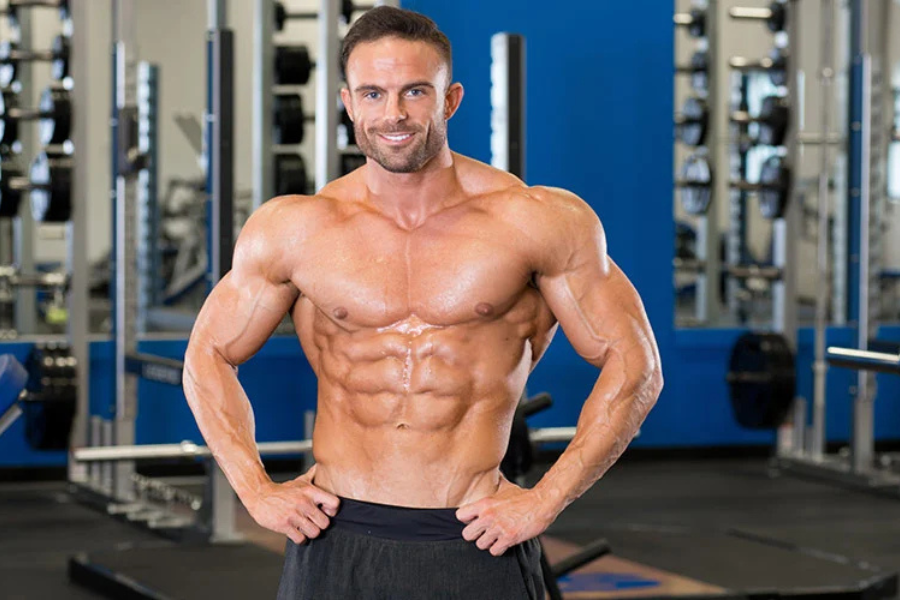
A strong core does far more than sharpen how your abs look. Effective home ab workouts for men help you lift heavier, move better, and protect your back, all without needing a single piece of equipment. With the right exercises and a smart plan, you can train hard in just a few square feet of floor space.
Below, you will find how ab training works, a follow‑along home circuit, and simple tips to actually see results, not just feel the burn.
Understand what “strong abs” really mean
When you think of ab workouts, you probably picture crunches. In reality, your core is a full 360‑degree system, including your rectus abdominis, obliques, transverse abdominis, and the muscles that support your spine and hips.
A good home routine for men should do three things:
- Train your abs from multiple angles
- Mix movement and stability work
- Support your bigger goals like squats, deadlifts, running, or sports
According to trainer Andrew Tracey, visible six‑pack abs are more about reducing the layer of body fat over your midsection through sustainable diet and lifestyle changes than about endless ab exercises, because you already have the muscles there. Gareth Sapstead, author of Ultimate Abs, notes that if you want those muscles to grow and stand out, you still need progressive overload by adding reps or difficulty over time.
Build a no‑equipment ab routine
You can put together an effective session using simple moves that hit your entire core. Aim for 3 to 5 different exercises that involve flexion, rotation, anti‑extension, and anti‑rotation. Work through 2 to 4 sets of 10 to 15 reps or 30 to 45 seconds of effort per movement, about three times per week.
Here is a sample full‑body core circuit you can do at home.
1. Crunches
Crunches target the upper portion of your rectus abdominis. They are basic, but they work, and research shows they produce strong muscle activation compared with many other ab moves.
Lie on your back with knees bent and feet flat. Cross your arms over your chest. Brace your core and lift your shoulders a few inches off the floor toward your knees. Pause, then lower with control. Keep your lower back lightly pressed into the floor and avoid pulling on your neck.
2. Reverse crunches
Reverse crunches move your pelvis instead of your ribcage, which shifts the focus to your lower abs.
Lie on your back with your legs bent at 90 degrees, knees over hips, shins parallel to the floor. Place your hands beside you for support. Exhale, brace, and curl your hips toward your ribs so your tailbone lifts off the floor. Lower slowly without swinging your legs.
3. Leg raises
Leg raises are a challenging option for your lower abs and hip flexors, and they also help your performance in squats, running, and jumping.
Start lying flat with your legs straight and arms by your sides. Press your lower back into the floor. Keeping legs together, raise them until they form about a right angle with your torso. Lower them as far as you can without your lower back arching off the floor. If your form breaks, shorten the range or bend your knees slightly.
4. Bicycle crunches
The American Council on Exercise ranks bicycle crunches as one of the best exercises for engaging your obliques and transverse abdominis without any equipment, which makes them perfect for at home.
Lie on your back with hands lightly behind your head and legs lifted, knees bent at 90 degrees. Bring your right elbow toward your left knee as you extend your right leg, then switch sides in a smooth pedaling motion. Move slowly enough that you can feel your ribs rotate, not just your elbows flaring side to side.
5. Heel taps
Heel taps are a simple way to keep constant tension on your abs and especially your obliques.
Lie on your back with knees bent and feet wider than hip‑width. Crunch your shoulders off the ground. Reach your right hand toward your right heel, then your left hand toward your left heel, alternating in a side‑to‑side “tap.” Keep your shoulder blades off the floor the entire time.
Add core stability moves for real‑world strength
Strong abs are not just about bending and twisting. You also need your core to brace and resist movement so your spine stays stable when you lift, carry, or sprint.
These stability exercises fit easily into home ab workouts for men and pay off in daily life and sports.
Planks
Planks light up your entire core as a stabilizer. They are also a mental battle against the clock.
Set up on your forearms and toes with your body in a straight line from head to heels. Squeeze your glutes, brace your abs, and imagine pulling your elbows toward your toes. Start with 20 to 30 seconds and build up. If your hips sag or your lower back aches, shorten the hold and reset.
Side planks
Side planks target your obliques, transverse abdominis, glutes, and shoulders while improving spinal alignment and posture.
Lie on one side with legs straight and elbow directly under your shoulder. Lift your hips so your body forms a straight line. Hold for 20 to 40 seconds, keeping your hips stacked and your chest open. Switch sides. You can bend your knees if you need a gentler variation.
Bird dog
Bird dog is a low‑strain way to strengthen your core and lower back, and it can help reduce low back pain for many people.
Start on all fours, hands under shoulders and knees under hips. Brace your core so your spine stays neutral. Reach your right arm forward and your left leg back until both are in line with your body. Pause, then return and switch sides. Move slowly so you are not rocking side to side.
Mountain climbers
Mountain climbers combine ab work with conditioning. Your core has to stabilize while your legs drive.
Begin in a high plank position with hands under shoulders. Keeping your hips low and core tight, bring one knee toward your chest, then switch quickly as if you are running in place. You can use slower reps with strict form for strength or speed up for a cardio finisher.
Try a quick 10‑minute ab finisher
If your schedule is packed, you can still get a serious session in a few minutes. Ab muscles recover quickly, so you can train them 5 to 6 times per week with short workouts and still make progress.
Here is a 10‑minute routine you can drop at the end of any workout:
- Plank, 30 seconds
- Bicycle crunches, 30 seconds
- Side plank right, 30 seconds
- Side plank left, 30 seconds
- Reverse crunches, 12 to 15 reps
Rest 30 to 40 seconds, then repeat the circuit 2 or 3 times. Focus on tight form, not racing the clock.
If you can still talk easily during each set, increase the difficulty by adding reps, slowing the tempo, or shortening your rest period.
Use smart progression to keep improving
To actually build muscle and strength, you need to make your ab workouts gradually harder. This is the progressive overload that Gareth Sapstead talks about, and it matters just as much for your core as for any other muscle group.
You can progress your home ab workouts for men in a few simple ways:
- Add more reps or seconds to each set
- Reduce rest time between exercises
- Move from easier variations to harder ones, for example, from bent‑knee leg raises to straight‑leg, or from basic planks to star planks
- Slow down the lowering portion of each rep to increase time under tension
Another method that shows up in some advanced home routines is Extinction Training, where you repeat an exercise with short rests until you cannot complete your target reps with good form. This style of training can be intense, so save it for shorter cycles and be honest about your technique.
Pair ab training with nutrition for visible results
If your goal is a visible six‑pack, you will not get there through crunches alone. According to performance specialist Lucas Dunham at EXOS, you need to sustain a calorie deficit, train your full body at challenging intensities, eliminate alcohol, and improve sleep. In that context, ab exercises act as catalysts because they help you train harder and more often.
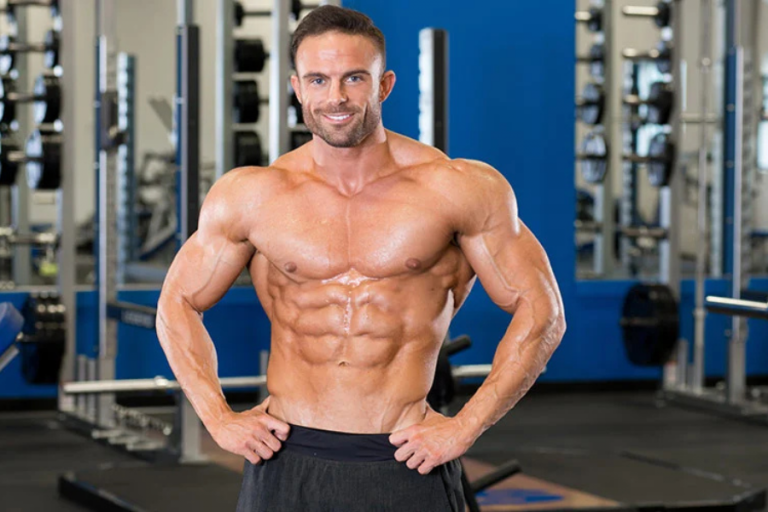
Most men need to reach roughly 6 to 15 percent body fat for clearly visible abs, with around 10 percent being a common sweet spot for definition. Hitting that range depends on:
- Eating enough protein, around 1.2 to 1.5 grams per 2.2 pounds of body weight, to maintain lean muscle
- Managing your total calorie intake so you are consistently in a small deficit
- Getting adequate recovery so you can push hard in your workouts
You can build a stronger core at any body fat level. Just remember that “seeing” your abs is a combination of muscle size, body fat, and overall lifestyle, not a single workout trick.
Set realistic timelines and expectations
You will often see promises like “six‑pack in 22 days” or “two‑week shredded abs.” For most men, especially if you are around 25 to 30 percent body fat, that is not realistic. You can feel a difference in your strength and movement in a few weeks, but meaningful fat loss and visible definition usually take longer.
A more sustainable window is 6 to 8 weeks of:
- Consistent home ab workouts for men, 3 or more sessions per week
- Regular full‑body strength and conditioning
- Solid nutrition, sleep, and stress management
Within that time you can noticeably tighten your core, improve posture, and set yourself up for long‑term results.
Put it all together
You do not need a gym or expensive gear to build a strong, defined midsection. If you:
- Train your abs from multiple angles with a mix of movement and stability
- Progress your sets gradually over time
- Support your training with nutrition, sleep, and full‑body workouts
you will feel your core getting stronger in daily life and see your midsection tighten up as your body fat drops.
Pick two or three exercises from the lists above and do them today for 10 minutes. Once you prove to yourself that you can show up for one short session, it becomes much easier to keep going and build the core strength you are after.
About the Author