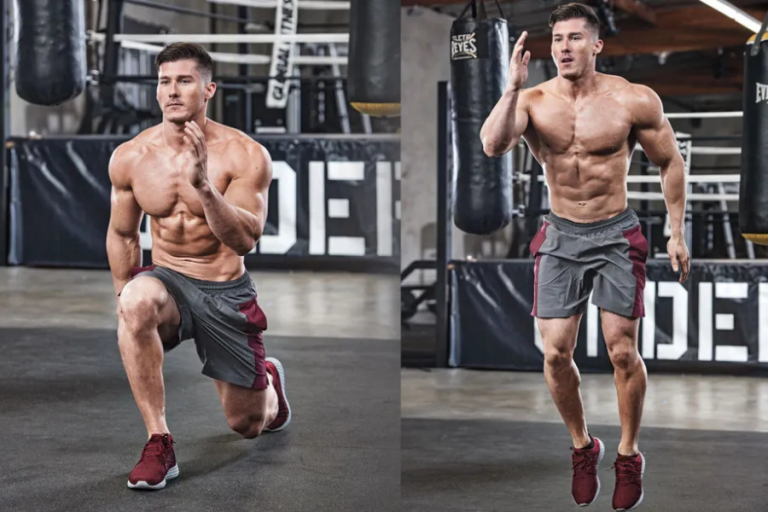
High intensity interval training is one of the most efficient tools you can use if your main goal is fat loss. HIIT training for fat loss combines short bursts of very hard work with periods of easy movement or rest, so you burn a lot of calories in less time and keep your metabolism elevated after you finish.
You do not need to live in the gym or suffer through long, boring cardio sessions. With the right approach, a few focused HIIT workouts per week can help you drop body fat, protect muscle, and improve your conditioning.
Understand what HIIT actually is
HIIT is not just “going hard” during a workout. It has a specific structure and intensity.
In a HIIT session, you alternate between short, intense periods where your heart rate rises to about 80 to 95 percent of your maximum, and recovery periods at a lower intensity. The total workout usually lasts 10 to 30 minutes and can include sprints, cycling, rowing, boxing drills, or bodyweight circuits, as long as the hard intervals truly feel challenging.
You are not supposed to maintain that effort for long. You push, back off, and repeat. That contrast between work and recovery is what makes HIIT different from steady state cardio like jogging at one pace for 40 minutes.
Why HIIT training for fat loss is so effective
HIIT works for fat loss in several ways at the same time. It helps you burn calories during the workout, keeps your metabolism elevated afterward, and preserves more muscle compared with long sessions of low intensity cardio.
You burn more calories in less time
Short HIIT workouts can rival or beat longer traditional cardio sessions for total calorie burn. A 20 minute HIIT session can burn as many calories as 40 to 60 minutes of steady state cardio, according to guidance from PureGym in 2024. That is a big deal if you have a busy schedule and still want to lose fat.
A review of 13 studies that included 424 adults with overweight or obesity found that both HIIT and traditional moderate intensity exercise reduced body fat and waist size effectively. So the total fat loss can be similar, but HIIT usually requires less time.
You get the “afterburn” effect
After an intense session, your body works harder to return to its normal resting state. It needs to restore oxygen levels, clear metabolic byproducts, and repair muscle tissue. This process uses extra energy, which means you continue burning calories after your workout. This is called excess post exercise oxygen consumption, or EPOC.
Research suggests that the afterburn effect from HIIT is usually about 6 to 15 percent of the calories you burned during the workout. If you burn 300 calories during the intervals, you might burn an extra 18 to 45 calories afterward without doing anything more.
HIIT and similar high intensity protocols produce a higher afterburn effect than lower intensity exercise, closer to that 15 percent range, although the exact number depends on your weight, fitness level, and muscle mass.
Some claims say HIIT keeps you burning calories for 24 hours, but studies show that for typical HIIT workouts the elevated burn usually lasts only a few hours. It still adds up over time, it just is not magic.
HIIT boosts your calorie burn during the session and keeps your metabolism slightly elevated for hours afterward, which supports fat loss when you also control your nutrition.
You protect more lean muscle
When you are trying to lose fat, keeping muscle is just as important as dropping the number on the scale. Muscle helps you look leaner and keeps your resting metabolism higher.
HIIT appears to preserve lean body mass better than long, slow cardio, especially in people who are not very active to begin with. Some research even shows modest increases in muscle mass with HIIT in less active individuals, although it is not as effective for muscle gain as dedicated strength training.
For you, that means HIIT can help you strip fat while keeping more of the muscle you already have, especially if you also lift weights each week.
Health benefits beyond just fat loss
Fat loss might be your main goal, but HIIT delivers several health upgrades at the same time.
Improved heart and lung fitness
HIIT is very effective for improving VO2 max, which is your body’s ability to use oxygen during exercise. An 8 week study in young adults found that both very high intensity HIIT protocols and moderate intensity intervals produced about an 18 percent increase in VO2 max, which is a big jump in aerobic capacity.
Another study found that HIIT and steady state cardio were equivalent in improving VO2 max and power after 8 weeks, but HIIT was more time efficient.
Better blood pressure and insulin sensitivity
HIIT has been shown to reduce resting heart rate and blood pressure and improve insulin sensitivity, which helps your body handle carbohydrates more effectively. Those changes reduce your risk of heart disease and type 2 diabetes and support long term health.
Hormonal support for fat loss
High intensity training increases levels of hormones like epinephrine and human growth hormone in the short term, which assist with fat breakdown and help preserve lean tissue. That does not mean HIIT replaces good nutrition, but it does create an internal environment that supports your fat loss efforts.
How often you should do HIIT for fat loss
More intensity is not always better. Too much HIIT can raise stress hormones, stall progress, and increase injury risk.
Experts suggest that the most effective and safe range is about 30 to 40 minutes per week with your heart rate above 90 percent of your maximum. That level of effort is enough to drive progress while avoiding burnout.
For most men, that looks like 2 or 3 HIIT workouts per week that last 10 to 20 minutes each, not counting warm up and cool down. PureGym recommends 2 to 3 HIIT sessions weekly with rest days in between and also suggests adding strength training twice per week to preserve muscle and support metabolism.
If you are newer to training, it is a good idea to build a base first. Some experts recommend at least six months of consistent cardio and resistance training before you rely heavily on HIIT. At that point you can replace one regular cardio day with one or two shorter HIIT sessions, spaced at least two sleep cycles apart, to support fat loss.
Why intensity matters more than variety
You might see “HIIT style” workouts everywhere, but many of them are really just moderate intensity circuits with short rest periods. Those can be tough, but they may not hit the intensity that true HIIT requires.
To get the specific fat loss and fitness benefits of HIIT, you need your hard intervals to feel truly demanding. Research suggests that intensity around 80 to 95 percent of your maximum heart rate is ideal. Doing lots of lower intensity intervals might feel productive, but it will not provide the same bump in afterburn and conditioning.
At the same time, going “all out” to absolute failure every session is not necessary. Beginners can see results with 1 to 3 minute intervals at about 80 percent effort, with rest periods up to 5 minutes, and still lose fat effectively.
Think “hard but controlled”, not reckless.
How HIIT compares to steady cardio for belly fat
If your main concern is belly fat, HIIT can be a smart tool, but it is not a magic spot reduction solution.
Research indicates that HIIT may be slightly more effective at reducing abdominal fat compared with some other exercise types. PureGym also notes that HIIT workouts help with belly fat reduction as part of overall fat loss, but you cannot choose where your body burns fat first. You still need a consistent calorie deficit over time for your stomach to lean out.
Steady state cardio still plays an important role. It supports cardiovascular health, adds to your daily calorie burn, and is easier to recover from. Combining moderate intensity cardio, HIIT, strength training, and core work gives better overall fat loss and fitness results than relying on HIIT alone.
Sample HIIT structures you can use
You can apply HIIT to many different types of exercise. The key is intensity during the work period and genuine recovery during the rest.
Here are three simple structures you can adapt to your fitness level:
-
Beginner interval walk or jog
Alternate 1 minute of brisk walking or light jogging with 2 minutes of easy walking. Repeat 8 to 10 times. Aim for the brisk parts to feel like 7 out of 10 effort. -
Bike or rower intervals
Warm up for 5 minutes at an easy pace. Then do 30 seconds hard, 90 seconds easy, 8 to 10 rounds. Cool down 3 to 5 minutes. Adjust resistance so your hard intervals feel tough but repeatable. -
Bodyweight circuit
Pick 3 moves like squats, push ups, and mountain climbers. Do 30 seconds of each back to back, then rest 90 seconds. That is one round. Start with 5 rounds and build up over time.
PureGym provides several example HIIT routines in 2024, including a 10 minute low impact option, a 12 minute dumbbell session, and a 22 minute advanced bodyweight circuit, which you can model your own workouts on.
Staying consistent without burning out
HIIT only works if you can stick with it. Very aggressive protocols like classic Tabata can look attractive because they are short, but they are brutally hard. In one 8 week study, a very high intensity Tabata protocol was less enjoyable than moderate intervals or steady state training. Participants also needed more recovery, which reduced the real life time savings.
Enjoyment matters because it keeps you consistent. For many men, a mix of:
- Two or three moderate intensity cardio sessions
- One or two HIIT workouts
- Two strength training days
strikes the right balance between effectiveness and sustainability.
Listen to your body. If you feel constantly sore, exhausted, or your performance is dropping, reduce your HIIT volume or intensity and focus on sleep, nutrition, and stress management.
Putting it all together
HIIT training for fat loss works best when you combine it with a balanced plan and realistic expectations.
- Use HIIT 1 to 3 times per week for short, focused sessions.
- Keep intervals genuinely hard, but do not chase failure every rep.
- Pair HIIT with strength training and moderate cardio to protect muscle and support heart health.
- Maintain a modest calorie deficit and enough protein so your body has what it needs to recover.
Start with one simple HIIT workout this week, like 10 rounds of 30 seconds hard and 90 seconds easy on a bike or rower. Track how you feel, adjust gradually, and let the results build over the coming months.
About the Author