High intensity interval training exercises can transform your cardio routine in less time than it takes to scroll through your feed. If you want to burn fat, boost endurance, and build functional strength without living on the treadmill, HIIT deserves a spot in your weekly plan.
Below, you will find a clear breakdown of what HIIT is, how it benefits your body, and specific high intensity interval training exercises you can plug into your workouts right away.
Understand what HIIT actually is
High intensity interval training is not just “going hard” during a random workout. HIIT is a structured strategy where you alternate short bursts of very intense effort with periods of lower intensity or complete rest.
In a typical HIIT workout, you might sprint, pedal hard on a bike, or perform explosive bodyweight moves for 20 to 60 seconds. Then you recover for an equal or slightly longer time before repeating. Research describes HIIT as repeated short bursts of intense activity performed at around 90 percent of your maximal oxygen uptake, or more than 75 percent of your maximal power, with rest in between.
Most HIIT sessions last 10 to 30 minutes. Even though the total workout time is short, the intensity is high enough to drive big changes in your cardiovascular fitness, strength, and metabolism.
Know the science-backed benefits for men
You are not just sweating for the sake of it. HIIT has been studied heavily and the benefits line up with what many men want from their training.
Stronger heart and better conditioning
The repeated cycles of pushing hard and backing off train your heart like a muscle. HIIT has been shown to significantly improve cardiovascular fitness and VO2 max in healthy adults, adolescents, and even people with coronary artery disease and heart failure, often matching or outperforming moderate intensity continuous training for aerobic gains.
EW Motion Therapy notes that HIIT strengthens the heart, lowers blood pressure, and boosts cardiovascular endurance through those intense work and recovery phases, improving overall heart function.
More efficient fat loss and a faster metabolism
If you want to lose body fat without long, slow cardio sessions, HIIT is a strong option. A review of 13 studies with 424 overweight or obese adults found that both HIIT and traditional moderate intensity exercise reduce body fat and waist circumference, so you can get similar results in less time.
HIIT also increases your metabolic rate for hours after the workout. This “afterburn effect” means your body continues to burn calories at a higher rate post session, which Healthline highlights as a key advantage for fat loss and metabolic health. EW Motion Therapy also notes that this elevated metabolic rate makes HIIT particularly effective for weight loss.
Support for muscle and functional strength
HIIT is not a replacement for heavy lifting, but when your intervals include strength moves such as squats, deadlifts, or power cleans, you get a powerful conditioning and muscular stimulus at once. NASM reports that HIIT can increase muscle hypertrophy, elevate anabolic hormones like testosterone and growth hormone, and improve mitochondrial density.
Massachusetts General Hospital also emphasizes functional fitness as a priority. Correctly performed HIIT can help you build muscle mass, improve balance, and maintain bone integrity, which supports healthy aging and daily activities like lifting, climbing stairs, and carrying groceries.
Follow key safety basics before you start
HIIT is intense by design, so a smart approach keeps you progressing instead of sidelined.
HIIT places high demands on your heart and joints. Research shows that while HIIT is effective, it can carry risks if you jump in too fast, especially if you are sedentary or have coronary conditions. Rapid spikes in heart rate and blood pressure, fatigue, and overtraining can all increase injury risk. A 2020 survey of 74 HIIT participants working out about 4.3 times per week reported an injury prevalence of 46.5 percent and injury incidence of 3.3 per 1,000 hours, similar to weightlifting and lower than American football or soccer.
You should:
- Talk with your doctor before starting HIIT if you have heart disease, high blood pressure, high cholesterol, diabetes, or are significantly deconditioned
- Get medical clearance if you have joint or muscle problems such as arthritis, or if you are returning after an injury
- Ease into intensity, starting with fewer intervals and longer rest periods
Physical therapists can be valuable partners. EW Motion Therapy notes that therapists can design personalized HIIT plans, teach proper technique and body mechanics, help with complex lifts like power cleans, and guide recovery strategies such as stretching and massage to reduce injury risk.
Warm up the right way for HIIT
You should never go from sitting at your desk straight into a set of jump squats or sprints. A focused warm up prepares your joints, muscles, and nervous system for the intensity ahead.
NASM recommends a warm up that includes self myofascial release, core and balance exercises, and low level plyometrics to activate your fast twitch (type II) muscle fibers and improve neuromuscular efficiency.
A simple 8 to 10 minute HIIT warm up could look like this:
- 2 to 3 minutes of light cardio, such as brisk walking, easy cycling, or jump rope
- 3 to 4 minutes of dynamic mobility, for example leg swings, hip circles, and arm circles
- 2 to 3 minutes of activation work, such as glute bridges, planks, and bodyweight squats
You should finish warm ups with a few short “rehearsal” bursts at lower intensity. For example, if you plan to sprint, perform 2 or 3 10 second runs at about 60 to 70 percent effort to get your body ready.
Try these proven HIIT structures
There are several well studied formats for high intensity interval training exercises. You can plug different movements into these blueprints depending on your equipment and goals.
Tabata: 4 minutes of all out effort
The Tabata protocol was developed in 1996 with Olympic speedskaters. It involves 20 seconds of ultra intense exercise at about 170 percent of VO2 max followed by 10 seconds of rest, repeated for a total of 4 minutes. In the original study, athletes improved both aerobic and anaerobic capacity with just 4 minutes of HIIT per day compared to 60 minutes of steady state training.
You can apply a Tabata style set to:
- Stationary bike sprints
- Burpees
- Kettlebell swings
- Jump squats
Work as hard as you can for the 20 seconds, then fully rest or move very lightly for 10 seconds. Complete 8 rounds. Because true Tabata is extremely demanding, start with only one Tabata block and build from there.
30:30 intervals: Sustainable intensity for beginners
A popular structure for beginners is 30 seconds of effort followed by 30 seconds of low intensity movement. NASM notes this 30:30 approach is effective for 5 to 10 minute blocks of training.
You can use 30:30 intervals with:
- Treadmill or outdoor runs
- Rowing machine or HIIT bike sprints
- Stair climbs
- Battle ropes
Aim for a hard but controlled pace during the 30 second work periods. You should be breathing heavily but still able to maintain good form.
30 20 10 intervals: Easy build to all out
The 30 20 10 protocol ramps intensity within each 1 minute block. You perform:
- 30 seconds at low pace
- 20 seconds at moderate pace
- 10 seconds at all out effort
Repeat this sequence several times. This format helps you mentally and physically prepare for max effort at the end of each minute. It works well for running, cycling, or rowing, and NASM includes it among effective HIIT structures.
Choose effective HIIT cardio exercises
You can turn almost any cardio movement into a HIIT exercise by adjusting your intensity and rest. Some options are especially efficient if you want maximum results in minimal time.
Sprinting and running intervals
Sprinting is one of the simplest and most powerful HIIT tools. You can perform intervals outdoors, on a track, or on a treadmill.
A beginner friendly interval session might be:
- Warm up for 8 to 10 minutes
- Run hard for 20 seconds
- Walk or jog slowly for 40 to 60 seconds
- Repeat for 8 to 10 rounds
As your fitness improves, you can extend the work periods to 30 seconds and shorten rest intervals.
Rowing machine and HIIT bike workouts
Rowing machines and HIIT style bikes that increase resistance as you push harder are excellent for whole body conditioning. NASM highlights them as effective because they engage both your upper and lower body, burn a high number of calories, and provide clear metrics such as distance or calories to keep you motivated.
You could use a rowing machine for a Tabata block, then finish with steady rowing to cool down. On a bike, try 10 rounds of 15 seconds all out followed by 45 seconds easy pedaling.
Jump rope and stair intervals
If you need a minimal equipment option, jump rope and stairs are practical choices.
You might:
- Jump rope for 45 seconds, then rest for 45 to 60 seconds
- Sprint up stairs for 20 seconds, walk down for 40 seconds, and repeat
Both options challenge your lungs and legs and they are easy to adjust. If you are gassed, extend the rest. If you feel strong, tighten the work to rest ratio.
Add strength based HIIT exercises
HIIT is often thought of as pure cardio, but when you pair it with strength exercises, you build conditioning and muscle at the same time. This approach supports functional fitness, which Massachusetts General Hospital identifies as a key research priority for healthy aging.
Bodyweight circuits
Bodyweight moves work well in HIIT circuits because they are easy to transition between and do not require a lot of setup.
For example, perform 30 seconds on, 30 seconds off for 3 to 4 rounds of each:
- Push ups
- Squats or jump squats
- Mountain climbers
- Plank shoulder taps
Focus on crisp technique. As you get stronger, you can reduce rest time or add a weighted vest for extra challenge.
Weighted HIIT moves
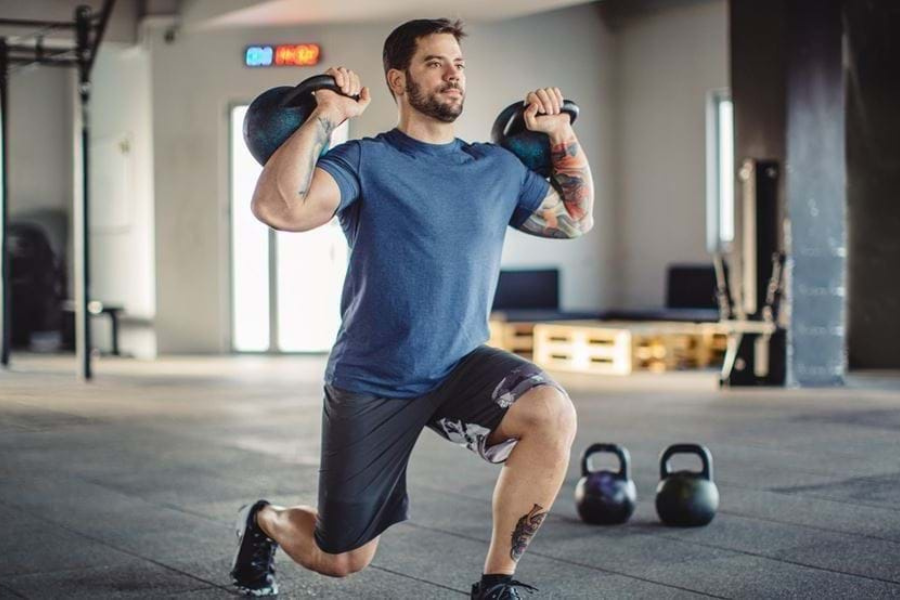
Mixing weights into your intervals can increase strength and muscle stimulus. Common options include:
- Kettlebell swings
- Dumbbell thrusters
- Goblet squats
- Deadlifts with moderate weight
Since poor body alignment and improper strength programming are major factors in HIIT injuries, you should dial in your form first. If you are unsure about technique, consider working with a qualified trainer or physical therapist, especially for complex moves like power cleans.
Build a weekly HIIT routine that fits your life
You do not need to perform HIIT every day. Quality matters more than quantity. For most men, 2 to 3 HIIT sessions per week spaced with recovery or lighter days works well.
Here is one way to structure your week:
| Day | Focus |
|---|---|
| Monday | HIIT cardio (sprints or bike) |
| Tuesday | Strength training, low intensity cardio |
| Wednesday | Rest or light activity, such as walking |
| Thursday | HIIT strength circuit |
| Friday | Full body lifting |
| Saturday | Optional low volume HIIT or recreational sport |
| Sunday | Rest |
Low volume protocols of less than 15 minutes of intense work per session have been shown to be time efficient and effective for improving cardiometabolic health, which means you can get real benefits without long gym visits.
When to scale up or pull back
Your body will tell you how your high intensity interval training exercises are landing.
You may be ready to progress if you:
- Recover your breathing within 1 to 2 minutes after an interval
- Complete your current workouts feeling challenged but not wrecked
- Maintain solid technique throughout all rounds
Increase difficulty by adding 1 or 2 intervals, shortening rest slightly, or adding a second weekly HIIT day.
You should pull back and consider consulting a professional if you:
- Feel joint pain, sharp discomfort, or dizziness during or after sessions
- Notice your resting heart rate climbing over several days instead of dropping
- Struggle with sleep or feel constantly fatigued
Research warns that overtraining and fatigue increase injury risk, especially for your knees and ankles. Including neuromuscular training and not rushing progress helps protect you.
Take your next step with HIIT
High intensity interval training exercises can fit into a busy life while still moving the needle on fat loss, conditioning, and overall health. You do not have to overhaul your whole routine to start. Pick one structure, such as 30:30 intervals, and try it with a simple exercise like cycling or running this week.
From there, layer in strength moves, experiment with formats like Tabata or 30 20 10, and adjust based on how your body responds. If you stay consistent and respect the intensity, HIIT can become one of the most efficient tools in your fitness toolbox.
About the Author