A regular workout routine does more than build muscle or help you manage weight. It also plays a major role in your sexual health. When you understand the relationship between exercise and sexual health in men, you can use movement as a practical tool to support libido, performance, and confidence at any age.
Below, you will see how different types of exercise affect hormones, erections, stamina, and overall sexual well‑being, and how to build a routine that helps rather than hurts.
Understand how exercise affects your hormones
Testosterone is a key hormone for male sexual health. It influences your sex drive, energy levels, mood, and ability to build and maintain muscle. Exercise interacts with testosterone in a few important ways.
Shortly after you work out, especially with resistance training that uses large muscle groups, your testosterone levels can rise for a brief window, peaking right after exercise and then returning to baseline within minutes to hours (NCBI). This acute boost is usually stronger if you are already resistance trained and if your workouts are moderately to highly intense with relatively short rest periods.
Endurance exercise can also raise testosterone, but it typically requires high intensity, such as around 90 percent of your VO2 max, and enough duration to create a noticeable effect (NCBI). A light jog or quick bike ride may not move the needle as much.
Over time, the picture becomes more complex. In healthy younger men, chronic exercise does not always lead to higher resting testosterone levels. However, in overweight or obese men, regular aerobic and resistance training has been linked to increases in baseline testosterone, often alongside fat loss (NCBI). It is not fully clear whether the hormone increase comes from the exercise itself or from losing excess weight, but both work in your favor.
Age and body composition matter too. If you are older or carry more body fat, your acute testosterone response to exercise may be smaller compared to a leaner or younger man, and obesity seems to blunt the exercise related rise in testosterone (NCBI). That is another reason to see exercise as a long term investment, not just a quick fix.
Clinically, exercising three to four times per week as part of a regular routine has been associated with a stable elevation in testosterone in men (Northwestern Medicine). Those higher levels help support mood, libido, and strength, all of which feed into healthier sexual function.
Support erections through better blood flow
A strong erection depends on healthy blood vessels. Exercise directly supports that system, which is one reason it is so effective for preventing and improving erectile dysfunction.
In a study of 177 Japanese men aged 23 to 82, those with higher aerobic capacity and greater muscular strength had significantly better erectile function scores on the IIEF5 questionnaire (PMC). These men also had less arterial stiffness, which means their blood vessels could expand and contract more easily.
Even after accounting for age and testosterone levels, aerobic capacity, handgrip strength, and arterial stiffness remained independent predictors of erectile function (PMC). In simple terms, how fit you are and how healthy your blood vessels are will likely show up in the bedroom.
A 2023 systematic review and meta analysis of 11 randomized controlled trials found that aerobic exercise improved erectile function by about 2.8 points on the IIEF Erectile Function domain score, with bigger improvements in men who had more severe erectile dysfunction at the start (PubMed). This review provided level 1 evidence that regular aerobic exercise is a reliable, low risk way to support erections, and experts recommend it as a non drug treatment option for erectile issues (PubMed).
Long term data reinforces this. In the Harvard Health Professionals Follow up Study, which followed over 22,000 men aged 40 to 75, those who ran an hour and a half a week or did three hours of vigorous outdoor work weekly were 20 percent less likely to develop erectile dysfunction than inactive men (Harvard Health Publishing). Bumping that to about two and a half hours of running weekly reduced ED risk by 30 percent.
Even if you do not run, a well rounded program that includes at least 30 minutes of moderate activity on most days, such as walking, swimming, or cycling, can provide major health benefits and likely help lower your risk of erectile problems (Harvard Health Publishing).
Boost libido without overdoing it
Regular movement is usually good news for libido. Active men generally report higher testosterone, greater sex drive, and better fertility compared with sedentary men (UCLA Health). Exercise can lift your mood, reduce stress, and make you feel more confident in your body, which all set the stage for a healthier sex life.
However, more is not always better. A study in Medicine and Science in Sports and Exercise found that men who regularly trained at high intensity for more than 10 hours a week were more likely to have lower libido than men who exercised a moderate amount (UCLA Health). Among those with low libido in the study, 65 percent exercised more than 10 hours a week, while just over 22 percent of men with normal to high libido trained that much.
Men in the low libido group were also about three times more likely to engage in very intense or prolonged exercise compared with men in the moderate exercise category (UCLA Health). The sample was small, only 60 men in the low libido group, so you should not panic if you enjoy long workouts. Experts note that training less than 10 hours per week is unlikely to harm your sex drive (UCLA Health).
The takeaway is balance. If you find yourself constantly exhausted, sore, or dragging through the day, then your training could be cutting into your libido. Adequate rest, nutrition, and sleep are just as important as your time in the gym.
Use specific workouts that support sexual health
Some types of exercise have particularly strong links with sexual health in men. You can prioritize these while still enjoying other activities you like.
Strength training with compound lifts
Resistance training, especially compound movements that use large muscle groups, has one of the most significant positive effects on testosterone and muscle building. Exercises such as squats, deadlifts, and bench presses signal your body to grow and repair muscle, which in turn supports testosterone production (Northwestern Medicine).
To support sexual health, you can:
- Train major muscle groups two or three times per week
- Keep most sets in a moderate to high intensity range, where the last few reps feel challenging but controlled
- Limit very long rest periods so your workout stays relatively dense, while still respecting good form and safety
This style of training is the same kind that produces acute testosterone spikes after exercise, with levels peaking immediately post workout then gradually returning to normal (NCBI).
Aerobic exercise for stamina and erections
Aerobic activity is one of the most proven ways to improve erectile function and long term heart and vascular health. Consistent walking, jogging, cycling, or swimming improves your VO2 peak, supports better blood flow, and reduces arterial stiffness, all of which are linked to better erections (PMC).
The 2023 meta analysis that showed aerobic exercise improves erectile function suggests that the benefits are even greater if your ED is more severe to begin with (PubMed). That means it is worth starting even if your sexual function is currently far from where you want it to be.
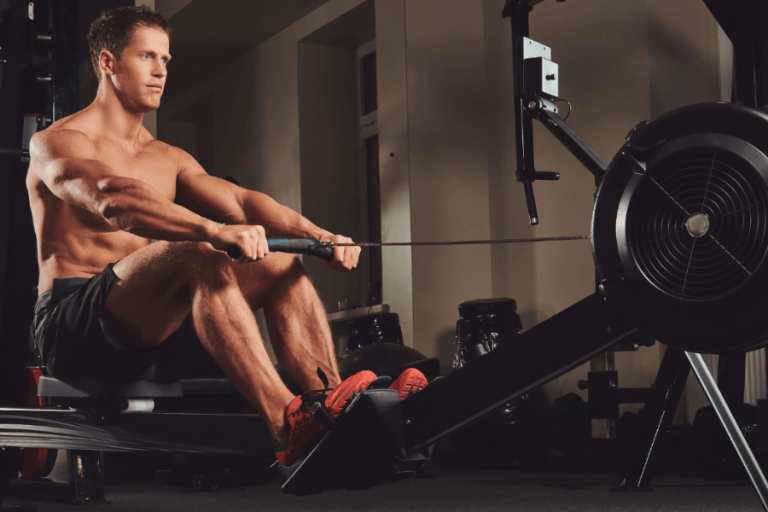
Aim for at least 30 minutes of moderate intensity cardio on most days, or incorporate a few longer sessions per week. If you currently do very little, even a daily brisk walk is a strong start.
HIIT for time efficient hormone support
High intensity interval training, or HIIT, uses short bursts of intense effort followed by brief rest periods. This style of training can lead to a surge in testosterone and provides a time efficient way to improve fitness (Northwestern Medicine).
You might try:
- 30 seconds of fast cycling followed by 60 to 90 seconds of easy pedaling, repeated several times
- Short uphill sprints with plenty of recovery in between
Keep HIIT to one or two sessions per week at first and avoid stacking it on top of heavy strength training on the same day if you already feel fatigued.
Pelvic floor and mobility work
Strong and responsive pelvic floor muscles support bladder control and sexual function. Kegel exercises for men can strengthen these muscles and may improve both urinary control and sexual performance if you practice them regularly for a few weeks to a few months (Mayo Clinic).
If you are unsure you are doing Kegels correctly, a healthcare professional or pelvic floor physical therapist can guide you and may use tools like biofeedback or electrical stimulation to help you learn the proper technique (Mayo Clinic). One important safety note is that you should not perform Kegels while urinating, since repeatedly stopping your urine flow can increase your risk of bladder infections (Mayo Clinic).
Pelvic floor friendly stretches and core exercises, such as hip bridges, Happy Baby, floating leg extensions, windshield wipers, pelvic rocks, and lying butterfly stretches, can also help mobilize and release deep core muscles that affect sexual function (Everyday Health). For example, the hip bridge strengthens your glutes and lower back and improves hip mobility, while Happy Baby targets your pelvic floor, hips, and inner thighs, helping you move more comfortably (Everyday Health).
Protect your sexual health while staying active
Most forms of exercise are helpful, but a few habits can undermine your efforts if you overlook them.
Overtraining, or pushing too hard without enough rest, can actually lower testosterone because it places excessive stress on your body. You will get better results, including for sexual health, if you balance intensity and duration with rest days, a nutritious diet, and enough sleep (Northwestern Medicine).
Cycling is another example. It is excellent cardio, but sustained riding on a narrow saddle can compress nerves in the perineum, which may cause temporary numbness in the penis. In rare cases, this numbness can contribute to impotence that lasts from a week to a month after a long ride (Harvard Health Publishing). You can lower this risk by using a properly fitted bike, choosing a wider or cutout saddle, standing up on the pedals periodically, and adjusting your position to reduce pressure.
Finally, remember that your overall vascular and metabolic health shows up in your sex life. Physical activity helps regulate nitric oxide production, improves insulin sensitivity, reduces pro inflammatory cytokines, and supports healthier arterial stiffness in men, which in turn helps maintain erections (PubMed). A 2024 systematic review concluded that physical exercise significantly improves sexual function in men, including those without other health conditions and those with diabetes, chronic heart failure, and different racial backgrounds (PubMed). The authors even encourage healthcare professionals to consider prescribing exercise as a treatment option for sexual dysfunction.
Put it all together into a realistic routine
You do not need a perfect program to see benefits. Start with a simple, sustainable plan that fits your life. For example:
- Two or three strength training sessions weekly focused on major muscle groups
- Two or three moderate cardio sessions like brisk walking, easy jogging, or swimming
- Optional one HIIT session if you feel recovered and enjoy pushing the pace
- A few minutes of pelvic floor and mobility work most days
Focus on consistency. Your goal is to support your body and sexual health over months and years, not to chase a quick fix. If you already have erectile dysfunction, low libido, or another sexual health concern, pairing this kind of routine with guidance from a healthcare provider can give you a strong foundation for improvement.
By understanding how exercise and sexual health in men are connected, you can treat your workouts as more than just a way to look fit. They become one of the most practical ways to protect your hormones, blood vessels, and confidence so that you feel and perform better in every part of your life.
About the Author