You know that a solid chest press workout can be a game-changer for building upper-body strength and defined pecs. But getting results from this exercise is not just about lifting heavier weights. Seemingly small mistakes, from the way you position your elbows to the pace of your reps, can throw off your form and limit your progress. By catching these errors early and adjusting your approach, you set yourself up for safer, more effective gains.
Below, you will find key insights on the most common pitfalls and how to avoid them, so you can confidently upgrade your chest press routine.
Recognize the common pitfalls
A major reason so many people fail to see progress in their chest press workout is poor technique. Doing the movement too quickly, arching your lower back, or letting your shoulders roll forward can all undermine your hard work. Instead of relying on momentum, focus on controlling every phase of the exercise.
When you rush the movement or sacrifice form for an extra rep, you increase your injury risk, especially in the shoulders and wrists. Pulled muscles and joint aches often trace back to sloppy reps. Practicing deliberate, precise motions is crucial, so slow down your tempo and keep your muscles under control. You will not only protect your body but also sharpen your mind-muscle connection, making each rep count.
Choose the right weight
One of the most common mistakes is going too heavy too soon. It is tempting to load up the bar or grab the biggest dumbbells in the gym, thinking more weight means quicker muscle growth. The truth is that grinding out ugly reps with poor form can do more harm than good.
Start with a manageable weight that allows you to execute each repetition with confidence. Focus on mastering your form before moving to a heavier load. You will likely notice surprising improvements in strength once you stop trying to force progress through brute force alone. If you can keep your elbows steady, your chest engaged, and your core braced without struggling, you know you have found a sweet spot for your working sets.
Position your body correctly
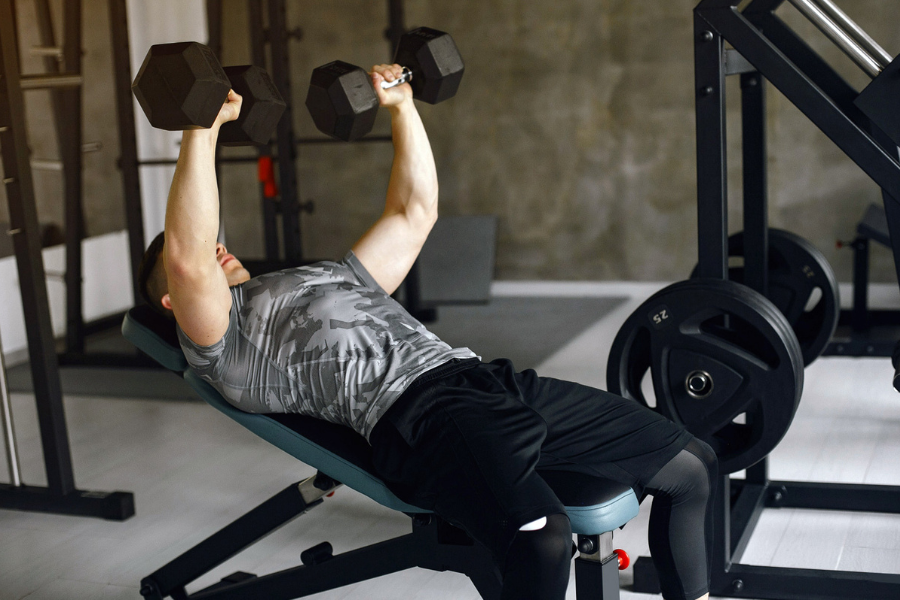
A successful chest press relies heavily on body positioning. First, lie flat on the bench with your head, shoulders, and hips in contact at all times. Plant your feet firmly on the floor for balance, avoiding any tippy-toe or one-foot-forward stances that throw off alignment.
If you feel your lower back arching excessively, place your feet on a small block or step to help keep your spine neutral. You will want a stable base, so your chest muscles can do the lifting rather than your lower back. Maintain a slight arch in the upper back region but avoid overextending it. When your torso is anchored, you reduce unnecessary stress on your spine and transfer that workload to the muscles you are aiming to develop.
Control your range of motion
Another issue is bouncing the bar or dumbbells off your chest at the bottom of the rep. This might give you a brief burst of momentum, but it takes the tension away from the target muscles. Lower the weight slowly and keep your elbows at roughly a 45-degree angle to your torso. Pausing gently at the bottom, or stopping just above your chest, preserves more tension in your pecs without risking shoulder strain.
At the top of the movement, keep a slight bend in your elbows instead of locking them out completely. Locking your elbows relaxes tension on your chest and dumps it into your joints. By stopping just short of lockout, you maintain constant stress on your pecs throughout the entire rep, boosting growth and strength.
Focus on your breathing
Proper breathing supports your lifts more than you might think. Breathe in as you lower the weight, allowing your chest cavity to expand. Then exhale forcefully as you push the weight up. This rhythm helps stabilize your core and deliver extra power when you need it most.
People often make the mistake of holding their breath from start to finish, which can lead to dizziness or reduced endurance. It also decreases oxygen flow to the muscles. Integrating clear, controlled breathing patterns into each rep makes your workout feel smoother and more sustainable.
Maintain steady progress
Progress does not mean jumping 20 pounds overnight. Instead, use incremental increases in weight or vary your sets and reps to continue challenging your muscles. If you feel your strength and endurance plateauing, swapping in variations like incline presses or slow eccentric reps can shock your muscles into new growth.
Below is a quick summary of mistakes you might make and how to correct them. Use it to double-check your approach whenever you feel your form slipping:
| Mistake | Quick Fix |
|---|---|
| Bouncing the weight off chest | Lower slowly, pause at bottom |
| Overarching the lower back | Keep shoulders, hips on bench |
| Going too heavy too soon | Master correct form first |
| Holding breath throughout | Inhale on descent, exhale on press |
| Locking elbows at the top | Stop short of full extension |
You do not need to chase immediate heavy loads to see solid gains. Consistency, patience, and careful attention to form will serve you better in the long run.
Give your shoulders proper support
Shoulder pain is a frequent complaint in any chest press workout. Simple adjustments can help you dodge that discomfort. Align your shoulder blades by pinching them lightly together as you settle onto the bench. This stabilizes your upper back and opens the chest, providing a solid foundation for each lift.
If you notice your shoulder blades winging out during a set, pause and readjust. A quick mental cue can be, “Shoulders back, chest up.” When you master that alignment, you reduce unnecessary inward rotation of the shoulders and lower your risk of impingement or rotator cuff issues.
Watch out for wrist strain
Your wrists also play a bigger role in the chest press than many realize. A neutral wrist position helps keep the weight properly distributed through your arms and into your chest. If your wrists bend backward, tension moves away from your pecs and onto smaller, more fragile joints.
Some people find supportive wrist wraps useful, but good form should come first. Gripping the bar or dumbbells firmly, with your wrists aligned and your knuckles pointed upward, can do wonders for stability. Whenever you feel pain or a twinge in your wrists, lower the weight and reevaluate your grip and alignment.
Practice a clear mind-muscle connection
Many lifters focus on just getting the bar from point A to point B. Instead, focus on feeling your chest contract to move the weight. Visualizing your pecs engaging during each press can enhance muscle activation and ensure proper mechanics.
When you stay connected to the target muscle, you are more likely to catch errors, like flared elbows or an arched back, before they become habits. This mind-muscle approach also encourages you to maintain a controlled tempo, which is the key to building real strength and muscle definition.
Summing it all up
Your chest press workout is not just about brute strength. Incorporating correct form, picking a comfortable yet challenging weight, aligning your body, and keeping a steady range of motion all play an enormous role in how well your chest will respond. Go for gradual progress over leaps and bounds, and remember that proper technique is the bedrock of safe, effective training.
The next time you settle in under a bar or pick up a pair of dumbbells, tune into your form step by step. Keep your core braced, shoulders set, wrists aligned, and elbows in a strong, stable position. Breathe at the right moments, maintain tension through every phase of the rep, and you will likely see better results than if you simply heaved the heaviest weight possible.
Making these small but powerful adjustments helps you press smarter, not just harder. By doing so, you will set yourself on a path to a stronger, broader chest — no wasted workouts or nagging injuries holding you back. Honor your body, stay consistent, and watch your chest press gains flourish over time.
About the Author