Understand your chest muscles
Your chest muscles, also called the pectorals, work in harmony with your shoulders and arms to push, press, and stabilize any weight you lift. The pectoralis major is the larger, fan-shaped muscle that gives your chest its overall size and definition, while the pectoralis minor lies underneath and supports shoulder movement.
Developing these muscles evenly is key to getting a solid physique and improving upper-body strength. When you focus on both pushing power and muscle balance in your chest day workout plan, you will see benefits that extend to your shoulders and triceps too.
Prepare properly for chest day
Jumping straight into heavy presses can lead to injuries and reduced performance. Spend at least five to ten minutes warming up the joints and priming the muscles for the work ahead. Dynamic stretches like arm circles and shoulder rolls help loosen your shoulders, which are critical in every chest exercise.
You might also add a few light resistance band exercises. For example, wrap a band behind your back and perform slow “band presses.” This gentle activation increases blood flow to your pecs, shoulders, and arms, so you feel ready to tackle your lifts more effectively.
Perform essential compound exercises
Compound exercises recruit multiple muscle groups at once, which means you build size and strength faster. They should form the foundation of any effective chest day workout plan.
Bench press basics
The classic bench press is arguably the king of chest exercises. It targets your pectorals, shoulders, and triceps for comprehensive upper-body development. Start by lying flat on the bench with your feet firmly on the ground and your lower back slightly arched. Grip the bar so your hands are just outside shoulder-width, then lower it to mid-chest level before pressing it back up.
Focus on controlled movements and a stable core. If you try to power through with speed alone, your form may suffer, and you risk injury. Aim for three to four sets of eight to twelve reps if muscle growth is your main goal.
Incline bench press
Shifting the bench angle upward emphasizes the upper portion of your chest, promoting a more defined and balanced look. Set the bench at about a 30 to 45-degree incline, and repeat the same basic bench press setup. This exercise also engages the shoulders, so keep your elbows at a comfortable angle to prevent strain.
Try two to three sets of eight to twelve reps when adding incline presses to your plan. Combined with the flat bench press, you will ensure your entire chest gets the attention it needs.
Include key isolation movements
While compound lifts build a solid base, isolation exercises let you give extra attention to specific parts of the chest. They are perfect for refining shape and bringing out definition.
Cable fly variations
Cable fly exercises target the inner chest and help create the look of separation between the pec muscles. Stand between two cable pulleys set at chest height, grab the handles, and step forward. Keep a slight bend in your elbows as you bring your hands together in front of your chest. Then, allow your arms to return to the starting position with control.
For variety, adjust the pulley height. Low-to-high cable flies emphasize the upper chest, while high-to-low variations hit the lower pec area. Perform two to three sets of ten to fifteen reps for a focused burn.
Dumbbell chest fly
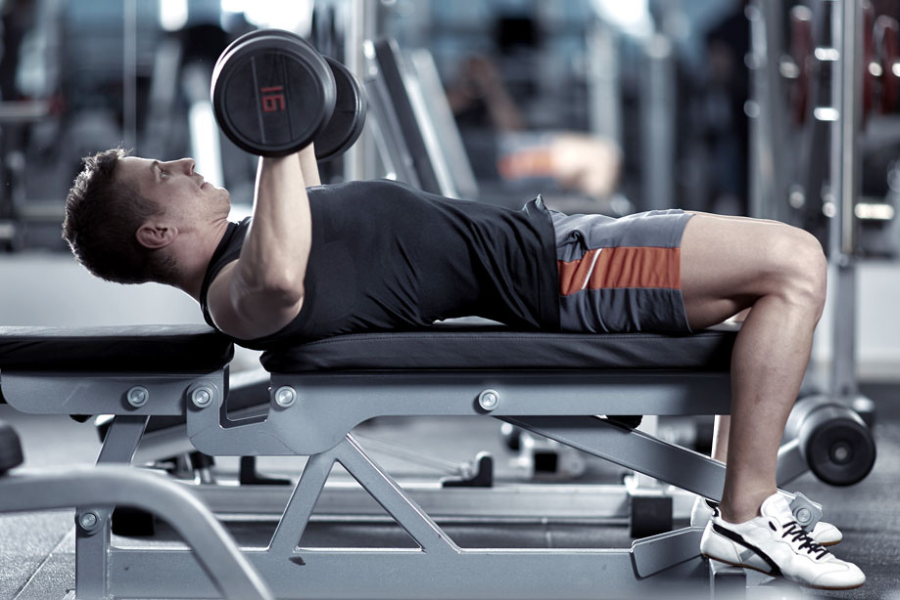
Dumbbell flies are another great option when you want to isolate the pectorals. Lie down on a flat bench (or slightly inclined bench), holding a dumbbell in each hand. With your arms extended above your chest and palms facing one another, lower your arms out to the sides in a wide arc. Avoid locking your elbows, and keep tension on the muscles at all times.
Routes like these promote muscle symmetry because each arm has to work independently. Aim for two to three sets of eight to twelve reps, and always maintain a controlled movement to avoid any shoulder discomfort.
Avoid common pitfalls
Even a well-planned chest day workout plan can backfire when certain mistakes creep in. Overtraining, for instance, can stall your progress. Remember, rest days are just as important as training days for strength gains and muscle growth.
You might also see people lifting too heavy, too soon, which compromises form. Choose a weight that challenges you but still allows more precise control. If you catch yourself bouncing the bar off your chest or arching your back excessively, consider lowering the weight and refining your technique. Proper form safeguards your joints and ensures muscles are doing the work.
Design your chest day workout plan
You do not need a complicated routine to see results. Instead, focus on balance, compound and isolation exercises, and progressive overload. Here is an example of a weekly chest workout structure:
- Flat bench press: 3–4 sets of 8–12 reps
- Incline bench press: 2–3 sets of 8–12 reps
- Cable fly or dumbbell fly: 2–3 sets of 10–15 reps
- Push-ups (optional burnout): 1 set to failure
Fit in this session up to two times a week, leaving at least 48 hours of rest in between. As you progress, slowly add a few pounds or one extra rep when your final set feels easy. This incremental increase keeps your muscles challenged and growing.
Final tips for progress
Incorporating a variety of angles and resistance levels is the key to continuous improvement. Over time, experiment with different incline settings, or swap between dumbbells and barbells to avoid plateaus. Make sure you pay attention to your recovery as well, including proper rest and adequate protein intake.
Keep in mind that each body responds differently to training frequency and exercise selection. Listen to yours so you can fine-tune your chest day workout plan. With consistency, smart exercise choices, and good eating habits, you will see steady chest gains that transform your upper-body strength. And remember—enjoying the routine and feeling confident in your form are as important as the weights on the bar. Keep pushing forward, and your best chest is right around the corner.
About the Author