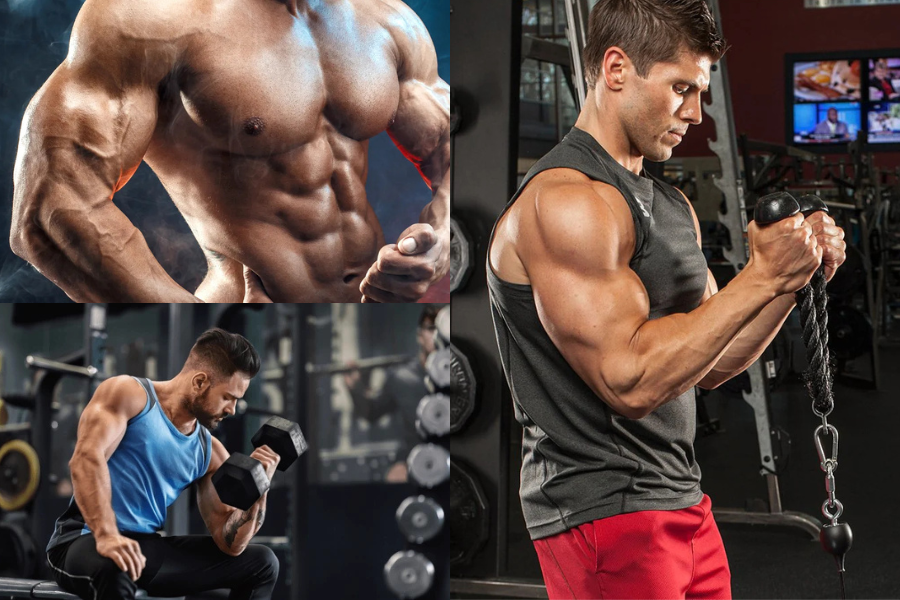
A set of pushups in your living room can do more for your arms than you might think. With the right bodyweight arm exercises, you can build real strength and definition at home without a single dumbbell.
Below, you will learn how bodyweight training works, which exercises actually grow your arms, and how to put everything into a simple routine you can follow in a small space.
Understand what bodyweight arm exercises can do
Bodyweight arm exercises use your own body as resistance instead of weights. Pushups, planks, dips, and crawls are all examples. You can do them almost anywhere and at any age or fitness level.
These moves mainly hit your:
- Triceps on the back of your arms
- Deltoids in your shoulders
- Chest and upper back
- Forearms and grip
- Core muscles that stabilize everything
Biceps and back muscles are a bit harder to overload without equipment, because they rely on pulling movements. That means bodyweight alone has some limits for pure size gains in those areas, especially as you get stronger. For serious long term growth you will eventually want external resistance like bands or a bar.
You can still build noticeable strength and definition with bodyweight arm work, especially if you are a beginner or getting back into training. The key is consistency, higher reps, and smart exercise progressions.
Warm up before you hit your first set
You do not need a long warmup, but you do need to wake up your joints and muscles before you start pounding out pushups.
Spend 3 to 5 minutes on:
- Arm circles, small to large, forward and backward
- Shoulder rolls and gentle chest opens
- Light wrist circles and a few fist pumps
- 20 to 30 seconds of high planks to switch on your core and shoulders
A short warmup improves shoulder mobility and stability, which helps you move better through each rep and lowers your injury risk.
Learn the best bodyweight arm exercises
You can build a solid arm day at home with a handful of movements. Most of these hit your triceps and shoulders hard while also lighting up your chest and core.
Classic and modified pushups
Pushups are the foundation of many bodyweight arm workouts. They target your chest, shoulders, and triceps while your core works to keep your body in a straight line. Trainers consider them a base movement for all fitness levels.
You can adjust difficulty by changing angles:
- Incline pushups, hands on a bench, couch, or wall, make the move easier
- Standard pushups on the floor are your baseline
- Decline pushups, feet elevated on a box or step, make the move harder
If you are just starting out, try 2 sets of 10 incline pushups and work your way to 3 sets of 10 on the floor.
Triceps dips
Triceps dips hit the back of your arms directly and also work your shoulders. You can use a stable chair, bench, or low table.
Sit on the edge, place your hands by your hips, walk your feet out, then lower your body by bending your elbows. Keep your back close to the bench and avoid shrugging your shoulders up.
You can make dips easier by keeping your knees bent and your feet close. To make them tougher, straighten your legs or elevate your feet on another surface.
Diamond and close stance pushups
You can shift pushups to target your triceps and even bring your biceps into the game.
- Diamond pushups: Place your hands under your chest with thumbs and index fingers touching to form a diamond. This variation loads the triceps heavily.
- Close stance pushups: Place your hands closer together beneath your shoulders. This change pulls more work into the triceps and biceps compared with a wide grip.
If you want more biceps work without equipment, these hand placement tweaks matter.
Planks and plank variations
Many bodyweight arm exercises are plank based, so you will train your arms and your core at the same time.
Useful variations include:
- High plank: Top of a pushup position. Shoulders, chest, triceps, and core all work to hold your body straight.
- Plank taps: From a high plank, tap one shoulder with the opposite hand, then switch. This challenges shoulder stability and arm strength.
- Plank up downs: Move from your forearms to your hands and back again. Your triceps and shoulders will feel these quickly.
- Side plank: Support your body on one forearm and the side of one foot. This variation hammers your shoulders and obliques.
These moves build stability that carries over to every other upper body exercise.
Burpees with a pushup
If you want a conditioning challenge that also trains your arms, burpees with a pushup are hard to beat. You squat down, kick your feet back into a plank, do a pushup, jump your feet forward, then explode upward.
Burpees recruit your chest, shoulders, triceps, legs, and core. They also drive your heart rate up and build endurance, so they fit well at the end of a workout.
Simple mobility focused moves
Not every arm move has to be high intensity. Mobility focused exercises help your shoulders feel better and support healthier posture.
These are quick to add at the end of a workout:
- Arm circles
- Arm front raises and lateral raises without weight
- Wall angels
- Downward dog to plank transitions
According to trainers, moves like these can improve shoulder mobility and postural alignment, especially if you sit a lot during the day.
Target your biceps without weights
Biceps are the one muscle group that are harder to overload at home with no equipment. True pulling moves like chin ups, inverted rows, or curls usually require a bar, rings, or bands.
You still have a few options using only bodyweight and leverage changes.
Pushup variations that recruit biceps
Some advanced pushup styles can hit the biceps more directly:
- Close stance pushups, hands narrow under your chest
- Inside pushups with reversed hands, hands placed lower on your torso with fingers pointing toward your feet, which creates more of an arm curling motion
- One arm pushups, which demand intense stabilization from your entire upper arm and shoulder
These versions are challenging, so take time to master regular and close stance pushups first.
Leverage and isometric tricks
You can also use isometric holds and slower tempos to make bodyweight biceps work harder. For example, holding the top of a close grip pushup for a 10 second count or moving through each rep very slowly.
Experts note that to keep building muscle with bodyweight, you should add variability through tempo changes, different exercise variations, and higher volume.
Eventually, for real pulling strength and bigger biceps, adding a simple pullup bar or resistance bands will help you progress further.
Build a simple at home arm routine
You do not need a complicated program. You can get a strong, efficient workout with a small circuit you repeat a few times per week.
Here is one structure you can follow:
Choose 4 to 6 bodyweight arm exercises. Do each for 45 seconds, rest 15 seconds, then move to the next. Rest 30 to 60 seconds after the full circuit. Repeat for 3 rounds.
This kind of format has been recommended by trainers to build strength and endurance with no equipment.
Sample bodyweight arm workout
Try this three day per week plan. Rest at least one day between sessions.
- Incline or standard pushups, 45 seconds work, 15 seconds rest
- Triceps dips on a chair, 45 seconds work, 15 seconds rest
- High plank taps, 45 seconds work, 15 seconds rest
- Diamond or close stance pushups, 45 seconds work, 15 seconds rest
- Side plank, 20 seconds per side, 10 seconds transition
- Burpees with pushup, 45 seconds work, 30 to 60 seconds rest
Repeat for 3 total rounds.
If 45 seconds feels too long, start with 20 to 30 seconds and build your way up. Another approach, especially if you prefer counting reps, is to select 6 exercises, do 12 to 20 reps of each, and complete 4 rounds with short rest breaks. Training your arms 2 to 3 times per week like this can lead to solid strength and visible definition using only bodyweight.
Progress over time and avoid plateaus
As you get stronger, the same number of pushups or dips will eventually feel easy. To keep making gains with bodyweight arm exercises, you need to increase the challenge.
You can do that by:
- Adding more reps or longer work intervals
- Slowing down your reps to increase time under tension
- Using harder variations, like moving from incline to floor pushups, then to decline or diamond pushups
- Introducing unilateral moves, such as single arm plank holds or eventually assisted one arm pushups
Coaches recommend these variation and volume changes to keep your muscles adapting when you are training without equipment.
Recover well and support growth
Good training is only one part of building stronger arms. You also need to give your muscles what they need to recover.
Focus on:
- At least one rest day between hard arm sessions
- Light stretching or mobility work after training
- A diet that includes enough protein to support repair and growth
Bodyweight strength training not only builds muscle, it can also improve bone density, reduce injury risk, and support overall health and longevity when you do it consistently.
Put it all together
Bodyweight arm exercises let you train hard at home with almost no setup. Pushups, dips, planks, and smart variations will challenge your triceps, shoulders, chest, and core. With higher reps, creative progressions, and steady effort, you can add real strength and definition even without weights.
Start with a short warmup and a single 3 round circuit. Once you have those basics down, experiment with variations and longer sessions. Your living room can be a perfectly good place to build stronger arms, as long as you keep showing up and doing the work.
About the Author