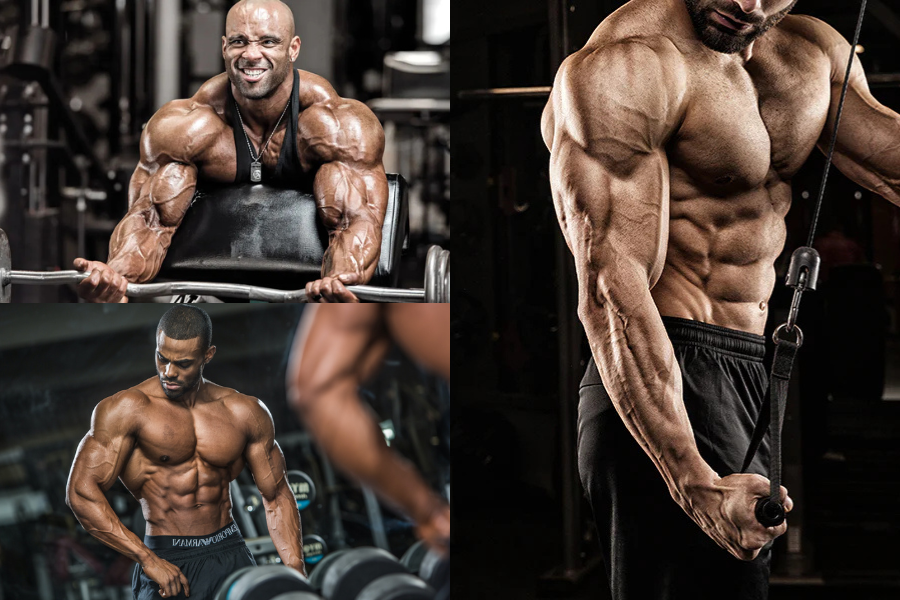
Building bigger, stronger arms does not have to be complicated. With a few smart bicep and tricep exercises, a basic understanding of how your arm muscles work, and a plan you can stick with, you can start seeing real changes in strength and size.
Below, you will learn how your biceps and triceps function, how to pick the right exercises, and how to put them together into easy workouts you can follow right away.
Understand your biceps and triceps
Before you grab a pair of dumbbells, it helps to know what you are trying to train. That way, each exercise has a clear purpose instead of feeling random.
Your biceps brachii is a two headed muscle on the front of your upper arm. Its main job is to bend your elbow, and it also helps rotate your forearm so your palm turns up. Both heads start on your shoulder blade and attach to the radius bone near your elbow.
Your triceps brachii sits on the back of your upper arm. It has three heads and is responsible for straightening your elbow. Two heads start on the upper arm bone and one starts on the shoulder blade, and all three attach to the bony point of your elbow.
Knowing this gives you a simple rule of thumb. Any movement that bends your elbow under load is a bicep exercise, and any movement that straightens your elbow under load is a tricep exercise.
Key principles for arm growth
If you want your bicep and tricep exercises to actually build size, a few basic training principles matter more than any one movement.
You will get the most muscle growth in a moderate rep range. For both biceps and triceps, aim for roughly 6 to 12 reps per set. Beginners usually do well with 2 to 3 sets per exercise. If you are more experienced, 4 to 6 sets per session is common for continued progress.
Frequency matters too. Training your biceps 2 to 3 times per week leads to greater hypertrophy than hitting them less often, with research suggesting about 3.1 percent more growth per week at higher frequency according to a 2024 guide from Gymshark that reviewed arm training studies. Triceps respond well to a similar approach, with many lifters doing at least two dedicated tricep sessions each week.
Form should always beat ego lifting. If you go too heavy, you tend to swing your body, recruit your shoulders, and take tension off the muscles you actually want to train, which slows growth and raises injury risk. Men’s Health highlights that using the elbow as the fixed pivot point is key for curls, skull crushers, and similar moves, and that rocking through the hips or shoulders limits arm gains.
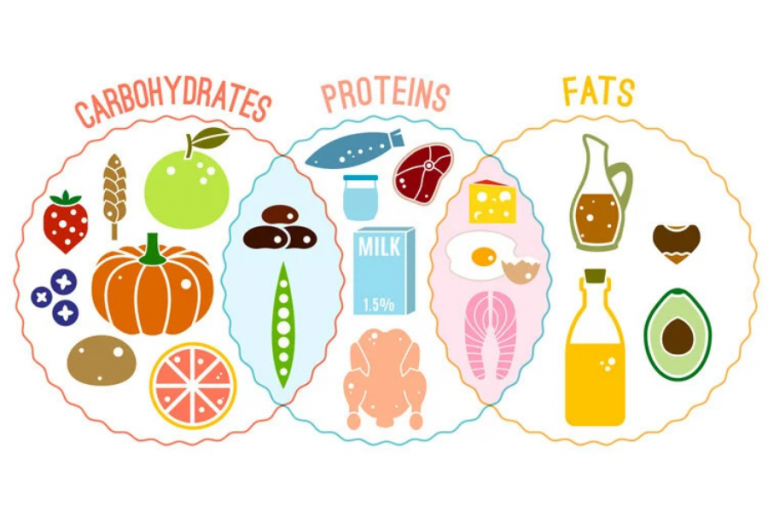
Finally, your recovery habits support everything. Getting at least 0.7 grams of protein per pound of bodyweight, staying in a slight caloric surplus if you want more size, sleeping 7 to 9 hours, and taking rest days all give your arms time to grow between workouts.
Simple bicep exercises that work
You do not need an endless list of curl variations. What you do need is a small set of bicep and tricep exercises that hit the muscle from slightly different angles and let you train with good form.
Your biceps have two heads. The long head runs along the outside and contributes to that high peak look. The short head sits more toward the inside and adds thickness and width. The most effective routines work both.
Here are some straightforward bicep options.
Dumbbell curls
Standard dumbbell curls are a classic because they train both bicep heads effectively. Stand tall, keep your elbows close to your sides, and curl the weights while keeping your palms facing up. Lower them slowly to keep tension on the muscle.
Use a weight that lets you get 8 to 12 clean reps without swinging. If you feel your shoulders or lower back taking over, reduce the weight and slow down.
Hammer curls
Hammer curls shift your grip so your palms face each other. This neutral grip places more emphasis on the long head of the biceps and also trains the brachialis and brachioradialis muscles in your upper and lower arm, which helps overall arm strength and balanced appearance.
Keep your elbows tight to your sides and avoid leaning back. Think about driving your knuckles up toward your shoulders, then lowering the weight under control.
Chin ups
You might think of chin ups as a back exercise, but they are one of the best compound bicep movements you can do. Using a shoulder width, underhand grip places significant load on your biceps while also training your upper back, shoulders, and core.
If bodyweight chin ups are too challenging right now, use an assisted pull up machine or a resistance band for support. Aim for multiple sets of 5 to 8 reps, rest well between sets, and focus on squeezing your biceps as you pull your chest toward the bar.
Effective tricep exercises for size
Big arms are mostly triceps. Around 70 percent of the muscle mass in your upper arm comes from the triceps, so giving them attention is essential if you want your sleeves to feel tighter.
Because the triceps have three heads, you will get better growth if you use a mix of pressing, pushdowns, and overhead work.
Close grip bench press
The close grip bench press is a compound exercise that works your chest and shoulders but places a heavy emphasis on the triceps. Lie on a bench, take a grip slightly narrower than shoulder width, and keep your elbows close to your sides as you lower and press the bar.
Use a controlled tempo and a weight that lets you get 6 to 10 reps without your form breaking down. This move lets you use more weight than isolation exercises, which is great for strength.
Tricep pushdowns
Cable or band pushdowns are ideal for targeting the lateral and medial heads of the triceps. With your elbows pinned to your sides and your forearms vertical, press the handle down until your arms are straight, then return slowly to the start.
Rope attachments are popular because they let you separate your hands at the bottom and get a strong contraction. Focus on locking out fully and briefly pausing at the bottom of each rep.
Overhead tricep extensions and skull crushers
To fully train the long head of the triceps, you need overhead work. Overhead tricep extensions, done with a dumbbell, cable, or bar, stretch the long head and hit it hard through a long range of motion. Skull crushers, which are lying tricep extensions where the weight moves toward your forehead or behind your head, do something similar.
Gymshark highlights overhead extensions and skull crushers as top choices for the long head, while movements like rope pushdowns and kickbacks are ideal for the lateral head. Choose a weight that lets you control the descent, keep your elbows steady, and feel the muscle working without elbow discomfort.
Why you should train biceps and triceps together
Training bicep and tricep exercises in the same session is efficient and surprisingly comfortable. Biceps and triceps are antagonist muscles. When one contracts, the other relaxes. This means that when you finish a set of curls, your triceps have been resting, and vice versa.
You can take advantage of this by pairing movements. For example, follow a set of chin ups with a set of tricep pushdowns. Your biceps rest while you hit triceps, and overall you get more quality work done in less time.
This approach also lets you track your arm training volume easily. Since biceps and triceps are smaller muscles, they do not need as many weekly sets as your legs or back. A common guideline is to start around 12 total sets per week for triceps and a similar amount for biceps, then adjust based on how you recover and progress. For most of these sets, stay in the 8 to 12 rep range at around 60 to 80 percent of your one rep max, which is a solid hypertrophy zone for arm growth.
Sample easy arm workouts you can follow
You can plug these ideas into almost any training plan. Here are two simple templates, one you can add after an upper body day and one quick finisher when you are short on time.
Basic bicep and tricep session
Use this after your main compound lifts, like bench press, rows, or overhead press. Rest 60 to 90 seconds between sets.
-
Chin ups or assisted chin ups
3 sets of 6 to 8 reps -
Dumbbell curls
3 sets of 8 to 12 reps -
Close grip bench press
3 sets of 6 to 10 reps -
Tricep pushdowns
3 sets of 10 to 12 reps
Keep the weight challenging but manageable. Your last 2 reps of each set should feel tough, but your form should still be clean.
Quick 10 minute 5/20 finisher
If you prefer a very brief but intense arm session, the 5/20 Method described by Men’s Health gives you a fast option at the end of your regular workout. It pairs four moves back to back with no rest, then repeats that circuit three times in about 10 minutes.
For biceps, one round looks like this:
5 chin ups, 10 dumbbell curls, 15 hammer curls, and 20 single dumbbell curls.
For triceps, one round is: 5 heavy barbell overhead extensions, 10 dips, 15 close grip push ups, and 20 tricep pressdowns.
You rest only after you have done all four moves, about 90 to 120 seconds, then you start the next round. The focus is on strict form, full range of motion, and squeezing the muscle at the top of each rep rather than going as heavy as possible.
If you are new to higher volume finishers, start with just one or two rounds and build up as your conditioning and recovery improve.
Recovery and mistakes to avoid
Your progress from bicep and tricep exercises depends just as much on what you avoid as on what you add.
Overtraining is a common issue, especially with arms. Because they are relatively small muscles, giving them as many sets as your legs or back can stall growth or even reverse it. Spreading your arm work across the week, instead of stacking multiple high volume arm days in a row, helps you recover better and make steady progress.
Cheating your form is another big one. Swinging during curls, letting your elbows drift far forward, or bouncing the bar in presses all take tension off the target muscles. Many lifters start using momentum too early in the set, so the biceps or triceps never get fully challenged. Slowing down the lowering phase and pausing briefly at the hardest point of the movement increases time under tension and improves your mind muscle connection, especially important for smaller muscles that cannot be loaded as heavily.
Support your training outside the gym too. Consistent protein intake, hydration, quality sleep, and one or two rest days each week give your arms the best chance to grow from the work you put in.
Bringing it all together
If you keep your approach simple, bicep and tricep exercises can fit smoothly into your current program without taking over your week.
Focus on a handful of reliable movements like curls, hammer curls, chin ups, close grip bench, pushdowns, and overhead extensions. Train in a moderate rep range, keep your form tight, and hit your arms 2 to 3 times per week. Then, back that up with decent nutrition and sleep.
Start by choosing one of the sample sessions above, plug it into your next workout, and pay attention to how your arms respond over the next few weeks. You can always add volume later, but building the habit of consistent, high quality reps is what will make your arms grow.
About the Author