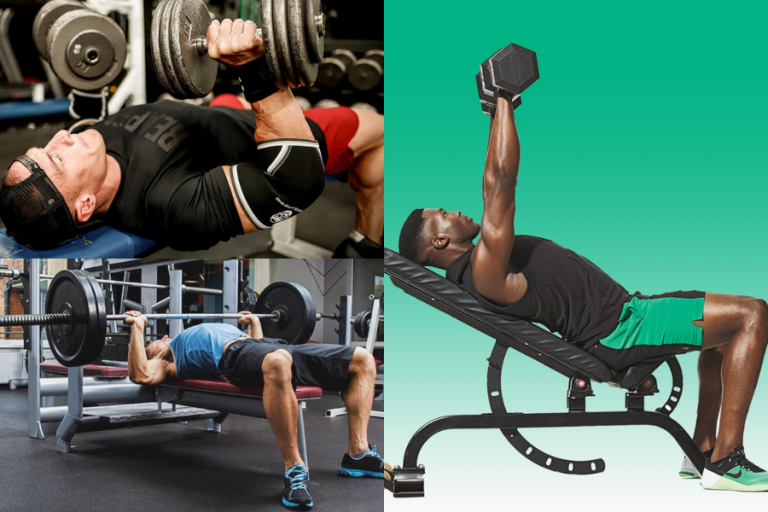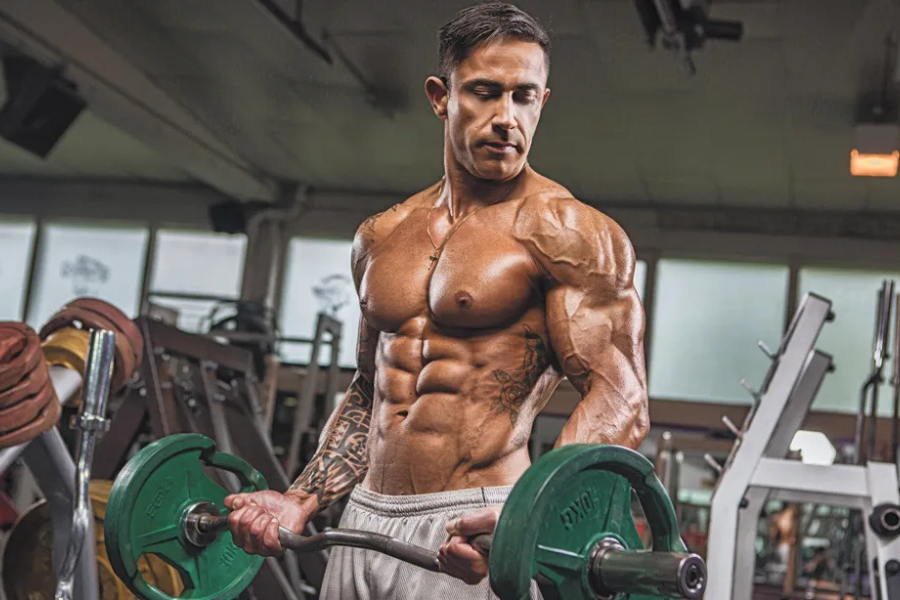
A strong pair of arms does more than fill out your T shirts. With smart arm strength training you also make everyday tasks easier, support healthy shoulders, and build a base for better performance in almost every other lift you do.
Below you will find a clear guide to building bigger, stronger arms without wasting time on random exercises.
Understand your arm muscles
Before you pick up a weight, it helps to know what you are actually training. Your arms are more than just biceps curls.
You have three main areas to focus on:
- Biceps on the front of your upper arm
- Triceps on the back of your upper arm
- Forearms from your elbow down to your wrist and hand
Your triceps make up roughly two thirds of your upper arm size. They include three heads, the long, medial, and lateral, which respond to different angles and grips such as close grip presses, skull crushers, and pushdowns, as highlighted by Gymshark in 2024. Your biceps and brachialis handle bending the elbow and rotating your forearm, while your forearms control grip and wrist position, both of which affect how much weight you can actually hold.
When you train all three areas instead of only chasing a biceps pump, you build balanced strength, healthier joints, and better results in the rest of your workouts.
Start with compound lifts
If you want serious arm strength, you cannot live on curls alone. Modern arm strength training puts big compound lifts first, then adds isolation movements on top.
Exercises like bench presses, pullups, rows, and shoulder presses let you handle heavier loads because they use your chest, back, and shoulders along with your arms. That extra weight is a powerful driver of strength and size. Coach David Otey, C.S.C.S., points out that these big movements are more effective for building overall arm strength than endless curls since they recruit more muscle at once.
You can think of compound lifts as the “engine” of your upper body. When you push, pull, and press hard a few times per week, your biceps and triceps get heavy work even before you touch a single isolation exercise.
Simple upper body compound moves
You do not need a complicated routine. Focus on:
- Bench press or push ups for pressing strength
- Pullups or lat pulldowns for vertical pulling
- Bent over rows or seated cable rows for horizontal pulling
- Overhead shoulder presses for pressing overhead
These four patterns already cover your biceps, triceps, shoulders, and forearms in a way that sets you up for strong, defined arms.
Use isolation moves the right way
Compound lifts get you most of the way, but isolation exercises finish the job. Biceps curls, hammer curls, triceps pressdowns, skull crushers, and overhead extensions let you zero in on specific muscles.
Fitness director Ebenezer Samuel, C.S.C.S., notes that isolation work is especially useful for building a better mind muscle connection. When you slow down curls or pressdowns and pause in the middle of the rep, you learn how a good contraction should feel. This awareness carries over to your heavier compound lifts so your arms work harder instead of letting other muscles take over.
How to get more from every rep
To make isolation work count:
- Choose a weight that challenges you without forcing you to swing or cheat
- Take 1 to 2 seconds to lift the weight and 1 to 2 seconds to lower it
- Pause briefly at the hardest point of the rep and squeeze the muscle
- Stop just short of locking your elbows so you keep tension on the muscle
Matt Harras of Virgin Active warns against using momentum or swinging the weights. He suggests dropping the load or using machines and benches to help you keep strict form for better toning and strength gains.
Train biceps, triceps, and forearms
Balanced arm strength training means treating all three areas as important, not just the muscles you see in the mirror.
Gymshark’s 2024 guidance calls out three key points for well rounded arms:
- Do not only train biceps. Include triceps and forearm work too.
- Hit your triceps from different angles to work all three heads.
- Add specific forearm exercises to build better grip and protect your wrists and elbows.
For your biceps, combine standard curls with hammer curls and wide grip curls so you hit the muscle from multiple angles. Hammer curls, where your palms face each other, are especially good at working the long head of the biceps and the brachialis, which helps add thickness to your upper arm.
For triceps, move beyond basic pushdowns. Overhead extensions, skull crushers, dips, and close grip bench presses help you reach every head of the muscle. Gymshark notes that skull crushers and pushdowns, paired with different grips, are great for full triceps development.
Forearms are your foundation. Wrist curls, reverse curls, Zottman curls, farmer’s carries, and dead hangs train your grip and help you hold heavier weights more safely. Gymshark emphasizes that strong forearms support wrist and finger movement and can reduce injury risk during heavy training.
Plan your weekly arm training
You do not have to crush your arms every day to make progress. In fact, that can hold you back.
The American College of Sports Medicine advises 2 to 3 strength sessions per week on nonconsecutive days, with 2 to 3 sets of 8 to 12 reps, to build general strength. For arms, that usually means you:
- Get indirect arm work from your regular push and pull workouts
- Add 1 or 2 targeted arm exercises at the end of those sessions
- Train arms directly 1 or 2 times per week if you want extra focus
Because arm isolation moves are smaller and use lighter weights than big leg or back lifts, some coaches like David Otey and Ebenezer Samuel suggest you can hit arms up to 3 or 4 times per week as finishers without overtaxing your system, as long as you are not pushing to failure every time.
On the other hand, Matt Harras recommends keeping serious arm sessions to about two days per week to leave room for recovery and overall progress. The right frequency for you will depend on how much total training you are doing and how well you recover.
Use reps, sets, and tempo for your goal
How you perform an exercise can matter as much as which exercise you pick.
If your goal is general strength, the ACSM guideline of 2 to 3 sets of 8 to 12 challenging reps is a solid baseline. For muscular endurance, trainers suggest lighter weights with higher reps and more sets, such as 15 to 20 reps per set. For pure strength, heavier weights with fewer reps, such as 6 to 8, make more sense.
Tempo also plays a big role. Fitness experts cited in 2024 emphasize the importance of controlled contractions. Each rep should take about 1 to 2 seconds to lift and 1 to 2 seconds to lower. If you rush through your sets, you reduce the time under tension and limit muscle growth.
A simple rule you can follow: if you cannot control the weight without swinging or if you cannot pause briefly at the top of the movement, it is probably too heavy for quality arm work.
Sample beginner friendly arm workout
If you are not sure where to start, you can use this straightforward workout twice per week on nonconsecutive days. It focuses on biceps, triceps, and forearms and follows Verywell Fit’s 2024 guidance for beginners, which recommends 2 to 3 sets of 10 to 12 reps where the last few are very challenging.
Complete this routine after your main push or pull workout, or use it on its own if you are just getting started.
- Dumbbell biceps curls, 2 to 3 sets of 10 to 12 reps
- Hammer curls, 2 sets of 10 to 12 reps
- Bench dips or chair dips, 2 to 3 sets of 8 to 12 reps
- Overhead dumbbell triceps extensions, 2 sets of 10 to 12 reps
- Wrist curls or farmer’s carry, 2 sets to near fatigue
- Dead hang from a pullup bar, 2 sets of 15 to 30 seconds
Bench dips and overhead extensions are simple but very effective triceps moves, and they scale easily with your strength. As you improve, you can add weight to dips, slow the tempo, or increase the total sets.
Aim for the last 2 or 3 reps of each set to feel tough while still allowing you to keep clean form. Avoid training arms to failure every session, especially at the start. Your elbows and shoulders will thank you.
Use intensity techniques wisely
Once you have a base of strength and solid technique, you can use intensity techniques to keep challenging your arms without simply piling on more weight.
Gymshark outlines the benefits of supersets for arm growth. You have two main options:
- Alternate biceps and triceps, for example, a set of curls followed by a set of pushdowns
- Pair two moves for the same muscle group, for example, skull crushers followed by close grip bench presses
Both methods increase fatigue and time under tension, which can boost hypertrophy when used in moderation. Another key tactic from Gymshark is progressive overload. Stay in roughly the 8 to 12 rep range, use a challenging load, and gradually increase difficulty over weeks by adding a bit of weight, sneaking in extra reps, or trimming rest times.
Sticking with a small set of high quality exercises for 2 to 3 months and focusing on progression usually beats constantly changing your routine. Gymshark notes that training a focused selection of three biceps moves and three triceps moves, combined with progressive overload, typically leads to better results over time.
Support your training with nutrition and hydration
Your arms grow in the kitchen as much as in the gym. Nutrition advisor Dezi Abeyta, R.D., explains that building bigger arms requires a tailored nutrition strategy that supports recovery and growth, not just time under the bar.
For most people trying to add muscle, a small daily calorie surplus of about 200 to 400 calories above maintenance, with balanced protein, carbohydrates, and fats, works well. Carbohydrates around your workouts give you fuel and help refill glycogen, while protein provides the amino acids your muscles need to repair and grow.
A practical post workout meal might look like:
- A lean protein source such as grilled chicken, fish, steak, eggs, or beans
- About 30 to 35 grams of carbohydrates from pasta, rice, potatoes, or whole grains
- A source of healthy fats like avocado, olive oil, or nuts
When you eat out, Abeyta suggests doubling up on protein and carb portions to support recovery and growth, while limiting fried foods such as chicken tenders and tater tots so you stay closer to your goals.
Micronutrients matter too. B vitamins and vitamin D plus minerals such as calcium and magnesium all support energy production and proper muscle contraction. Staying hydrated helps transport these nutrients, removes waste, regulates muscle temperature, and reduces fatigue risk during tough arm sessions.
If you train in the afternoon or evening, a small pre workout snack, like a banana or a smoothie, then a balanced meal afterward, can make a noticeable difference in how strong you feel and how quickly you recover.
Put it all together
Effective arm strength training is a mix of smart exercise selection, solid technique, and consistent habits. You focus on big compound lifts, then layer in targeted biceps, triceps, and forearm work. You respect recovery, use progressive overload, and let your nutrition support the process.
Start with one or two changes, such as adding hammer curls and dips to your week or slowing your rep speed so you feel every inch of the movement. Over the next 6 to 12 weeks, small, consistent improvements in load, reps, or control will add up to stronger, more powerful arms that help you in the gym and in everyday life.
About the Author