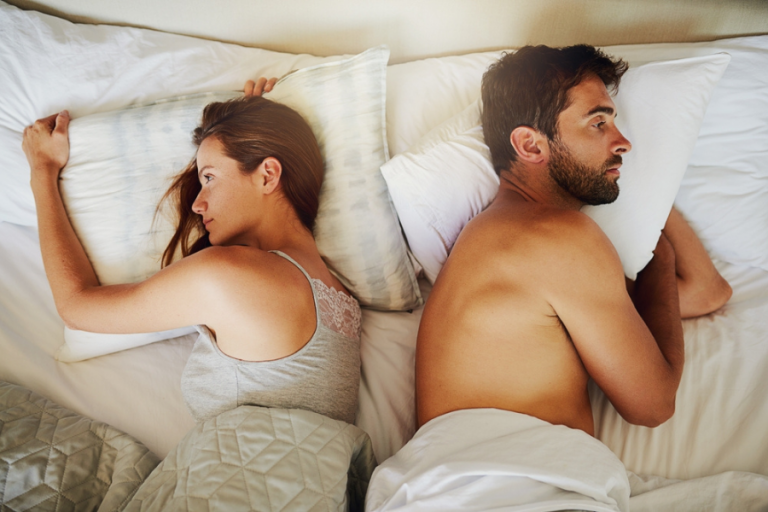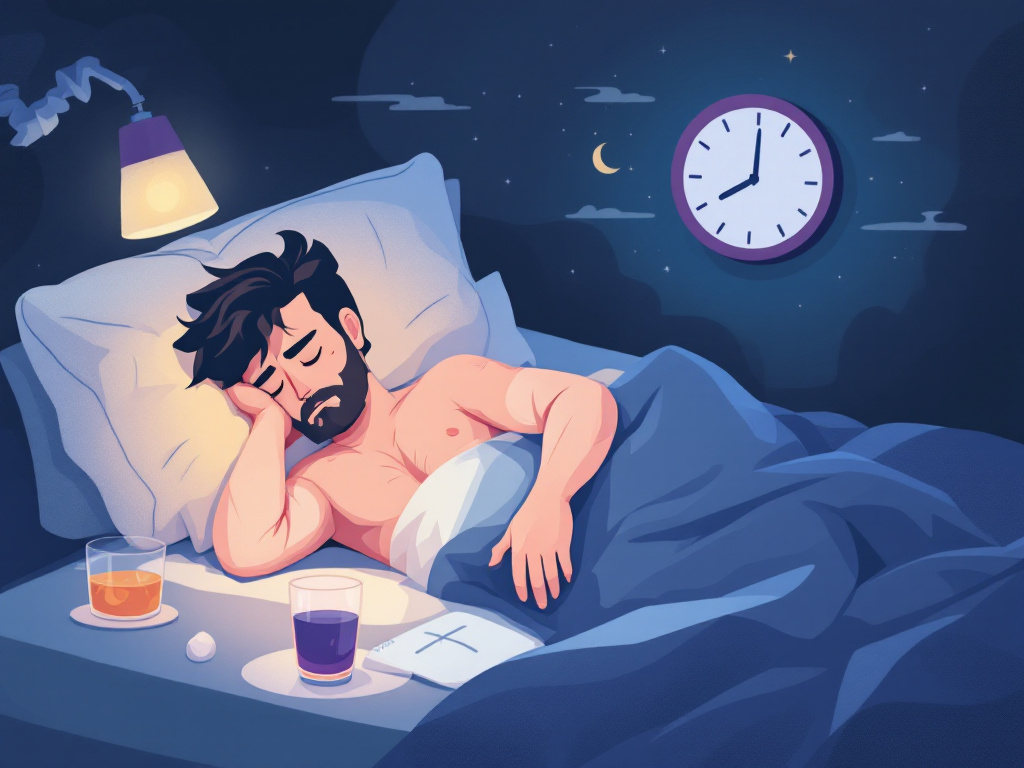
Image by Flux
Alcohol and sleep in men are more closely linked than many people realize. A drink in the evening might feel like it helps you unwind and fall asleep faster. The tradeoff is that your sleep quality often drops, especially in the second half of the night, and that can affect everything from your energy to your hormone levels.
Below, you will learn what actually happens in your brain and body when you mix alcohol and sleep, why men can be especially affected, and what you can do to protect your rest without necessarily giving up alcohol completely.
How alcohol really affects your sleep
Alcohol acts like a sedative at first. You may notice that you fall asleep quickly after a few drinks. That part is real. Alcohol interacts with some of the same brain receptors as common insomnia medications and can promote deep, slow wave sleep at the start of the night (MD Anderson Cancer Center).
The problem is what happens next. As your body metabolizes the alcohol, your brain chemistry shifts again. Instead of staying in deep, restorative sleep, your sleep becomes lighter and more fragmented. You are more likely to wake up at 2 or 3 a.m. and find it hard to fall back asleep, a pattern sometimes called rebound insomnia (MD Anderson Cancer Center).
So while it feels like alcohol is helping you sleep, it usually just front-loads your deep sleep and then steals rest from the second half of the night.
What happens to your sleep cycles
Your sleep is made up of repeating cycles of different stages. You move from light sleep into deep sleep, then into REM sleep, which is when most vivid dreaming and important memory processing occur. Alcohol scrambles this pattern.
In the first part of the night, alcohol increases deep N3 sleep and decreases REM sleep. Then, as your blood alcohol level drops, the balance flips. You spend more time in very light N1 sleep and wake up more easily. The result is a night that may technically be long enough, but does not feel restful (Sleep Foundation).
REM sleep is especially important for feeling mentally sharp the next day. Alcohol suppresses REM sleep in the part of the night when you should be getting the most of it. This can reduce your learning, memory, concentration, and overall sense of being refreshed (MD Anderson Cancer Center).
Over time, regularly disrupting REM and deep sleep can leave you feeling chronically tired even if you think you are in bed long enough.
Nearly 90% of people who regularly drink in the evening report at least one sleep-related problem, such as difficulty staying asleep or waking unrefreshed (Sleep Foundation).
Why evening drinks hit men’s sleep hard
If you are a man who likes a nightcap, you are not alone. The research suggests that you are also more likely to pay for it in lost sleep.
In a large Korean study of adults, higher scores on a standard alcohol screening test were linked to poorer overall sleep quality in men. Men who drank more reported worse subjective sleep, shorter sleep duration, and more sleep disturbances, even after researchers adjusted for age, chronic disease, exercise, depression, anxiety, and smoking (Korean Journal of Family Medicine).
Interestingly, this pattern did not show up in the same way for women in that study. Women with higher alcohol scores did not have clearly worse overall nighttime sleep quality. They did, however, report more daytime dysfunction, which suggests that alcohol can blunt the restorative benefits of sleep for women even if their night does not feel dramatically worse (Korean Journal of Family Medicine).
For you, the takeaway is simple. If you are a man, there is solid evidence that drinking more is tied directly to shorter and more disrupted sleep.
Alcohol, insomnia, and long term sleep problems
If you already struggle with insomnia, you might be tempted to use alcohol as a sleep aid. That strategy often backfires.
Older research from the National Institute on Alcohol Abuse and Alcoholism found that, over a six month period, 18% of people with alcohol dependence had insomnia, compared to 10% of people without alcohol dependence (NIH – NIAAA). In other words, chronic heavy drinking and chronic insomnia often go together.
It also seems to work both ways. Adults with persistent insomnia are about 2.3 times more likely to develop alcohol abuse than those without insomnia (NIH – NIAAA). If you regularly drink to fall asleep, you might be sliding into a cycle where alcohol worsens your sleep, so you drink more to cope with that poor sleep.
Even when men with alcohol dependence stop drinking, some sleep problems can linger. Studies have shown that total sleep time and some deep sleep measures may take one to two years to fully normalize. Light sleep, brief arousals, and REM sleep disruptions can persist for up to three years in some men, especially in those who later relapse or who also live with depression (NIH – NIAAA).
If you have noticed that your sleep has stayed poor even after cutting back on alcohol, this kind of long term disruption might be part of the reason, and it is worth discussing with your doctor.
Snoring, sleep apnea, and breathing problems
Alcohol does not just change your brain chemistry. It also relaxes muscles throughout your body, including the ones that support your tongue and throat. For many men, this is where the biggest night time trouble begins.
Alcohol acts as a muscle relaxant that can increase snoring and make obstructive sleep apnea more likely or more severe. When those airway muscles relax, your airway narrows or collapses, you snore more loudly, and your breathing can repeatedly stop and start. This leads to fragmented sleep and significant next day tiredness (Sleep Foundation, MD Anderson Cancer Center).
In the Korean sleep study, men who said they woke up at least once a week because of their own snoring had significantly higher alcohol use scores than men who did not wake up from snoring (Korean Journal of Family Medicine). If that sounds familiar, your evening drinks may be adding fuel to the fire.
If your partner complains about your snoring, or if you wake up gasping, choking, or with a dry mouth and morning headache, it is important to talk with a health care provider. Treating sleep apnea can improve your energy, mood, and long term health, and cutting back on alcohol is often part of that plan.
Alcohol, hormones, and testosterone in men
Sleep and hormones are tightly connected, and alcohol can affect both at the same time. Recently, researchers have looked more closely at how alcohol intake interacts with testosterone levels in men.
A 2022 study of 314 Korean men found a striking pattern. Men who flush when they drink, which suggests a specific way their body metabolizes alcohol, had a much higher risk of testosterone deficiency if they drank heavily. For flushers who drank more than 8 standard drinks per week, the odds of having low testosterone were over four times higher than for nondrinkers (Korean Journal of Family Medicine).
In that group, heavy drinkers also had lower average testosterone levels, around 4.0 ng/mL, compared with about 5.1 ng/mL for nondrinkers and 5.2 ng/mL for flushers who drank moderately, at 8 or fewer drinks per week (Korean Journal of Family Medicine).
For men who did not flush, heavy drinking did not show the same clear link with testosterone deficiency. This suggests that your genetics and how your body processes alcohol can change its impact on your hormones.
If you are a man who gets red in the face when you drink, especially if you also feel hot or get a fast heartbeat, this research points to a practical guideline. Researchers recommend that flushers limit alcohol to no more than 8 standard drinks per week to reduce the risk of low testosterone (Korean Journal of Family Medicine).
Timing, quantity, and smarter choices
You do not have to quit alcohol completely to protect your sleep. The way you drink matters. Two key levers you can control are timing and quantity.
Experts recommend finishing any alcohol 3 to 4 hours before your planned bedtime. Drinking right up to lights out increases the sedative effect at the start of the night and then magnifies the withdrawal effect that wakes you in the early morning hours (MD Anderson Cancer Center).
Quantity matters just as much. The more you drink, the bigger the disruption to your sleep architecture and breathing. Heavy alcohol use is linked to a much higher rate of insomnia symptoms, with up to 75% of people with alcohol dependence reporting sleep problems, especially during withdrawal and early recovery (Sleep Foundation).
If you are not sure where to start, try one or two of these shifts for a few weeks:
- Keep alcohol to one drink on most evenings, and avoid drinking every day.
- Plan your last drink to end at least 3 hours before you go to bed.
- On nights when you are especially tired, skip alcohol entirely and see how you feel the next morning.
- If you notice facial flushing when you drink, be especially careful with weekly totals.
Pay attention to how your body responds. Many men notice that even a small cutback leads to fewer night time awakenings and better energy.
When to talk with a professional
If you suspect that alcohol is affecting your sleep, you do not have to figure it out alone. It is worth reaching out to a health care professional if you notice any of these:
- You rely on alcohol most nights to fall asleep.
- You wake up multiple times a night and feel unrefreshed most mornings.
- Your partner notices loud snoring, pauses in your breathing, or gasping.
- You have symptoms of low testosterone, such as low libido, fatigue, or reduced muscle mass, and you also drink regularly.
- You have tried cutting back on alcohol but find it very difficult to do.
A doctor or sleep specialist can help you sort out what is alcohol related and what might have another cause. They can also suggest treatment options for insomnia, sleep apnea, or alcohol use that fit your life and goals.
You do not have to have a perfect lifestyle to protect your sleep. Small, intentional changes in how and when you drink can make your nights more restful and your days clearer and more energetic.
About the Author