Advanced ab workouts for men can do much more than carve out a six pack. The right routine helps you build a strong, balanced core that supports heavy lifts, protects your lower back, and improves how you move in everyday life. To get there, you need to go beyond basic crunches and planks and start training your abs with more resistance, more control, and smarter progressions.
Below, you will find how to structure advanced ab workouts for men, which muscles to focus on, and specific exercises you can plug into your routine right away.
Understand what “advanced” abs really means
When you think about core training, you might picture just your “six pack.” In reality, your core includes the rectus abdominis, obliques, transverse abdominis, spinal erectors, and even your glutes. Advanced ab training means you target all of these so your midsection is strong from every angle, not just in the mirror.
To reach that level, you need:
- Resistance, either from weights or from tougher leverage
- Movements that resist extension and rotation, not only flex your spine
- A mix of isometric holds and dynamic, full range motions
Your abs are heavily involved when you deadlift, press, run, or simply pick up groceries. As Marvin Burton of Anytime Fitness points out, your core fires when you sneeze, cough, or laugh, which is why building enough strength for daily life and sport is so important.
Train your abs for all core functions
If you want definition and performance, your advanced ab workouts for men should not be built on random exercises. You will get more out of your training when you intentionally hit each major core function.
Anti extension
Anti extension means preventing your lower back from arching excessively. This is what keeps your spine safe during overhead presses, planks, and heavy barbell lifts.
Good advanced options include:
- Ab wheel rollouts
- Swiss ball rollouts
- Long lever planks, where you move your elbows further away from your shoulders
The ab wheel rollout in particular is a powerful anti extension move that also tests your shoulder mobility. Aim for 3 sets of 6 to 10 controlled reps. Focus on keeping your ribs down and glutes tight instead of seeing how far you can reach on day one.
Anti rotation and anti lateral flexion
Your obliques and deep stabilizers prevent unwanted twisting and side bending. Training these patterns helps you stay solid when you sprint, change direction, or carry heavy loads in one hand.
You can build this capacity with:
- Half kneeling kettlebell windmills
- Side plank progressions and side plank roll to plank
- Anti rotation presses, sometimes called Pallof presses
- One arm farmer’s carries
The half kneeling kettlebell windmill is an underused advanced core move that builds rotational strength, hip and shoulder mobility, and serious core bracing. Try 3 sets of 6 to 8 reps per side, and keep the weight stacked over your shoulder the entire time.
Flexion and rotation
For visible definition, you still want movements that flex and rotate the spine, as long as your back tolerates them. These emphasize the rectus abdominis and obliques and can be trained with more resistance to promote growth.
Examples include:
- Cable crunches
- Dumbbell situps to overhead reach
- Bicycle crunches
- Russian twists or cable woodchoppers
The American Council on Exercise ranks bicycle crunches as one of the top ab exercises for activating the obliques and transverse abdominis through spinal rotation, and they are suitable for home workouts if you do not have access to equipment.
Use resistance and leverage to progress
One of the biggest differences between basic and advanced ab workouts for men is how you increase the challenge. Doing more and more bodyweight crunches mostly builds endurance, not strength or thickness.
You can progress in two main ways.
Add external load
Loaded ab exercises introduce progressive overload so you can actually build more muscle and strength. Good options include:
- Dumbbell situp to overhead reach, 3 to 4 sets of 30 seconds per set
- Cable crunches, 3 sets with count ups to 5 second holds at the peak
- Weighted Russian twists with a medicine ball
- Cable woodchoppers for rotational strength
Weighted farmer’s carries, hard style situps, and double kettlebell front squats are also powerful examples of “feed back” tension. Your abs contract in response to the load you are managing, which teaches them to brace hard when it matters most.
Manipulate your leverage
You can also make exercises harder without adding weight by changing how your body is positioned. This is especially important if you train at home with limited equipment.
Moves like:
- Dragon flags
- Hanging leg raises
- Long lever planks
- L sits
all increase the demand on your abs simply by placing your legs further from your center of mass or reducing your contact points with the floor or bar. For dragon flags, you can slightly bend your knees to reduce hip flexor strain while you learn to control the eccentric lowering phase.
Hanging leg raises are another advanced favorite. Slightly bend your knees and point your toes slightly inward to enlist the glutes and support your pelvis. Start with 3 sets of 8 to 12 strict reps and avoid swinging.
Combine isometric and dynamic ab work
Isometric exercises, where you hold a position without moving, are valuable for building core stiffness and endurance. Dynamic exercises, where you move through a range, add the stretch and contraction your abs need for full strength and development.
You will get the best results when you use both.
Isometric staples for advanced lifters
Examples of isometric core work include:
- Standard and long lever planks
- Side planks and side plank roll to plank
- L sits and supported holds
- Turkish get up pauses at specific positions
The side plank roll to plank, highlighted by spine expert Stuart McGill as part of his “Big 3” core exercises, increases oblique and lat activation while reducing spinal twisting. It is a smart choice if you want strong obliques without a lot of spinal shear.
The Turkish get up is another advanced option that blends core strength with shoulder stability, mobility, balance, and body awareness. Moving slowly and under control, rather than rushing the reps, is what makes this lift so effective.
Dynamic moves for strength and size
Dynamic abdominal training involves a stretch followed by a powerful contraction, such as lowering your legs under control in a leg raise, then snapping them back up. This type of training is especially useful if you do not have flexion intolerance or a history of back pain.
String together moves like:
- V sit crunches
- Swiss ball rollouts
- Mountain climbers
- Burpees, for a full body cardio and core challenge
These keep your heart rate up, train coordination, and force your abs to generate tension while you move, which is closer to how your core works during sports and daily tasks.
Sample advanced ab workout structure
You can plug many different movements into a smart framework. For most men, 3 to 5 core exercises at the end of your main workout is plenty.
Here is one example of a balanced, advanced routine:
- Anti extension: Ab wheel rollouts, 3 sets of 6 to 10 reps
- Anti rotation: Half kneeling kettlebell windmill, 3 sets of 6 to 8 reps each side
- Flexion: Weighted cable crunch, 3 sets with 8 to 12 reps, holding each contraction up to 5 seconds
- Lower abs and leverage: Hanging leg raises, 3 sets of 8 to 12 reps
- Finisher: Side plank roll to plank, 2 sets of 30 to 45 seconds per side
Most sets can be in the 10 to 15 rep or 30 to 45 second range. Work at a controlled pace, and stop each set a rep or two before your form breaks down.
You want maximal tension, not just a burning sensation. The “burn” mainly reflects rising acidity from energy use, not the quality of the muscle contraction itself. Strong, crisp contractions that you can only hold for 20 to 30 seconds will do far more for ab strength than chasing a 2 minute plank for the sake of it.
Match your ab training to your nutrition
You can train your abs hard and still not see them if your body fat is too high. For most men, visible abs appear around 6 to 13 percent body fat according to guidelines summarized by the American Council on Exercise and brands like Gymshark.
To move into that range, you will need:
- A calorie deficit so you are losing fat over time
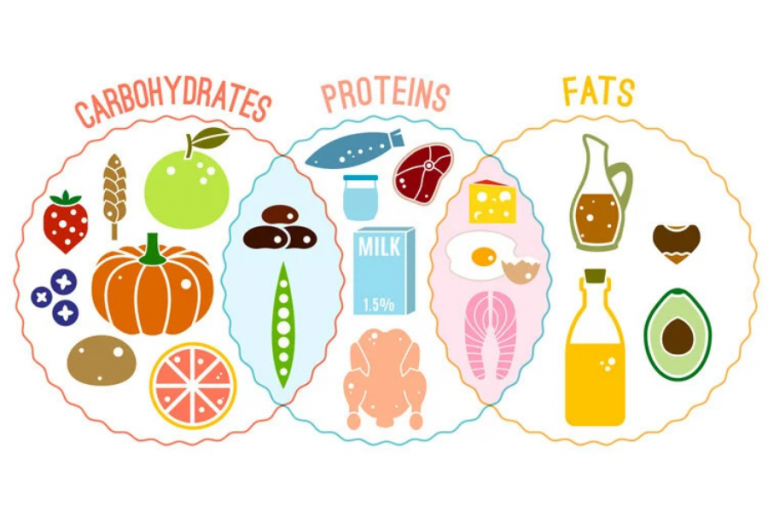
- Sufficient protein, roughly 1.2 to 1.5 grams per 2.2 pounds of bodyweight
- A mix of strength and cardio training
- One to three focused ab sessions per week
Fitness expert Laila Ajani emphasizes that no workout can make up for a poor diet. You cannot out-train very high body fat levels such as 30 percent. If you are serious about definition, treat nutrition as your primary lever and your ab workouts as a powerful support tool.
Try a focused home program if you lack equipment
If you do not have access to a gym or heavy weights, you can still follow advanced ab workouts for men at home by leaning on leverage and smart programming methods.
One example is a 22 day home ab circuit that uses a “Six Pack Progression” with no equipment. It targets every major ab function, from lower abs to upper abs to obliques, and places the hardest exercises first while offering scaled versions for different fitness levels.
This type of program often uses “Extinction Training.” You perform a prescribed number of reps with only 10 second breaks, repeating until you can no longer hit the target reps. This is a straightforward way to push your abs close to failure and stimulate growth without special gear.
Key moves in such a progression include:
- W raises for the lower abs
- Black Widow knee slides for bottom up rotation
- Butterfly situps for midrange work
- Seated corkscrews for obliques
- Levitation crunches for upper abs
- Situp elbow thrusts for explosive top down rotation
Combine a short daily circuit like this with a sensible nutrition plan and you can build the habits that support long term core strength and visible definition.
Put everything together
To make your advanced ab workouts for men count, keep these principles in mind:
- Train every part of your core, not only your six pack
- Use resistance and harder leverage instead of endless light reps
- Include both isometric holds and dynamic contractions
- Brace your core during heavy compound lifts so your abs work throughout your session
- Pair your training with a realistic nutrition plan so definition can actually show
From ab wheel rollouts and dragon flags to Turkish get ups and cable crunches, you have plenty of tools. Start by adding one or two advanced movements to your current routine, focus on solid technique, and progress the challenge slowly. Over time, you will not only see more definition, you will also feel how much stronger and more stable your entire body has become.
About the Author