How fat loss ab workouts really work
If you are searching for ab workouts for men for fat loss, you might be picturing endless crunches and sit ups. The reality is different. You burn belly fat by losing overall body fat, not by hammering one muscle group. Your ab workouts help shape and strengthen your core, while your overall training and nutrition take care of the fat loss.
According to the American Council on Exercise (ACE), visible abs for men usually show up around 6 to 13 percent body fat, which requires a consistent calorie deficit, enough protein, and smart training, not just more crunches. Once you understand that, you can design workouts that actually move the needle instead of just tiring out your midsection.
Why you cannot spot reduce belly fat
You can absolutely make your abs stronger and thicker. You cannot force your body to pull fat from only your stomach.
Research on spot reduction has repeatedly found that targeted exercises, like sit ups, do not significantly reduce fat in that specific area. One study in the Journal of Strength and Conditioning found that sit ups increased abdominal strength but did not change belly fat levels.
When you train or do cardio, your body taps into fat stores from all over. Genetics decide where you lose fat first and last. The University of Sydney points out that this makes spot reduction a myth for the abdominal area, even though targeted work can still tone the muscles underneath.
That is why the smartest way to attack belly fat is to:
- Create an overall calorie deficit
- Use resistance training to keep or build muscle
- Add cardio and higher effort intervals to increase calorie burn
- Layer in focused core training to build visible ab muscles
Your ab workouts have an important role, but they are one part of a bigger plan.
How often you should train your abs
It is easy to swing from never doing core work to training abs every single day. Both extremes can slow your progress.
Exercise physiologist Jeremey DuVall recommends training the abdominal muscles two to three times per week for most lifters, which is enough to get results and avoid overtraining. More advanced lifters or anyone prioritizing ab growth can push that to three to six sessions weekly if recovery is solid.
You do not need long sessions either. A balanced ab workout can last 5 to 30 minutes. Short, focused 5 to 10 minute blocks at the end of your main workout are often more effective than 20 minutes of rushed crunches when you are already exhausted.
A simple schedule that works for most men:
- 2 or 3 focused ab sessions per week
- At least 1 rest day between those sessions
- Core involvement on other days through compound lifts like squats, deadlifts, and overhead presses
This pattern gives your abs enough stimulus and, just as important, enough time to recover and grow.
Best ab movement patterns for fat loss and strength
For ab workouts that support fat loss, you want more than just flexion exercises like basic crunches. Different movement patterns hit different parts of your core and keep your workouts balanced and joint friendly.
1. Flexion moves
These are the classic “six pack” exercises where your spine curls.
Examples include:
- Crunches
- Reverse crunches
- Cable crunches
- Med ball V ups
You still want them in your routine, but they should not be the only pattern you use. For more growth, you can load them, for example with cable crunches or dumbbell sit ups.
2. Anti extension moves
Here you resist your lower back arching, which is crucial for a strong, stable trunk.
Great options:
- Front plank
- Stability ball rollouts
- Ab wheel rollouts
- Hollow holds
Planks, for example, are highly effective when you treat them as real strength work. Aim for 4 sets of 30 second to 1 minute holds and focus on tight glutes, tight abs, and controlled breathing.
3. Rotational and anti rotation moves
Rotation work targets your obliques and deep core. Anti rotation builds stability when something is trying to twist you.
Examples:
- Russian twists
- Bicycle crunches
- Pallof press
- Cable or band wood chops
- Half kneeling kettlebell windmill
Bicycle crunches, ranked by ACE as the top ab exercise for oblique and transverse abdominis activation, offer a lot of value with no equipment needed.
4. Hip flexion with a stable torso
These moves challenge your abs by lifting the legs while your trunk stays still.
Good choices:
- Hanging knee raises
- Hanging leg raises
- Lying leg raises
- Knee tucks with sliders or on a stability ball
These exercises force your abs to brace while your legs move, which teaches real world core control.
Sample ab workouts for men focused on fat loss
Below are two sample ab workouts that fit easily into a weekly plan. Each uses 3 to 5 exercises and hits multiple movement patterns, which the research suggests is ideal for building a strong, defined core during fat loss.
Workout A: Bodyweight core burner
Use this on full body or cardio days.
- Front plank
- 4 sets of 30 to 45 seconds
- Rest 30 seconds between sets
- Bicycle crunch
- 3 sets of 12 to 15 reps per side
- Move at a controlled tempo, do not yank your neck
- Lying leg raise
- 3 sets of 10 to 15 reps
- Press your lower back gently into the floor
- Side plank
- 3 sets of 20 to 30 seconds per side
- Mountain climbers
- 3 sets of 30 seconds of continuous work
- Keep your hips low and core tight
You can run this as a circuit for more conditioning, rotating through exercises with minimal rest, or as straight sets with 30 to 45 seconds rest.
Workout B: Strength focused weighted abs
Use this on your heavier lifting days.
- Cable crunch
- 3 sets of 10 to 15 reps
- Hold the squeezed position for 2 seconds
- Pallof press
- 3 sets of 8 to 10 reps per side
- Stand tall and resist rotation as you press
- Dumbbell sit up to overhead reach
- 3 sets of 30 seconds on, 30 seconds off
- Keep the dumbbell light enough to control the movement
- Half kneeling kettlebell windmill
- 3 sets of 6 to 8 reps per side
- Russian twists
- 3 sets of 15 to 20 total reps, light weight
- Focus on rotating your ribcage, not just flinging your arms
In both workouts, you can adjust sets and reps within these ranges and gradually increase load, reps, or total time to apply progressive overload.
How to combine abs, strength training, and cardio
For fat loss and visible abs, your full program matters more than any single session.
Research shows that combining strength training and cardio three times per week, with about 30 minutes of each per session, produces more fat loss and better core development than cardio alone. That mix lets you burn calories while keeping or gaining muscle, which improves how your midsection looks as you lean down.
A simple weekly structure:
- 3 days: Strength training + 5 to 15 minutes of focused ab work
- 2 or 3 days: Cardio, either steady state or intervals
- 1 or 2 days: Light movement and recovery
For cardio, you can use:
- Steady state work like brisk walking, cycling, or easy jogging for at least 30 minutes
- High intensity interval training (HIIT) such as treadmill sprints, bike intervals, or bodyweight circuits
HIIT can burn up to about 30 percent more calories than steady state in the same time frame, which makes it a powerful tool for fat loss if your joints and fitness level can handle the intensity.
Full body, high effort movements like burpees, kettlebell swings, mountain climbers, and medicine ball slams are especially effective because they recruit many muscle groups and spike your heart rate. That translates into more calories burned per minute compared with isolation exercises.
Nutrition rules that reveal your abs
If your nutrition is not dialed in, even the best ab workouts for men for fat loss will only bring you stronger abs under the same layer of fat.
The key principle is an energy deficit: you need to eat fewer calories than you burn each day. The Centers for Disease Control and Prevention (CDC) suggests losing 1 to 2 pounds per week through a daily deficit of roughly 500 to 750 calories. For most men, a daily deficit of 300 to 500 calories is a sustainable starting point.
From there, pay attention to your macros:
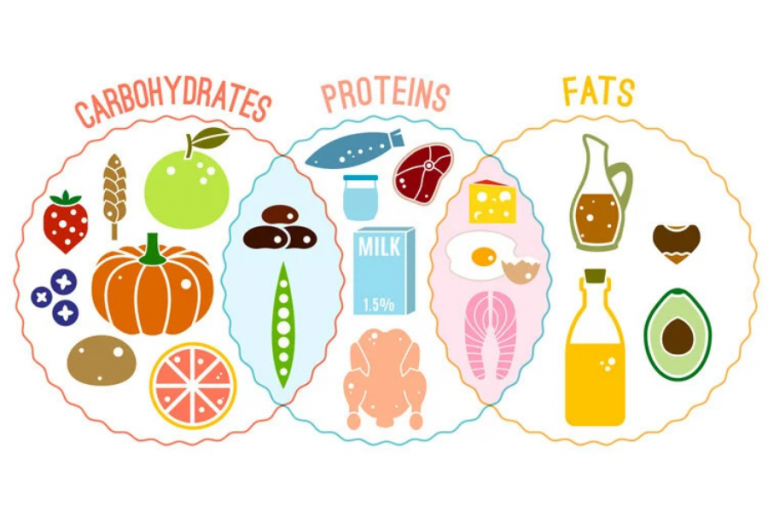
- Protein: Aim for about 1.6 to 2.0 grams per kilogram of body weight. For an average 185 pound man, that comes out to roughly 135 to 170 grams of protein per day. Higher protein intake helps preserve muscle mass while you lose fat and supports ab definition.
- Carbohydrates: Do not cut carbs to the bone. Around 2 to 3 grams per kilogram of body weight is a good starting range so you have energy for hard training and recovery.
- Fats: Keep dietary fat near the lower end of 20 to 25 percent of your daily calories. Focus on healthy sources like avocados, nuts, seeds, and omega rich fish such as salmon.
Carb quality matters too. Replacing refined carbohydrates with whole grains such as oats, barley, buckwheat, and quinoa has been linked with significant reductions in belly fat over a 12 week period when whole grain bread replaced refined wheat bread.
If you get stuck, track your intake and scale weight for 2 weeks. If your body weight is not trending down by roughly 0.5 to 1 percent per week, adjust your calorie intake slightly or add a bit more daily movement.
Protecting your back during ab workouts
If you feel your lower back more than your abs, it is a signal to adjust your technique and exercise choices.
To keep your spine happy:
- Master basic bracing by taking a breath, tightening your abs as if preparing for a body shot, and keeping your ribs stacked over your pelvis
- Prioritize stability moves like bird dogs, dead bugs, and glute bridges, which build core endurance without excess spinal stress
- Limit heavy or high rep spinal flexion if you already have back issues and lean more on anti extension and anti rotation work
Bird dogs, dead bugs, and glute bridges help you train the muscles that support your lumbar spine, including the deeper core and glutes. This reduces the risk of your lower back compensating every time you try to “hit your abs.”
If any movement gives you sharp pain instead of normal muscular fatigue, stop it and choose a regression, for example bent knee instead of straight leg raises.
Putting it all together
You do not need complicated routines to make ab workouts for men for fat loss work. You need a repeatable structure that you can stick to for months, not days.
As a quick reference, you can use this:
2 to 3 focused ab sessions per week, each with 3 to 5 exercises from different patterns, layered on top of full body strength training, regular cardio, and a consistent calorie deficit with enough protein.
Start with one or two of the sample workouts, plug them into your week, and give the plan 8 to 12 weeks. Track how you feel, adjust your exercises if something bothers your joints, and keep your nutrition aligned with your fat loss goal.
Over time you will notice more than just a leaner midsection. A stronger, more stable core will make every lift, run, and daily task feel easier, while your clothes start to fit the way you wanted when you first searched for that ab routine.
About the Author