A strong, well trained core does much more than carve out a six pack. The right ab workouts for men athletic performance can help you run faster, lift heavier, and stay injury free. When you train your abs as part of your whole core, you give your body a more stable base for almost every sport and lift you do.
Below, you will learn how your core really works, which ab exercises matter most for performance, and how to turn them into simple, repeatable workouts you can actually stick with.
Why athletic abs are different from “beach abs”
If your only goal is visible abs, you can spend a lot of time on crunches and leg raises. For athletic performance, that approach is incomplete and can even backfire.
Traditional moves like sit ups, crunches, toes to bar, and straight leg raises mainly work the rectus abdominis in one direction of movement, trunk flexion in the sagittal plane. Research suggests that focusing only on this kind of flexion can create imbalanced core development and increase your risk of low back pain in male athletes as of July 28, 2022. Real sport rarely looks like that kind of straight up and down motion.
For performance, you need your core to do three big jobs:
- Generate power when you jump, sprint, throw, swing, or change direction.
- Stabilize your spine so your arms and legs can move efficiently.
- Control rotation and side bending when you cut, twist, or land.
That is why effective ab training for men should include movements in all three planes of motion, flexion and extension, side bending, and rotation, not just basic crunches.
Know your core muscles and what they do
When you think about ab workouts for men athletic performance, it helps to know which muscles you are really trying to train.
Your performance focused core includes:
-
Rectus abdominis
The classic six pack muscle. It flexes your torso and helps with powerful bracing in heavy lifts. -
External and internal obliques
These wrap around your sides. They handle rotation, resist unwanted twisting, and help control side bending. Together they form much of the frame of your abdomen. -
Transverse abdominis
A deep corset like muscle that wraps around your midsection. It is crucial for spinal stability and connecting upper and lower body. Weak deep core muscles are linked to low back pain and poor running form, according to research from the Ohio State University Wexner Medical Center, which can reduce oxygen intake and athletic effectiveness. -
Serratus anterior
Runs along the sides of your ribs. It stabilizes your shoulder blades and trunk so you can punch, push, or press with more control.
Targeting all of these muscles with a mix of stability, strength, and controlled movement is what builds a truly athletic core.
How a strong core boosts performance
A strong core pays off across almost everything you do.
Better posture and alignment help you stand taller and move more efficiently. A study in Isokinetics and Exercise Science found that men who did Pilates three times a week for two months significantly improved posture, which improved stability as well.
In the weight room, a stable core helps you transfer force between your upper and lower body. That means:
- Safer, stronger deadlifts, squats, and presses
- More reps before your form breaks down
- Less energy lost to wobbling or collapsing through your midsection
In running and field sports, your core is the link between your legs and arms. Certified running coach Raj Hathiramani notes that stronger abdominal muscles help your upper and lower body work together more efficiently so you can maintain good form, conserve energy, and improve endurance, speed, and power.
Core strength also supports quick changes of direction, sharper cuts, and higher jumps by giving you a more stable center to push from. Functional core exercises that improve strength, stability, and coordination tend to do more for performance than endless sit ups, because they train the stabilizing role your core plays in sport specific movements.
Finally, a strong core is protective. Weak trunk muscles are tied to poor biomechanics and a higher risk of injury. Strengthening them lowers your injury risk and helps you stay on the field or in the gym longer.
Principles of effective ab training for performance
If you want your ab training to carry over to sports and lifting, structure it with a few key principles in mind.
Train all planes of motion
Sports involve twisting, turning, and side to side movement, not just forward bending. As performance focused research from July 28, 2022 emphasizes, you should train:
- Sagittal plane, flexion and extension, like controlled crunch variations and supermans
- Frontal plane, side bending and anti side bending, like kettlebell teapots and side planks
- Transverse plane, rotation and anti rotation, like banded rotations and Pallof presses
This variety mimics real life and game like movement patterns.
Use the Six Pack Progression order
For athletic performance, you can follow a simple order that coaches sometimes call a Six Pack Progression:
- Start with lower ab and bottom up movements, these are the most demanding.
- Move to mid range and oblique work.
- Finish with upper ab focused exercises.
Doing the hardest work first while your energy is highest gives you better quality reps and better strength gains.
Focus on bracing and anti movement
Many of the most effective performance ab exercises teach you to resist movement instead of chasing huge ranges of motion.
Marvin Burton from Anytime Fitness UK suggests bracing your core as if you are about to take a hit to the midsection. That kind of tight, intentional bracing builds subconscious activation that carries into your lifts and sport. Breathing into your stomach and tensing your abs during advanced moves helps keep load out of your lower back too, as Raj Hathiramani also stresses.
Five key exercises for athletic abs
Several experts highlight a small group of movements that cover all the main core functions you need. Five key ab exercises for athletic performance as of July 28, 2022 are:
1. Supermans, trunk extension
You lie face down and lift your arms and legs off the floor. This trains trunk extension, hits your spinal erectors, and balances all the flexion work your abs already get.
Supermans help you avoid overdeveloping the front of your core at the expense of your lower back, which reduces the risk of pain and improves posture.
2. Kettlebell teapots, lateral flexion
Stand tall with a kettlebell in one hand and slowly slide that weight down the side of your leg, then return to the top. This works your obliques through controlled lateral flexion.
Keep both shoulders square and think of creating space between your ribs as you move. The goal is controlled side bending, not collapsing. Training this direction of movement improves your ability to handle side hits and maintain balance when you cut or land off axis.
3. Isometric lunge banded rotations, rotational stability
Get into a lunge stance and hold a resistance band out in front of your chest with tension. From there you resist the pull of the band and perform small controlled rotations.
This variation ties your core and lower body together. It teaches you to stabilize your trunk over a split base, just like when you are throwing, hitting, or decelerating after a sprint.
4. Pallof presses, anti rotation
The Pallof press is a classic anti rotation drill. You stand sideways to a cable or band anchor, hold the handle at your chest, then press straight out and back while resisting the band’s pull.
This lights up your obliques and deep stabilizers. By learning to stop unwanted twisting, you keep your spine safer during heavy lifts and sudden changes of direction.
5. Deadbugs, core bracing
Deadbugs are one of the most useful core exercises for athletes. You lie on your back with arms straight up and knees over your hips, then slowly lower opposite arm and leg while keeping your lower back gently pressed into the floor.
Performed 2 to 3 times per week, deadbugs train you to maintain spinal stability while your limbs move. That pattern shows up in almost every sport. They also help reduce the risk of low back pain and improve functional performance when done consistently.
Sliding Ab Tuck, the best no equipment move
If you want one ab exercise with no machines or weights that still builds serious athletic core strength, consider the Sliding Ab Tuck.
This move targets both the rectus abdominis and obliques while limiting hip flexor overuse. You start in a plank position with your feet on sliders or towels, then pull your knees toward your chest and slightly across your body, before sliding back out. Because you are moving from your lower body up, it fits the demanding bottom up slot in the Six Pack Progression.
Other useful bodyweight moves for athletic abs include the Side Bridge Twist for lateral flexion and rotational stability, the Levitation Crunch for upper abs, and the Gymnast Ab Tuck for lower abs. All are designed to train more than simple forward bending, which is key for sport carryover.
How often you should train your abs
Unlike some muscle groups that need long breaks, your abs and core are active in almost every movement you make. That is why many performance focused programs recommend training them frequently, often 5 to 6 times a week or even in short daily sessions.
You do not need long, punishing workouts. Short blocks of about 6 to 10 minutes are enough if you are consistent and choose the right exercises. You might add a quick core circuit to the end of your strength sessions or as part of your warm up.
A meta analysis of 29 randomized controlled trials involving 956 healthy athletes aged 15 to 23 years from 2014 to 2024 found that core training significantly improves general athletic performance, with a large standardized mean difference, although the exact confidence interval is cut off in the summary. Most of these programs used 2 to 3 sessions per week lasting 20 to 120 minutes, over 4 to 24 weeks, and included core stability, core strength, or combined training of trunk muscles. Even with differences between studies, core training consistently improved foundations like endurance and balance.
Sample ab workouts for men’s athletic performance
You can turn the principles above into simple routines that fit around your existing training. Aim for 3 to 5 exercises, 2 to 4 sets, and 10 to 15 reps or timed rounds, performed 1 to 3 times per week.
Here is a straightforward template you can adapt.
Focus first on quality form and proper bracing, not speed. If your lower back starts to carry the load, stop the set, reset your posture, and shorten the range of motion.
Workout A, core stability and anti rotation
- Deadbug, 3 sets of 10 to 12 slow reps per side
- Pallof press, 3 sets of 10 to 15 seconds hold per position each side
- Side plank or Side Bridge Twist, 3 sets of 20 to 30 seconds per side
- Supermans, 2 to 3 sets of 10 to 15 reps
Rest 30 to 45 seconds between sets. This is a good add on after heavy lifting days.
Workout B, rotational power and lower abs
- Sliding Ab Tuck, 3 sets of 8 to 12 reps
- Kettlebell teapots, 3 sets of 8 to 10 reps per side
- Isometric lunge banded rotations, 3 sets of 20 to 30 seconds per side
- Bicycle crunch, 2 to 3 sets of 20 to 30 seconds at a controlled pace
Rest 30 to 45 seconds between sets. This pairs well with sprint or field based training.
If you prefer timed circuits, follow the running specific routine recommended for an intense core challenge: perform 30 seconds each of Bear Plank Extension, Walking Plank, Forearm Side Plank with Hip Dip to Leg Raise, Single to Double Leg Lower, and Bicycle Crunch, resting 15 seconds between exercises. Repeat the circuit three times with 1 minute rest between rounds. This setup builds the stability and endurance runners need, as described by Raj Hathiramani.
Do not forget nutrition and overall training
Ab workouts for men athletic performance will make your core stronger and more resilient. However, if you also want visible definition, what you eat and how you train the rest of your body matter just as much.
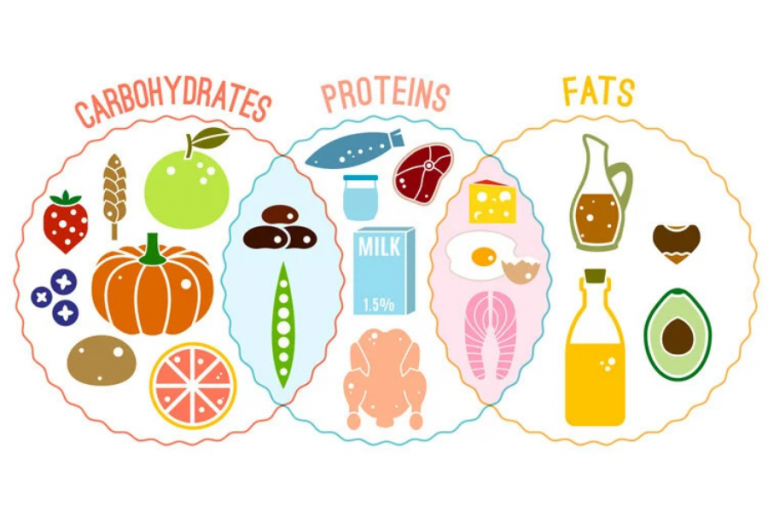
Ab exercises cannot spot reduce belly fat. For your abs to show, you need to manage overall body fat through a balanced diet and regular activity. A useful guideline for many active men is roughly 40 percent of calories from protein, 40 percent from fibrous carbohydrates, and 20 percent from starchy carbohydrates. That mix supports fat loss and muscle maintenance so the muscle you are building has a chance to be seen.
At the same time, remember that core work supplements, not replaces, full body training. Compound lifts like squats, deadlifts, and rows already challenge your core significantly. When you add smart, focused ab sessions, you round out your strength, stability, and control in all planes of motion.
Putting it all together
If you take one idea from this guide, let it be this: train your abs as part of your core, in every direction you move in sport, and you will feel the difference in how you perform.
Start by adding one 6 to 10 minute core block to the end of 2 or 3 workouts this week. Include at least one bracing move like deadbugs, one anti rotation exercise like the Pallof press, and one bottom up or lower ab move like the Sliding Ab Tuck. Pay attention to posture and breathing, brace as if preparing for a light punch, and move with control.
Over the next few weeks, you should notice better posture, more stability under the bar, and smoother, more powerful movement in your sport. From there, keep building. Your core will thank you every time you sprint, lift, or change direction with confidence.
About the Author