A strong shoulder routine does more than fill out your T-shirt. The right shoulder exercises for men protect your joints, improve posture, and boost pressing strength for everything from push-ups to overhead carries. You can build powerful, defined shoulders at home with just a few dumbbells or resistance bands and a bit of floor space.
Below, you will find a simple structure to follow: learn what your shoulders actually do, warm them up properly, then pick from joint friendly exercises you can perform without a full gym.
Understand your shoulder muscles
Before you start lifting, it helps to know what you are training. Your shoulders are more than a single muscle.
The three heads of the deltoid
Your main shoulder muscle is the deltoid, which has three heads:
- Anterior delts at the front, used heavily in push-ups, bench presses, and overhead presses
- Lateral delts on the side, responsible for the round, capped look
- Posterior delts at the back, important for posture and pulling movements
Many men overemphasize the front delts and neglect the rear delts. Since the front delts already work hard during chest and triceps exercises, loading them with lots of extra front raises can create imbalances and increase your risk of shoulder pain and rotator cuff issues, as highlighted in a Squatwolf guide on common shoulder training mistakes.
Supporting muscles around the joint
The joint itself is stabilized by smaller but crucial muscles:
- Rotator cuff muscles that keep the shoulder head centered in the socket
- Rhomboids and trapezius in your upper back that help you retract and stabilize your shoulder blades
Effective shoulder exercises for men should include movements that challenge all these areas so you build strength, symmetry, and stability, not just size. A Gymshark shoulder training guide emphasizes targeting the deltoids, rotator cuff, rhomboids, and traps for well rounded development.
Warm up and protect your shoulders
Your shoulders are mobile but delicate. Taking 5 to 10 minutes to prepare them before your workout can spare you months of pain.
Start with light cardio and mobility
Begin with 5 to 10 minutes of low impact movement such as brisk walking, marching in place, or a light stationary bike session if you have one at home. The American Shoulder and Elbow Surgeons (ASES) recommend this kind of warm up to increase blood flow and loosen tissues before strengthening exercises.
Follow with simple dynamic movements:
- Arm circles forward and backward
- Shoulder shrugs and rolls
- Gentle band pull aparts or dislocates using a light band or towel
Move through a comfortable range of motion. You should feel warmth and light stretching, not pain.
Activate your rotator cuff
Before you lift heavier weights overhead, prime your smaller stabilizers with very light resistance:
- External rotations with a band, elbow tucked by your side
- Internal rotations with a band
- Face pulls with a light band, pulling toward your nose with elbows high
ASES suggests beginning shoulder conditioning with exercises like external and internal rotations, scapular setting, and light rows to improve stability and reduce pain risk. These kinds of moves set your shoulders up for safer strength work later in the session.
Core shoulder exercises you can do at home
Once you are warm, you can focus on the most effective shoulder exercises for men that require minimal equipment. A pair of adjustable dumbbells and a resistance band will cover almost everything listed here.
Overhead press variations
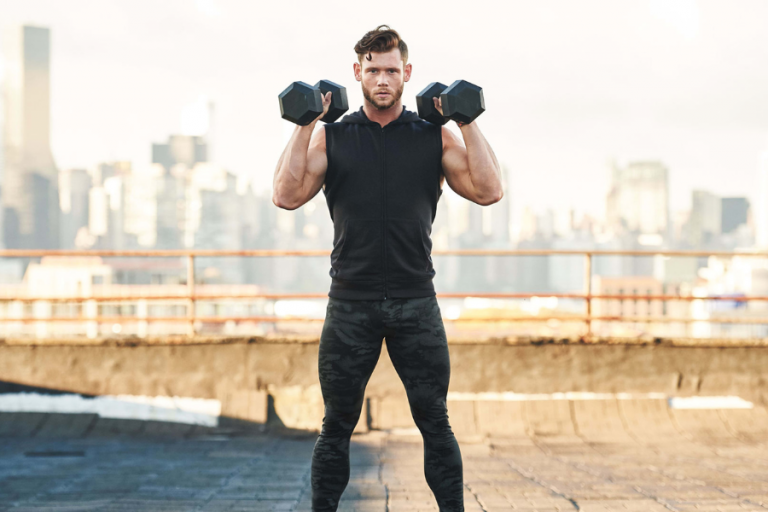
The overhead shoulder press is one of the best compound shoulder exercises for men. It primarily works the anterior delts and secondarily hits the lateral delts, traps, triceps, and upper chest. You can do it standing or seated with dumbbells or a barbell if you have one available.
At home, try these variations:
- Seated dumbbell shoulder press for more stability
- Standing dumbbell shoulder press for added core engagement
- One arm dumbbell push press, a slight leg drive helps you move heavier weight and challenges your core
Aim for 3 to 4 sets of 8 to 12 reps, resting about 60 seconds between sets. Use a controlled tempo and avoid locking your elbows at the top to keep tension on the muscles and protect your joints.
Lateral raises for side delts
Lateral raises are your go to move for building width through the shoulders. They target the lateral delts and help create that broad, athletic look.
Stand tall with a light dumbbell in each hand, raise your arms to the sides until they are roughly parallel to the floor, then lower with control. Keep the weights moderate and avoid swinging. Using too much momentum is a common mistake that reduces activation in the small delt heads and increases injury risk.
Try 3 sets of 10 to 15 reps with a weight that challenges you but still allows strict form.
Rear delt work for posture and balance
Rear delts are often the weakest and most undertrained part of the shoulder. They do not get as much work from typical chest or shoulder presses, which can leave you rounded forward and more prone to neck or upper back discomfort.
You can target them at home with:
- Reverse fly with dumbbells, leaning forward at the hips
- Band pull aparts, pulling a band apart at chest or eye level
- Face pulls with a band, pulling toward your forehead with elbows high
Research based guides from brands like Gymshark and Gold’s Gym emphasize including rear delt flies and face pulls in shoulder routines to improve posture and shoulder stability. Include at least 3 sets of 12 to 15 reps of one or two of these exercises in every shoulder session.
Front raises in moderation
Front raises target the anterior delts. Since your front delts already work hard in most pressing movements, you do not need a lot of extra isolation work.
Use light dumbbells. Raise your arms straight in front of you to shoulder height, then lower slowly. Perform 2 to 3 sets of 10 to 12 reps if you feel your front delts are lagging, but avoid piling this on top of many pressing exercises in the same session.
Squatwolf warns that overworking the front delts with excessive raises can contribute to rotator cuff issues and tendinitis, especially when combined with frequent chest and shoulder pressing.
Sample at home shoulder workout plans
You can organize these movements into simple, effective sessions you can complete in 25 to 35 minutes. Use a weight that lets you maintain clean form for the full rep range while still feeling challenged on the last couple of reps.
As a starting point for muscle growth, many guides recommend working in the 8 to 12 rep range at roughly 70 to 80 percent of your one rep max, and totaling around 9 to 15 sets per week for shoulders spread across 1 to 3 sessions.
Basic dumbbell shoulder workout
If you have a pair of dumbbells, try this two day per week structure:
- Dumbbell shoulder press, 3 sets of 8 to 12 reps
- Dumbbell lateral raise, 3 sets of 12 to 15 reps
- Reverse fly or band pull apart, 3 sets of 12 to 15 reps
- Front raise, 2 sets of 10 to 12 reps
Rest about 60 seconds between sets. Focus on smooth, controlled movement, not rushing to finish.
Shoulder and core combo session
If you want to train shoulders and core together, use a mix of stability focused moves:
- One arm dumbbell push press, 3 or 4 sets of 5 to 6 reps per side
- Standing dumbbell shoulder press, 3 sets of 8 to 10 reps
- Plank dumbbell shoulder taps or raises, 3 sets of 8 to 10 reps per side
- Band face pulls, 3 sets of 12 to 15 reps
According to a 2026 Gold’s Gym guide, moves like the one arm push press and plank dumbbell shoulder raise challenge your delts, core, and stabilizers at the same time, which is especially helpful for at home training where you may not have access to many machines.
Form tips to avoid common mistakes
Good technique is what turns a basic movement into a powerful muscle builder. It is also what protects you from chronic shoulder irritation.
Respect your shoulder’s range of motion
Avoid pushing through pain or forcing your arms into positions that feel pinched. For example:
- In overhead presses, lower your hands to at least chin level, but stop before your shoulders feel unstable
- At the top of a press, stop just short of locking your elbows so your muscles, not your joints, carry the load
Using a slightly diagonal pressing pattern such as a landmine press is often easier on sensitive shoulders. Landmine pressing involves pressing a barbell anchored in a corner or landmine attachment at an angle instead of straight overhead. Guides from Gymshark and other training resources point out that the landmine press can reduce joint strain for people with restricted shoulder mobility.
Choose weight for control, not ego
Ego lifting, or grabbing weights that are too heavy, is one of the fastest ways to strain your shoulders. It usually shows up as:
- Excessive swinging during lateral or front raises
- Half reps that never reach full range of motion
- Shrugging your shoulders toward your ears during presses
Most isolation shoulder exercises use relatively small muscles. Lighter dumbbells that you can move slowly and smoothly will stimulate more growth and keep your joints happy. Several coaching resources stress that momentum heavy raises and presses reduce muscle engagement and increase the risk of rotator cuff irritation.
How often you should train shoulders
For most men training at home, two focused shoulder sessions per week is plenty. That gives you enough volume to grow without overworking delicate joints.
A practical approach is:
- 2 dedicated shoulder or push days per week, combining shoulders with chest and triceps
- 3 to 5 total exercises per session
- 2 or 3 sets per exercise, mostly in the 8 to 12 rep range
Research summaries from brands like Gymshark note that total weekly training volume seems to matter more than exact frequency, as long as you hit roughly 9 to 15 hard sets per week for shoulders at moderate loads and avoid painful movements.
Pay attention to how your shoulders feel across the week. Mild muscle soreness is normal. Sharp joint pain is a sign to reduce the load, check your form, or consult a professional.
Putting it all together
When you strip away the noise, effective shoulder exercises for men at home follow a few straightforward rules:
- Warm up properly with light cardio, dynamic mobility, and rotator cuff activation
- Build your sessions around compound presses, then add lateral and rear delt work
- Keep front raises moderate, since your front delts are already busy in most push movements
- Use weights that allow strict control through a full, comfortable range of motion
- Aim for 9 to 15 quality sets per week, spread across one to three sessions
Pick two or three of the exercises above and try them in your next workout. As your shoulders get stronger and more stable, you can gradually increase weight, sets, or frequency. With consistent, smart training, you will not just see broader shoulders in the mirror. You will also feel stronger and more resilient in every upper body movement you do.
About the Author