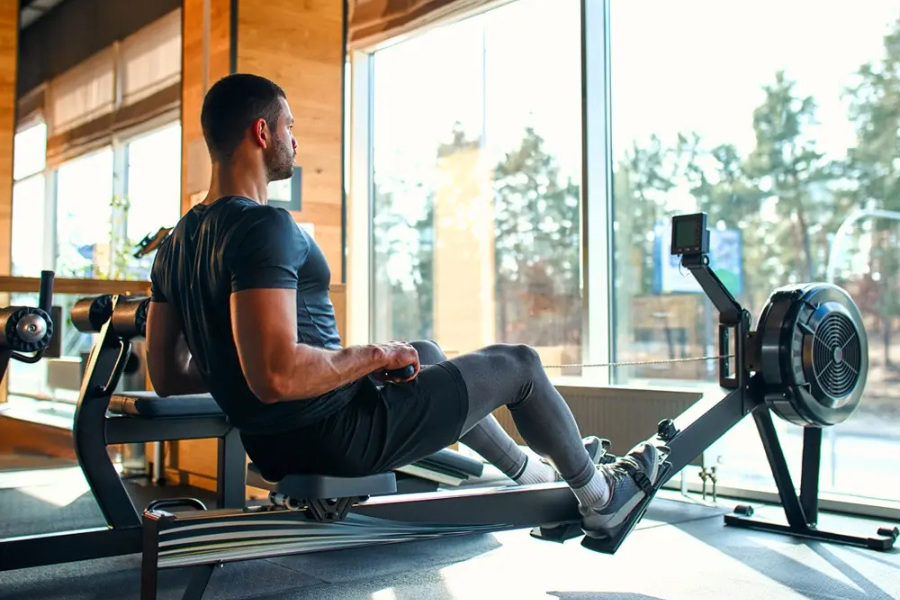
If you’re looking for a low-impact, full-body workout that builds serious stamina, rowing workouts for endurance may be exactly what you need. Rowing not only strengthens your legs, back, and arms, but it also helps you establish a rhythm that trains your cardiovascular system. Because it’s easier on your joints than running, rowing is a great option for men who want to build endurance without putting too much stress on their knees or ankles.
For many beginners, the rowing machine can seem a bit unfamiliar. However, once you learn the fundamentals, it becomes an enjoyable way to elevate your heart rate, burn calories, and boost your overall fitness. From long-haul steady-state sessions to heart-pumping interval training, you can keep your muscles guessing and your motivation high.
Understand rowing machine basics
Before diving in, take a moment to get familiar with the machine itself. Most indoor rowers combine a sliding seat, a handle connected by a chain or strap, a footplate to secure your feet, and a flywheel or magnetic resistance that you can adjust. By knowing how each part works, you can fine-tune the settings to match your goals. Start by positioning your feet comfortably and adjusting the damper setting to a moderate level until you find a good rhythm.
You’ll also want to check the monitor that tracks your strokes per minute (SPM), pace, and distance. Understanding these readouts motivates you to maintain consistent effort levels rather than rowing too hard and burning out quickly. If your goal is to gain endurance, aim for pacing that challenges you but still allows you to row for longer periods without feeling completely wiped out.
Warm up and cool down
A thorough warmup prepares your body for the upcoming effort and helps prevent injury. Begin with a few minutes of light rowing at a slow stroke rate. Keep the resistance low and focus on loosening your shoulders, knees, and hips. You might also include dynamic stretches like leg swings or arm circles to activate your major muscle groups.
Once you’ve finished your session, take time to row gently at the end to lower your heart rate and help your muscles recover. Follow this with some gentle stretching for your hamstrings, hip flexors, and shoulders. This winding-down period supports flexibility and reduces post-workout soreness so you can come back feeling strong for your next row.
Focus on form and technique
Proper technique is the backbone of rowing workouts for endurance. When you row efficiently, you maximize your energy output and reduce unnecessary stress on your joints. Each stroke consists of four key phases: catch, drive, finish, and recovery. Mastering these allows you to distribute your effort evenly and maintain good form throughout your workout.
Lean forward slightly at the catch, with your arms extended and knees bent so your shins are nearly vertical. Drive through your legs first while keeping your core tight, then bring your torso back and pull the handle toward your chest. At the finish, tap the handle just below your ribs with a neutral spine, and in the recovery phase, reverse the motion by extending your arms forward first, then hinging from the hips, and finally bending your knees.
Master your posture
One of the easiest mistakes is hunching your shoulders or rounding your back. Instead, think about pulling your shoulder blades down and back and bracing your core. Imagine someone lightly tapping your stomach, prompting you to hold your abs firmly. Good posture gets you more power on each stroke and helps prevent lower back pain.
Plan your endurance workouts
To get the most out of rowing workouts for endurance, you’ll want a balanced plan that combines steady-state training with occasional bursts of higher intensity. Steady-state rowing, where you maintain a moderate pace for 10 to 30 minutes, strengthens your aerobic capacity. Interval sessions mix short, intense efforts with recovery periods, boosting your power and mental resilience.
Below is a sample four-week approach to gradually build your endurance:
- Week 1: Complete 3 x 8-minute steady-state rows at a comfortable pace, resting 2 minutes between sets.
- Week 2: Attempt 4 x 6-minute intervals at a challenging intensity, then row gently for 2 minutes to recover.
- Week 3: Add a 20-minute steady row at a relaxed pace, focusing on smooth strokes and consistent breathing.
- Week 4: Do 5 x 4-minute high-intensity intervals, then finish with a 10-minute moderate steady-state session.
Balance intensity and recovery
Overdoing it on the rowing machine can lead to burnout or persistent aches. Endurance grows best when you repeatedly challenge yourself, then allow your body a chance to recuperate. Prioritize good nutrition, consistent rest, and proper hydration to help your muscles bounce back. Light stretching or gentle yoga on off days can loosen tight muscles and support flexibility.
If you notice excessive soreness or fatigue, step back and scale your training accordingly. Pushing through serious pain might temporarily boost your output, but it can derail long-term progress. With a smart mix of tough workouts and well-timed recovery, you’ll keep building stamina without risking injury.
Track progress and stay motivated
Measuring your improvements is a powerful way to stay engaged, especially when you’re tackling tough rowing sessions. Track stats like stroke rate, split times, and total distance to spot patterns that point to growing endurance. You may find that a pace you once considered challenging now feels comfortable for longer intervals.
Setting personal goals adds extra excitement to your everyday routine. Maybe you want to break a certain 2,000-meter time or row for a full half-hour without pausing. Celebrating small wins helps you stay focused on your long-term vision. Just remember, advancement isn’t always a straight line. Embrace the process, give yourself grace on tough days, and keep aiming for those incremental gains that lead to lasting results.
Rowing workouts for endurance might feel demanding at first, but they quickly become one of the most efficient ways to elevate your cardio fitness. Each session builds a healthier heart, stronger muscles, and a sense of achievement that keeps you coming back for more. By honing your form, balancing your workload, and setting clear goals, you’ll not only boost stamina, but also discover a low-impact exercise that supports your overall wellbeing. Enjoy the journey and keep pushing your limits—you’ll be amazed at how quickly you progress.
About the Author