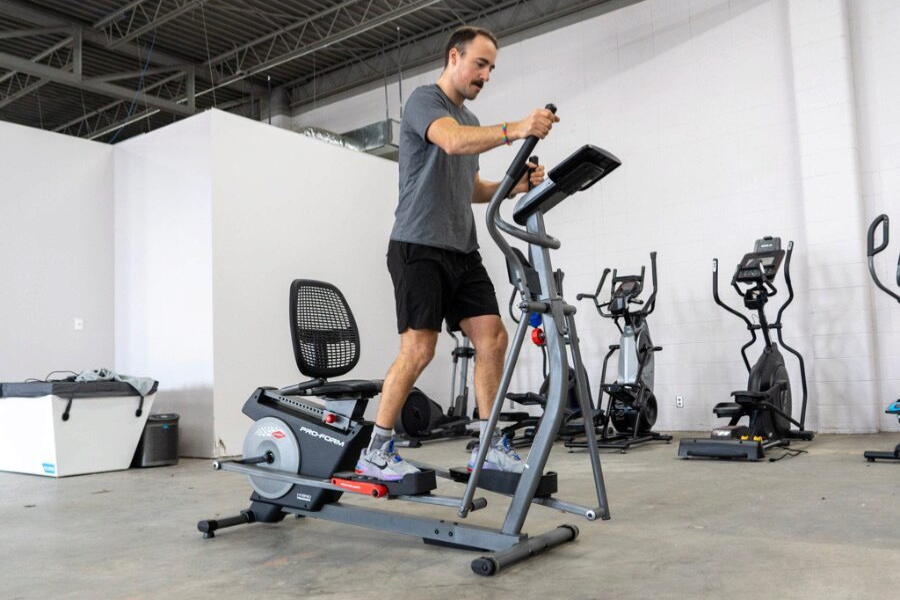
A cardio machine that works your entire body, protects your joints, and fits into a busy schedule is hard to beat. That is exactly what you get with men’s cardio elliptical exercises. With the right approach, the elliptical can help you burn calories, build endurance, and stay consistent, even if running is tough on your knees or back.
Below, you will learn how elliptical training benefits you, how to set up your machine, and several structured workouts you can plug into your week whether you are a beginner or ready for intense intervals.
Why the elliptical is great for men
Elliptical machines are more than a “gentler treadmill.” Used properly, they give you a serious workout while staying kind to your joints.
Low impact, high reward
On an elliptical, your feet never leave the pedals. That means less pounding on your knees, ankles, and hips compared with running. Trainers note that ellipticals provide a low impact aerobic workout that is easier on the joints, yet still conditions your heart and lower body, which is especially helpful if you deal with knee pain, arthritis, or old injuries from sports.
A 2010 study cited by Healthline found that calories burned, oxygen consumption, and heart rate during elliptical workouts were nearly identical to treadmill workouts, which shows the elliptical is an effective alternative to running for cardio and fat loss.
Full body muscle engagement
When you use the moving handles, men’s cardio elliptical exercises train your upper and lower body at the same time. You work:
- Glutes, hamstrings, quadriceps, calves, and small stabilizing muscles in your feet
- Chest, back, biceps, triceps, shoulders, and core
This full body effort increases calorie burn and improves muscle endurance. Some machines even let you pedal backward to emphasize hamstrings and calves, which adds variety without changing machines or routines.
Calorie burning for weight management
Elliptical workouts can support fat loss when you pair them with a solid nutrition plan. Men between 125 and 185 pounds can burn roughly 270 to 400 calories in 30 minutes of moderate intensity elliptical training, making it an efficient way to chip away at your weekly calorie goals.
Experts also note that incorporating higher intensity interval training with a 1 to 1 work to recovery ratio can increase fat burning and cardiovascular benefits, which is ideal if you want results from shorter sessions.
How to set up for success
Before you think about intervals or hills, it helps to dial in your setup and form. Good technique makes every minute on the machine count.
Pick the right shoes
The best footwear for elliptical workouts is usually running shoes or cross trainers with:
- Solid arch support
- Good cushioning
- Stable heels
Unlike outdoor running, the treadmill surface does not change under your feet, but you still want enough support to keep your ankles and knees aligned and to protect your joints during longer sessions.
Nail your posture and form
Form is where many people lose out on the benefits of men’s cardio elliptical exercises. Focus on these basics:
- Stand tall. Keep your chest open, shoulders relaxed, and eyes forward instead of looking down at your feet.
- Engage your core. Lightly brace your abs as if you are preparing to cough. This supports your lower back.
- Use the handles. Keep your hands on the moving handles to engage your upper body. Avoid leaning heavily on them, think of them as guides, not crutches.
- Place your feet evenly. Distribute your weight through your whole foot rather than just your toes. This helps prevent numbness and keeps your stride smooth.
Good posture maximizes muscle engagement, calorie burn, and endurance while lowering your injury risk.
Warm up and cool down
A few extra minutes at the beginning and end of your workout can make your training feel better and help you bounce back faster.
- Warm up with 3 to 5 minutes at low resistance and low incline. Aim for an effort that feels easy and lets you breathe comfortably.
- Cool down with another 3 to 5 minutes at similar effort, gradually lowering resistance and incline.
Think of these minutes as insurance for your joints, heart, and muscles.
Men’s cardio elliptical exercises for beginners
If you are new to the elliptical or coming back from a break, start simple. Your first goal is consistency, not intensity.
20 minute starter workout
This routine keeps things manageable but still challenges your heart and lungs.
- Minutes 0 to 5: Warm up at an easy effort, about 3 out of 10 on a perceived exertion scale.
- Minutes 5 to 15: Increase resistance slightly so your effort feels like 4 to 6 out of 10. You should breathe harder but still be able to speak in short sentences.
- Minutes 15 to 20: Lower the resistance for a gentle cool down.
Beginners to elliptical training are encouraged to start around 10 to 20 total minutes and slowly add time each week. Once 20 minutes feels comfortable, you can extend to 25 or 30 minutes to meet the U.S. guideline of 150 minutes of moderate aerobic activity per week.
Easy interval progression to 30 minutes
When steady efforts begin to feel too easy, you can introduce light intervals without making the workout overwhelming.
Try this 30 minute structure:
- 5 minutes easy warm up
- 3 minutes at comfortable pace, then 2 minutes slightly harder, repeat that 3 plus 2 pattern four times
- 5 minutes easy cool down
Those 3 minute easier and 2 minute harder intervals keep you focused while naturally boosting your conditioning. Over time, you can gradually increase resistance or incline during the harder segments as your fitness improves.
Fat burning HIIT elliptical workout
Once you have a foundation, high intensity interval training (HIIT) can give you more results in less time. HIIT is especially helpful if you are short on gym time but still want to push your limits.
25 minute HIIT session
Try this efficient pattern that fits into most lunch breaks:
- 5 minutes warm up at easy effort.
- 30 seconds high intensity. Increase resistance and possibly incline so your effort feels like 8 or 9 out of 10. You should be breathing heavily and happy that it ends after half a minute.
- 90 seconds low intensity. Drop resistance and incline until your breathing settles to a comfortable 3 or 4 out of 10.
- Repeat the 30 second hard and 90 second easy pattern 8 to 10 times.
- Finish with 5 minutes of easy cool down.
This 1 to 3 work to rest ratio still counts as interval training and is realistic if you are getting used to harder efforts. As you adapt, you can move toward a 1 to 1 ratio, for example 45 seconds hard and 45 seconds easy, for an even more intense session.
HIIT puts significant stress on your cardiovascular system and muscles, so keep these workouts to 2, maybe 3 times per week, and space them out with lighter days.
Incline and hill style training
Most ellipticals allow you to adjust incline as well as resistance. Higher incline mimics climbing, which targets your glutes and hamstrings and can break up the monotony of flat sessions.
30 to 40 minute hill climber
Use this structure when you have a bit more time and want a leg focused challenge.
- Minutes 0 to 5: Easy warm up at low incline and resistance.
- Minutes 5 to 10: Moderate resistance, moderate incline. Effort 5 out of 10.
- Minutes 10 to 15: Same resistance, higher incline. Effort 6 to 7 out of 10.
- Minutes 15 to 20: Keep incline high, increase resistance slightly if you can.
- Minutes 20 to 25: Reduce incline to moderate while maintaining resistance. This will feel like a small relief but still challenging.
- Minutes 25 to 30: Lower both incline and resistance for an easy cool down.
If you want a 40 minute session, add one extra 10 minute hill block in the middle where you gradually raise the incline for 5 minutes, then gradually lower it for 5 minutes.
Hill style workouts are demanding, so treat them like a strength endurance session rather than a daily habit.
Upper body focused elliptical workout
You can also lean into the arm component of the elliptical to give your upper body more attention on days when your legs are tired from lifting or running.
20 minute upper body emphasis
For this workout, your legs are there to support, but your arms and shoulders do the main pushing and pulling.
- 5 minutes easy warm up at low resistance for both arms and legs.
- 10 minutes at moderate to high arm resistance and slightly lower leg resistance. Focus on driving the handles with your chest, back, biceps, and triceps. Keep your stride smooth and steady.
- 5 minutes easy cool down.
This style of session will not replace dedicated strength training, but it can help you build muscular endurance in your upper body while still maintaining your cardio.
Longer steady state sessions
If you enjoy zoning out with a show, podcast, or game, long steady workouts might suit you better. Elliptical machines are well suited to this style because of their low impact and smooth movement pattern.
45 to 60 minute endurance builder
Use this on days when you have more time and want to build a solid aerobic base:
- 5 to 10 minutes easy warm up.
- 30 to 45 minutes at a steady, moderate pace that you could maintain for at least an hour. Your breathing should be controlled and sustainable, around 4 to 5 out of 10 in effort.
- 5 to 10 minutes easy cool down.
You can gently vary resistance and incline every 5 to 10 minutes to keep your muscles engaged without turning it into an interval session. This style supports heart and lung health and helps you meet the physical activity guidelines of 150 to 300 minutes of moderate intensity aerobic exercise per week.
Think of endurance work as your base. Intervals are the “spice” that you add for extra flavor, not the whole meal.
Tips to stay consistent and avoid injury
Men’s cardio elliptical exercises are only effective if you can stick with them. Small adjustments make that easier.
- Listen to your joints. Low impact does not mean zero risk. If your knees, hips, or back consistently hurt after sessions, lower the resistance and incline, shorten your workouts, or consult a professional.
- Mix your routines. Rotate between beginner steady state, HIIT, hill, and upper body focused workouts across the week to keep training interesting.
- Combine with strength training. The elliptical is not ideal for building a lot of muscle mass, so add 2 or more days of strength work for a balanced program.
- Respect recovery. Plan at least one full rest day per week and avoid stacking multiple all out HIIT days back to back.
With the right structure and pacing, the elliptical can be a long term tool instead of a short term fix.
Putting it all together
Men’s cardio elliptical exercises can fit almost any goal: weight management, joint friendly conditioning, or simply feeling less winded during your day. Start with solid form, the right shoes, and a realistic schedule. Use beginner sessions to build your base, then layer in HIIT, incline work, and upper body focused days as your fitness improves.
Choose one workout from this guide to try at your next gym visit. Pay attention to how your body responds, then adjust resistance, incline, and duration to match your current level. Over time, those small, consistent efforts will add up to better health and stronger cardio, without beating up your joints in the process.
About the Author