A dash diet for blood pressure control focuses on real, everyday foods instead of strict rules or expensive products. If you are trying to lower your numbers, lose a bit of weight, or simply support your heart, this way of eating can fit into your life without a complete overhaul.
Below, you will learn what the DASH diet is, how it helps your blood pressure, what to eat in a typical day, and simple ways to start, even if you feel busy or overwhelmed.
Understand what the DASH diet is
DASH stands for Dietary Approaches to Stop Hypertension. It is an eating plan created to help you prevent or manage high blood pressure by focusing on nutrient rich foods and limiting sodium and saturated fat.
You build your meals around vegetables, fruits, and whole grains, and then add lean protein, low fat dairy, nuts, seeds, and beans. At the same time, you keep salty, processed, and high fat foods in the background instead of the center of your plate. The plan is flexible, and you do not need special products because everything comes from regular grocery store items (Mayo Clinic).
See how DASH helps your blood pressure
High blood pressure is often driven by too much sodium, not enough potassium, extra body weight, and a diet that is low in fiber and high in saturated fat. The DASH diet addresses all of these at once.
This plan limits your sodium to about 1,500 to 2,300 milligrams per day, which is roughly three quarters to one teaspoon of table salt (Mayo Clinic). When you follow the DASH eating pattern and keep sodium at the lower end of that range, you can lower your blood pressure even more than if you aim only for 2,300 milligrams (NHLBI).
You also naturally take in more potassium, calcium, magnesium, protein, and fiber from vegetables, fruits, whole grains, and low fat dairy. These nutrients play a key role in blood pressure control and heart health (Mayo Clinic). Because of this, the DASH diet is consistently ranked as a top heart healthy plan and is currently named the best diet for high blood pressure by NIH supported reviews (NHLBI).
Learn the core food groups
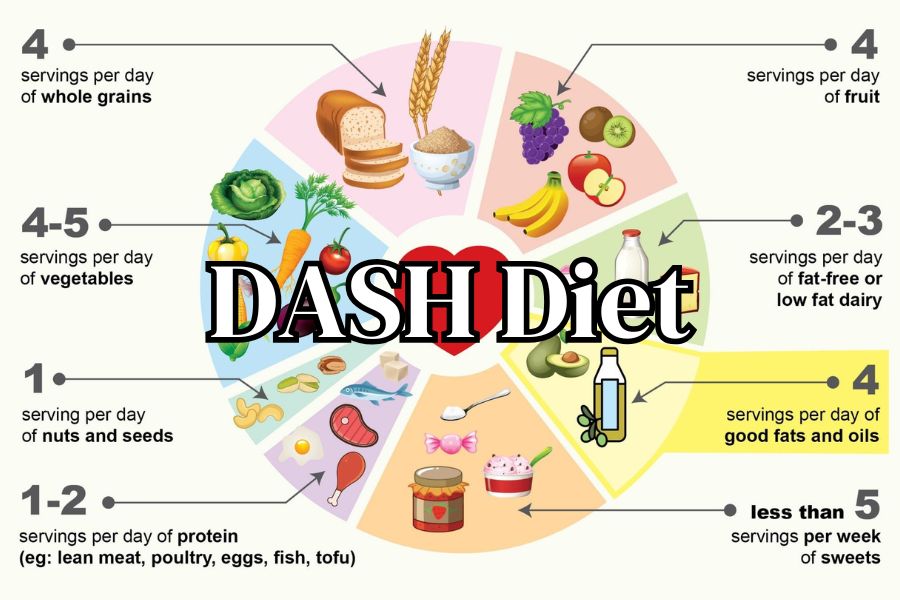
Instead of counting every calorie, the DASH diet for blood pressure uses daily and weekly serving goals from different food groups based on about 2,000 calories per day (NHLBI). Your exact needs may be higher or lower, but the structure stays the same.
You focus on these categories:
- Grains, mostly whole, such as oats, brown rice, and whole wheat bread
- Vegetables, especially a mix of colors and types
- Fruits, fresh, frozen, or canned in water or juice
- Fat free or low fat dairy, such as milk or yogurt
- Lean meats, poultry, and fish in modest portions
- Nuts, seeds, and beans a few times per week
- Fats and oils, kept moderate and mostly unsaturated
- Sweets and added sugars, limited to small treats
Within these groups you also limit foods high in saturated fat, such as fatty cuts of meat and full fat dairy, because they can raise LDL cholesterol and add to heart disease risk (Mayo Clinic).
Build a simple DASH friendly plate
To make this real, it helps to picture what your meals might look like on a typical day. Here is a sample day that reflects DASH principles at about 2,000 calories, adapted from common guidelines (Mayo Clinic).
Think of your plate in four sections: half vegetables and fruits, one quarter whole grains, and one quarter lean protein, plus a side of low fat dairy.
Breakfast
- Oatmeal cooked with low fat milk, topped with berries and a sprinkle of chopped nuts
- A small orange or half a grapefruit
- Black coffee or tea, without sugary syrups
Lunch
- Large salad with mixed greens, tomatoes, cucumbers, carrots, and chickpeas
- Grilled chicken or baked tofu on top
- Whole wheat roll or a slice of whole grain bread
- Light vinaigrette made with olive oil
Snack
- Plain low fat yogurt with sliced fruit
- A small handful of unsalted almonds
Dinner
- Baked salmon or skinless chicken breast
- Brown rice or quinoa
- Steamed broccoli and roasted carrots
- A small side of fruit for dessert
You can mix and match ingredients that you enjoy, as long as you keep the same basic idea: plants first, lean proteins, whole grains, and limited added salt, sugar, and saturated fat.
Adjust sodium without losing flavor
Cutting back on sodium sounds easy on paper, but it can feel challenging when you are used to salty snacks or restaurant meals. The DASH diet for blood pressure does not require you to eliminate salt completely. It asks you to be more intentional.
You can start by removing the salt shaker from the table and tasting your food before you season it. Use herbs, spices, citrus, garlic, vinegar, and pepper to add flavor instead of automatically reaching for salt. When you buy canned vegetables, beans, or broths, choose low sodium or no salt added labels and rinse items like beans under water to wash away some extra sodium (Mayo Clinic).
Restaurant and fast food meals are a major source of sodium, even when they do not taste very salty. Try to cook at home more often, portion half your restaurant meal to save for later, or ask for sauces and dressings on the side. Over time, your taste buds adjust, and foods that used to seem normal may start to taste overly salty.
Use DASH to support weight loss
If you also want to lose weight, the DASH diet can be a strong foundation. It naturally fills your plate with high fiber, nutrient dense foods, which help you feel satisfied on fewer calories.
To use DASH for weight loss, you keep the same food groups and balance but slightly reduce your portions or choose lower calorie options within each group. For example, you might swap a large glass of juice for a whole piece of fruit, use smaller amounts of oil in cooking, or trim visible fat from meats. The National Heart, Lung, and Blood Institute notes that your specific number of servings from each group depends on your calorie needs, which you and your healthcare provider can personalize (NHLBI).
Since this eating pattern improves blood pressure and can lower LDL cholesterol at the same time, it offers a double benefit if you are working on your weight and your heart health together (Mayo Clinic).
Make the plan fit your lifestyle
A strict, all or nothing approach is hard to keep up. Instead, you can treat the DASH diet for blood pressure as a flexible template that you adapt to your tastes, culture, and schedule.
If you currently eat very little produce, you might begin by adding just one extra serving of vegetables and one serving of fruit each day. If soda and sweets are daily habits, you could set a goal of having them only a few times per week and enjoying smaller portions. If alcohol is part of your routine, you might limit yourself to no more than two drinks per day if you are a man, or one or less if you are a woman, since higher intake can raise blood pressure (Mayo Clinic).
Batch cooking and simple meal prep also make it easier to stay on track. You can cook a pot of brown rice, roast a tray of mixed vegetables, and grill several chicken breasts or tofu pieces at once. Then, during the week, you quickly combine these building blocks into bowls, salads, and plate meals that follow DASH principles.
Check in with your health team
While the DASH diet is safe for most people and does not rely on extreme rules, it still helps to talk with your doctor or a registered dietitian before making big changes, especially if you have kidney disease, diabetes, or take medications for blood pressure.
Your provider can recommend a sodium target within the 1,500 to 2,300 milligram range that is right for you, help you find your ideal calorie level, and adjust medications if your blood pressure improves. They may also suggest checking your numbers at home so you can see how your new habits pay off over time.
Key takeaways
- The DASH diet for blood pressure centers on vegetables, fruits, whole grains, lean proteins, low fat dairy, and healthy fats.
- You limit sodium to about 1,500 to 2,300 milligrams per day and cut back on foods high in saturated fat, added sugars, and heavy processing (Mayo Clinic).
- This eating pattern is backed by major health organizations and is recognized as a leading plan for lowering blood pressure and supporting heart health (NHLBI).
- You can use the same structure to support healthy weight loss by adjusting portions and total calories.
- Small, steady changes, like adding more produce or swapping salty snacks for nuts and fruit, help you build a version of DASH that you can live with long term.
You do not need to change everything at once. Try one or two DASH inspired swaps at your next meal, watch how you feel, and build from there. Over time, those small choices can add up to lower blood pressure, better energy, and a stronger heart.
About the Author