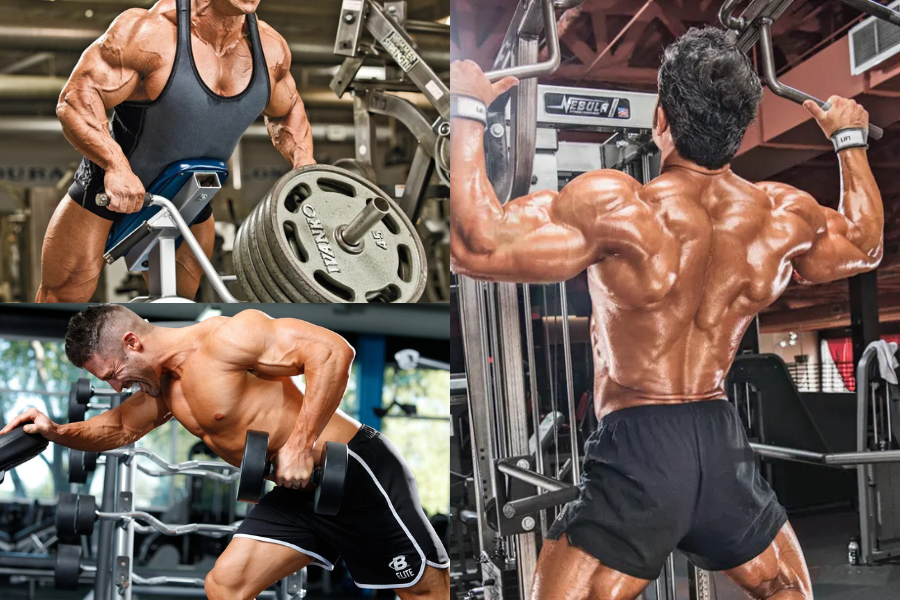
A smart back workout for men is about more than looking good in a T‑shirt. A strong, well trained back supports your spine, protects you from injury, improves your posture, and helps you lift more in every other exercise you do. Since around 10 million people in England and Scotland live with persistent back pain, and research in The Physician and Sports Medicine highlights exercise as the most important self-managed treatment for low back pain, building your back is one of the most valuable investments you can make in your health and performance.
Below, you will learn how your back actually works, which exercises matter most, and how to put them together into a practical back workout for men you can follow at the gym or at home.
Understand your back muscles
If you want results, it helps to know what you are training. Your back is not one big slab of muscle. It is a network of around 40 muscles that stabilize, support, and move your spine and shoulders.
Key players include:
- Latissimus dorsi, the large “V‑shape” muscles that pull your arms down and back
- Trapezius and rhomboids, which control your shoulder blades and upper back posture
- Erector spinae and multifidus, deep muscles that keep your spine stable and upright
- Obliques, which help you rotate and resist twisting through your trunk
- Teres major and smaller stabilizers around your shoulder joint, which assist in pulling and overhead movements
These muscles team up whenever you pull, hinge at the hips, stand upright, or brace your core. That is why a strong back improves everything from deadlifts and squats to presses and even daily tasks like picking up groceries.
Why back workouts matter for men
If you tend to focus on chest, arms, and abs, you are not alone. Many men undertrain their backs and then wonder why progress stalls or nagging aches appear.
Consistent back training helps you:
- Improve posture by strengthening the muscles that hold you upright and pull your shoulders back
- Reduce risk of back pain and stiffness by building support around your spine
- Boost performance in other lifts such as bench press and shoulder press by stabilizing your shoulder blades
- Protect your spine and shoulders by improving control, not just brute strength
A poll in Men’s Health found that 87% of men will experience a “bad back” at some point. Training your back properly gives you a real chance to be in the other 13%, or at least to handle flare ups with more resilience.
If you have a history of back pain or chronic health conditions, check in with a healthcare provider before starting new back strengthening exercises so that you can train safely and with good form.
Focus on the right movement patterns
Most effective back workouts for men revolve around two main pulling patterns, plus a hip hinge:
- Vertical pulls, where you pull your body or weight up and down, such as pull ups or pulldowns
- Horizontal pulls, where you pull weight toward your torso, such as rows
- Hip hinges, where you bend at the hips with a neutral spine, such as deadlifts and Romanian deadlifts
Vertical pulls emphasize width through the lats. Horizontal pulls build thickness and mid back strength. Hip hinges strengthen your erector spinae and the lower back region while also training glutes and hamstrings.
Many typical routines overemphasize vertical pulling and machines. You get better results when you balance vertical and horizontal pulls and rely more on free weights and bodyweight work, which allow a fuller range of motion and better muscle activation than fixed path machines.
Best back exercises for men
You do not need dozens of variations. You do need a few reliable movements that you can perform well and progress over time. The exercises below together cover your upper, mid, and lower back.
1. Bent over barbell row
This is a classic horizontal pull that hits your lats, rhomboids, traps, and spinal erectors while challenging your grip.
- Hinge at the hips with a flat back and soft knees
- Pull the bar toward your lower ribs, driving your elbows back
- Pause briefly, then lower under control
Aim for 3 to 4 sets of 8 to 12 reps. Keep your torso stable and avoid jerking the weight up with momentum.
2. Pendlay row or gorilla rows
Pendlay rows start from the floor each rep, which helps you focus on explosive pulling and strict positioning. Gorilla rows use two kettlebells or dumbbells from a hip hinge position to train anti rotation and grip.
Both exercises increase back power and stability, and they complement slower, controlled rowing movements.
3. Pull ups and chin ups
Pull ups are one of the most effective vertical pulls you can do. They target your lats, traps, and smaller stabilizers around the shoulder.
- Use a grip just wider than shoulder width
- Start from a dead hang with straight arms
- Pull your chest toward the bar and think about driving your elbows down to your sides
If you cannot yet do bodyweight reps, use an assisted pull up machine or a resistance band. As you get stronger, you can add weight with a belt or vest. Advanced variations, such as “2 finger” pull ups, dramatically increase lat challenge but should only be attempted once you have a solid strength base.
4. Deadlifts
Deadlifts are often labeled as a leg exercise, but they heavily involve your back muscles, including your lats, traps, and rhomboids. You have to brace your torso and pull the bar close to your body, which trains full body tension.
A simple starting point is 4 sets of 8 reps with a weight you can control with good form. Focus on:
- Keeping the bar close to your shins and thighs
- Driving through your legs while bracing your core
- Finishing tall without leaning back at the top
Deadlifts place a high demand on your spine and nervous system, so prioritize perfect technique and allow recovery.
5. Dumbbell row variations
Dumbbell rows are ideal for men who want to build back muscle with minimal equipment and also correct side to side imbalances.
You can rotate between:
- Single arm dumbbell rows, which target lats and rhomboids and challenge your core to resist rotation
- Chest supported dumbbell rows, which reduce lower back strain and lock in strict form
- Incline rows, which use a bench angle to emphasize your lower lats
A common structure is 3 sets of 8 to 12 reps per side. Focus on pulling with your back, not just your biceps, by thinking about driving your elbow toward your hip.
6. Dumbbell Romanian deadlift
The dumbbell Romanian deadlift is a key hip hinge that strengthens your erector spinae, lats, glutes, and hamstrings. It is especially helpful if you want to support spinal health, reduce lower back discomfort, and improve posture.
- Hold dumbbells at your sides or in front of your thighs
- Hinge at the hips while keeping a neutral spine
- Lower until you feel a strong stretch through your hamstrings, then drive back up by pushing your hips forward
Perform 3 to 4 sets of 8 to 12 reps with controlled movement. You should feel work through your posterior chain, not strain in your lower back.
7. Bodyweight extensions and “superman”
When you do not have equipment, simple bodyweight movements still build strength:
- Bridge or hip lift, for glutes and lower back
- Side plank, for obliques and lateral trunk stability
- Superman back extensions, where you lift arms and legs while lying face down to engage your entire back
You can perform these in sets of 8 to 12 reps or timed holds of 20 to 30 seconds.
8. Loaded carries
Farmer’s carries with heavy dumbbells or kettlebells challenge your traps, upper back, and core as you walk.
- Stand tall, squeeze your shoulder blades slightly, and brace your abs
- Walk in a straight line without leaning or shrugging excessively
Try 3 to 4 rounds of 30 seconds on and 30 seconds off. This one movement does a lot for posture, grip, and total body tension.
Structuring a back workout for results
To build noticeable muscle and strength, you want enough weekly volume, good exercise selection, and consistent progression.
A practical target is at least 10 sets per week for your major back muscle groups. Many men do well training their back twice per week, for example on “pull” days in a push pull legs split.
Here is a simple gym based back workout for men you can adjust to your level:
- Deadlift, 4 sets of 6 to 8 reps
- Pull up or lat pulldown, 3 sets of 8 to 10 reps
- Bent over barbell row, 3 sets of 8 to 12 reps
- Chest supported dumbbell row, 3 sets of 10 to 12 reps
- Farmer’s carry, 3 rounds of 30 seconds
For a home based back workout with dumbbells or bands:
- Dumbbell Romanian deadlift, 3 to 4 sets of 8 to 12 reps
- Single arm dumbbell row, 3 sets of 8 to 12 reps per side
- Resistance band pulldown or inverted row from a sturdy table, 3 sets of 10 to 15 reps
- Superman back extensions, 3 sets of 12 to 15 reps
- Side plank, 2 sets of 20 to 30 seconds per side
Warm up first with a few minutes of light cardio and dynamic stretches, such as arm circles and hip hinges. Cool down afterward with gentle static stretches for your chest, lats, and hips to support recovery.
Aim to add a little more over time, whether that means more weight, extra reps, or slightly longer sets. This progressive overload is what drives real change in strength and muscle size.
Train smarter for long term gains
Two men can perform the same back workout and get very different results. The difference often comes down to technique and focus.
Keep these points in mind as you train:
- Prioritize form over weight so that your lats and upper back, not just your biceps and lower back, do the work
- Avoid relying only on machines, which limit your range of motion compared to barbells, dumbbells, and bodyweight pulls
- Include both heavy compound lifts and more controlled isolation style exercises so that you challenge the full back, from traps and rhomboids to erector spinae
- Pay attention to your grip, since weak hands and forearms can limit how much you can load your back
You do not need a bodybuilder’s schedule to build a strong, impressive back. You do need consistency, patience, and a program that targets the right muscles with the right patterns.
Start with one of the routines above, commit to it for 8 to 12 weeks, and track your weights and reps. You will likely notice your posture improve, your other lifts feel more stable, and, yes, your shirts start to fit a little tighter across the shoulders.
About the Author