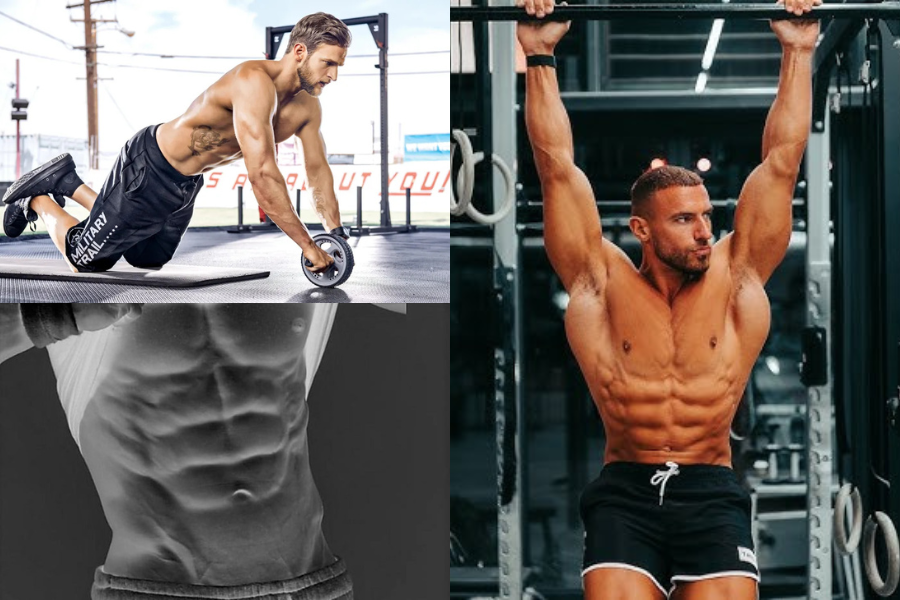
If you are searching for effective lower ab workouts for men, you are probably after two things: a stronger core and more visible definition. You can get both, but only if you combine smart exercise choices with a realistic plan for fat loss and recovery.
Below, you will find how your lower abs actually work, which exercises matter most, and how to put everything into a routine you can stick with.
Understand what “lower abs” really are
You often hear people talk about upper abs and lower abs as if they are separate muscles. In reality, the rectus abdominis, the six pack muscle, is one long sheet that runs from your ribs to your pelvis. You cannot completely isolate the lower portion, but you can emphasize it.
You do this with bottom up movements. Any exercise where your pelvis curls toward your ribcage, such as leg raises, hip lifts, or mountain climbers, will tend to recruit more of those lower fibers. Lower ab exercises are also challenging because you are lifting the weight of your legs, which already makes them a form of weighted work.
At the same time, your lower abs do not work alone. Your transverse abdominis, internal and external obliques, and even your lower back muscles all contribute to a stable, strong core. That is why expert guidelines for core training, such as those from the Mayo Clinic, focus on the abdominal muscles, back muscles, and the muscles around your pelvis together, not in isolation.
Why diet and cardio matter for visible abs
You can do the best lower ab workouts for men and still not see much definition if you are carrying a thick layer of fat over your midsection. Your abs are a muscle group like any other. If they are covered, you will not see them.
To reveal that lower ab line, you need to get lean enough. That happens when you create a consistent calorie deficit through food choices and overall activity, not just endless crunches or extra sets of planks. Fitness experts emphasize that fat loss is driven primarily by diet and total energy balance, while your workouts shape the muscles underneath.
Cardio helps you create that deficit and improve heart health. Running, cycling, brisk walking, or time on the elliptical all count. Aim for at least 150 minutes of moderate activity each week along with your strength training, which matches general health recommendations and supports lower body fat levels over time.
Key principles for lower ab training
Once your expectations around fat loss are in place, you can focus on how you train. A few principles will make every rep more effective.
Focus on pelvic tilt, not just lifting your legs
On exercises like hanging knee raises or leg drops, it is easy to let your hip flexors do all the work. To shift the load into your abs, think less about lifting your feet and more about curling your hips.
As you raise or lower your legs, gently tilt your pelvis toward your ribcage and round your lower back slightly. You should feel your abs shorten and tighten as you do this. That hip curl is the key cue that separates an effective lower ab move from just a leg swing.
Control the eccentric phase
The lowering portion of each rep, known as the eccentric phase, is where you build a lot of strength and muscle. Instead of letting your legs drop, lower them over two to three seconds. This longer time under tension makes your abs work harder without adding more sets.
For example, in leg drops, raise your legs up in one smooth second, then count “one, two, three” slowly as you lower them back down. You can use a similar tempo with hip lifts and mountain climbers by moving slightly slower and more deliberately than you might be used to.
Add resistance when bodyweight gets easy
If you can do 20 to 30 repetitions of a given ab exercise with good form, the movement is no longer very challenging. At that point, you are mostly training endurance instead of muscle growth.
To keep progressing, start adding load. You can:
- Hold a dumbbell or plate on your chest during crunches
- Place a light dumbbell between your feet on leg raises
- Use a cable stack for weighted kneeling crunches
- Wear ankle weights during leg drops or hip lifts
Treat your abs like any other muscle group. Gradually increase weight or difficulty over time to avoid plateaus.
Respect recovery time
Your abs might not feel as sore as your legs after squats, but they still need rest. Intense ab work creates microscopic tears in the muscle tissue. These tears repair and grow during your rest days, not while you are training.
Aim to hit your abs hard two or three times per week, with at least one rest day in between. On off days, light activity like walking or gentle stretching helps blood flow, reduces stiffness, and supports recovery.
Best lower ab exercises to include
There are many ways to train your lower abs. The exercises below offer a mix of difficulty levels and movement patterns so you can build strength, stability, and control.
Leg drops and their variations
Leg drops are a classic move that teaches you how to brace your core while moving your legs.
- Lie on your back with your arms by your sides. For extra support, place your hands under your sitting bones.
- Bring your legs up so your feet point toward the ceiling and your knees are slightly bent.
- Press your lower back gently into the floor.
- Slowly lower both legs toward the ground as far as you can without your lower back lifting.
- Pause, then curl your pelvis slightly and bring your legs back up.
If full leg drops are too intense, try half drops, where you lower your legs only halfway, or single leg drops, where you alternate legs. In all variations, avoid letting your lower back pop off the floor. That is your sign to limit the range a bit.
Hip lifts
Hip lifts target the bottom of the rectus abdominis by focusing on a controlled pelvis curl.
- Lie on your back and raise your legs so your feet are above your hips.
- Squeeze your abs and exhale as you gently lift your hips off the floor, sending your feet straight toward the ceiling.
- Think about rolling your spine off the floor one vertebra at a time.
- Lower your hips back down with control and repeat.
Start with small, precise lifts. Speeding through big swings shifts the work into momentum instead of your abs.
Mountain climbers
Mountain climbers are usually seen as a cardio move, but when you slow them down they are highly effective for your lower abs and overall core stability.
- Begin in a high plank with your hands under your shoulders and your body in a straight line.
- Brace your core and pull one knee toward your chest.
- Pause briefly, then switch legs in a smooth motion.
- Keep your hips low and your shoulders stacked over your wrists.
You can make these more challenging by sliding your feet on towels or sliders instead of stepping, which forces you to maintain tension throughout the movement.
Scissor kicks and flutter kicks
Scissor kicks and flutter kicks train your lower abs while your core fights rotation and extension.
- Lie on your back and press your lower back into the floor.
- Lift both legs a few inches off the ground.
- For scissor kicks, cross one leg over the other, then switch.
- For flutter kicks, alternate small, quick up and down movements.
- Keep your chest relaxed and focus on bracing through your midsection.
If your lower back starts to lift, bring your legs up a bit higher or shorten the movement until you can hold good form.
Bicycle crunches and the hundred
Ab workouts that ask you to coordinate breathing, leg movement, and torso rotation challenge your core in a more complete way.
Bicycle crunches combine spinal flexion and rotation, which hits both your rectus abdominis and obliques. The hundred, a Pilates style exercise, pairs controlled breathing with a held position and arm pumps to build endurance across the entire midsection.
A 2019 study found that core routines including planks, crunches, scissor kicks, and similar movements can improve posture, reduce injury risk, and help relieve back pain when you perform them consistently and with good form.
Sample 10 minute lower ab circuit
To pull these ideas together, you can use a short circuit two or three times per week. Adjust rest times to your fitness level.
-
Leg drops
3 sets of 10 to 12 reps, 45 seconds rest -
Hip lifts
3 sets of 10 to 15 reps, 45 seconds rest -
Slow mountain climbers
3 sets of 20 total steps, 30 to 45 seconds rest -
Scissor kicks
3 sets of 20 total kicks, 30 to 45 seconds rest
This circuit focuses on bottom up movements, controlled eccentrics, and steady tension. As it gets easier, reduce your rest periods slightly or add a small weight where it feels appropriate.
If you find you can breeze through this circuit without much effort, it is time to either slow your tempo, extend sets, or introduce resistance so your muscles continue to adapt.
Safety tips and when to be cautious
Lower ab exercises are safe for most healthy men, but they do demand good technique. A few simple habits will keep you on track:
- Move smoothly instead of jerking through reps
- Keep your lower back supported by engaging your core and adjusting your range
- Stop any exercise that causes sharp pain and replace it with a less intense version
- Warm up with a few minutes of light cardio and dynamic stretches before intense work
If you have chronic back pain, prior abdominal surgery, or any ongoing medical condition, talk with your doctor or a qualified professional before you start a new routine. This is especially important for exercises that involve spinal flexion, such as sit ups or heavy cable crunches, since you want to be sure they are appropriate for your specific situation.
Putting it all together
Effective lower ab workouts for men do not rely on extreme routines or endless daily crunches. You need three things working together:
- A realistic calorie deficit and regular cardio to reduce the fat covering your abs
- Focused lower ab exercises that emphasize pelvis curl and controlled eccentric movement
- Enough resistance and recovery time so your muscles can grow instead of just staying the same
With consistent effort over a few months, you will feel your core get stronger in everyday movements and see more definition across your midsection. Start with one or two of the exercises above in your next workout, focus on quality over speed, and build from there as your strength improves.
About the Author