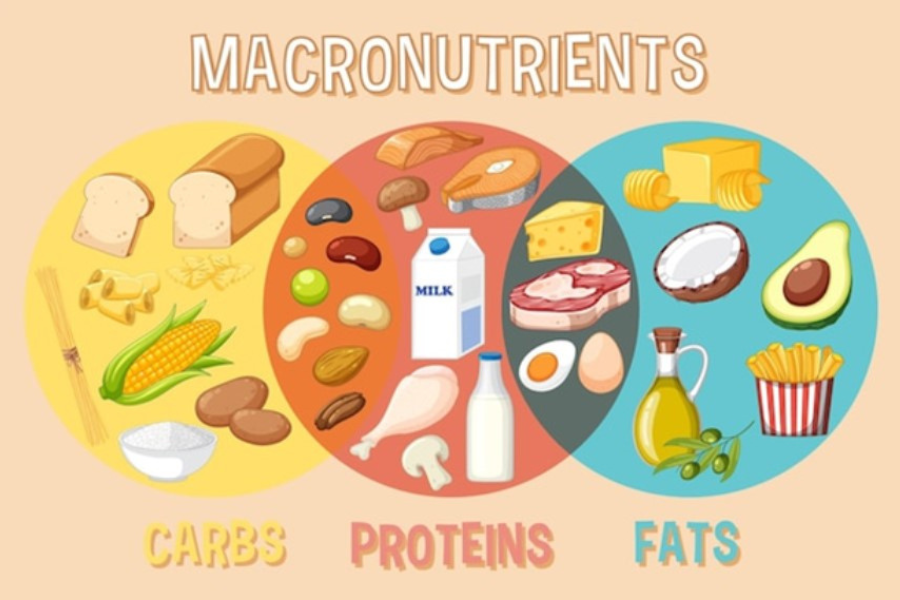
A smart approach to macronutrient requirements for men helps you feel stronger, train better, and protect your long‑term health. It is not only about hitting a certain number of calories. How you balance protein, carbohydrates, and fats matters just as much as how much you eat.
Below are the most common mistakes men make with macronutrients, and how you can avoid them with simple, realistic tweaks.
Focusing only on calories, not macros
If you count calories but ignore macronutrient requirements for men, you might hit your calorie target and still feel tired, soft, or constantly hungry.
Protein, carbs, and fats each play a different role. Protein supports muscle repair, hormone production, and immune function. Carbs provide your main source of quick energy. Fats support brain health and hormone production.
According to US guidelines, carbohydrates should typically provide about 45 to 65 percent of your daily calories, protein about 10 to 35 percent, and fats the remaining 20 to 35 percent (Mayo Clinic, Harvard Health Publishing). Many men feel and perform well around a 40 percent carb, 30 percent protein, 30 percent fat split, though athletes often need more tailored ratios (Herbalife).
Rather than chasing a single perfect ratio, start with a balanced template. Then notice how you feel during workouts, how your appetite behaves, and adjust one macro at a time.
Underestimating your protein needs
One of the biggest mistakes is assuming you are getting enough protein just because you eat meat a couple of times a day.
The official Recommended Dietary Allowance for adults is 0.8 grams of protein per kilogram of body weight, or 0.36 grams per pound (Harvard Health Publishing). For a 165 pound man, that is only about 60 grams daily, which simply prevents deficiency. It does not necessarily support muscle gain, strength, or healthy aging.
For men who are active, lift weights, or care about preserving muscle, higher protein intakes are usually more appropriate:
- Major sports organizations suggest 1.2 to 2.0 grams of protein per kilogram of body weight for male athletes, which is roughly 84 to 140 grams of protein per day for an average sized man (Sports Health / PMC).
- If you are trying to lose body fat while keeping or building muscle, the International Olympic Committee suggests 1.8 to 2.7 grams per kilogram per day (Sports Health / PMC).
You also want to spread that protein across the day. Aiming for roughly 15 to 30 grams of protein at each meal supports muscle maintenance better than saving most of your protein for dinner (Mayo Clinic Health System).
Finally, think about quality. High protein does not mean more processed meats. Fish, poultry, eggs, dairy, beans, lentils, nuts, and seeds provide protein with fewer downsides than heavy reliance on red and processed meat (Harvard Health Publishing).
Overdoing or slashing carbs too hard
Carbs are often misunderstood in macronutrient requirements for men. You might be told to avoid them entirely if you want to lose fat, or to eat as many as you like because you work out. Both extremes can backfire.
Carbohydrates are your primary source of energy in the form of glucose. Your brain and muscles rely on this fuel to perform well (Medical News Today). Research suggests you need at least 130 grams of carbohydrates per day to meet basic energy needs, which is about 25 percent of a 2,000 calorie diet (Mayo Clinic).
Most adults do best when 45 to 65 percent of daily calories come from carbs, or around 225 to 325 grams per day at 2,000 calories (Mayo Clinic). For athletes, carb needs can climb even higher depending on training:
- Light activity, roughly 3 to 5 grams of carbs per kilogram of body weight
- Intense training, up to 8 to 12 grams per kilogram per day (Sports Health / PMC)
When you cut carbs too drastically, you might feel fatigue, dizziness, and mood changes. You should talk to a health professional before making big reductions (Medical News Today).
Instead of focusing only on carb quantity, pay attention to carb quality. Fill most of your carb intake with:
- Whole grains
- Fruits and vegetables
- Pulses and legumes like beans, peas, and lentils
Global health recommendations encourage you to get carbohydrates, including fiber, mostly from these whole sources (Medical News Today). Limiting added sugars to less than 10 percent of daily calories supports better long term health (Mayo Clinic).
A simple plate guideline helps. Try to fill half your plate with non starchy vegetables, a quarter with starchy carbs like whole grains or potatoes, and a quarter with lean protein (Medical News Today).
Ignoring healthy fats and saturated fat limits
Another common mistake is treating all fats as the same. You need dietary fat for hormone production, brain function, and the absorption of fat soluble vitamins, but type and amount really matter.
For most men, fat should provide 20 to 35 percent of daily calories (Sports Health / PMC). Within that range, you want to favor unsaturated fats and keep saturated fats low.
The American Heart Association recommends that saturated fat make up less than 6 percent of daily calories to reduce heart disease risk. That is about 13 grams of saturated fat or less in a 2,000 calorie diet (American Heart Association). Too much saturated fat raises LDL, or “bad,” cholesterol, which increases your risk of heart disease and stroke (American Heart Association).
Saturated fat is mainly found in:
- Beef, pork, and higher fat cuts of poultry
- Full fat dairy like cheese, whole milk, butter, and cream
- Certain tropical oils such as coconut and palm oil, which are usually solid at room temperature (American Heart Association)
To support heart health and performance, you can shift toward unsaturated fats:
- Use oils like olive, canola, or soybean oil when cooking
- Choose lean meats or poultry without skin
- Eat fish, beans, legumes, and nuts regularly (American Heart Association)
The American Heart Association also suggests that you focus on your overall eating pattern, full of fruits, vegetables, and whole grains, instead of obsessing over one nutrient alone (American Heart Association).
Forgetting that age and activity change your needs
Macronutrient requirements for men are not static. Your body composition, training style, and age all change what you need and how your body uses it.
Protein needs are a good example:
- A sedentary 165 pound man only needs about 60 grams per day to meet the basic RDA (Mayo Clinic Health System).
- Between about 40 and 50 years of age, protein requirements rise to roughly 1 to 1.2 grams per kilogram of body weight, or 75 to 90 grams daily for that same 165 pound man, to help fight age related muscle loss (Mayo Clinic Health System).
- If you exercise regularly, your ideal intake climbs further to 1.1 to 1.5 grams per kilogram. Endurance training for events like running or cycling often calls for 1.2 to 1.7 grams per kilogram (Mayo Clinic Health System).
Going beyond 2 grams of protein per kilogram per day is usually considered excessive for most men (Mayo Clinic Health System). You still want room in your diet for high quality carbs and fats.
Carb and fat needs also shift with activity level. If you are more active, you burn more energy and deplete more glycogen, your stored form of carbohydrate. Sports nutrition guidelines use resting metabolic rate calculations, such as the Mifflin–St Jeor equation, plus your daily movement and training to estimate how much you should eat to maintain or change your weight (Sports Health / PMC).
If your schedule or training changes, it is worth revisiting your macros. What worked for you in college probably will not be ideal in your 40s.
A useful check in: if your energy, recovery, or body composition is not where you want it, assume your macros need adjusting before assuming your workouts are the problem.
Using percentages instead of your body weight
Percentages of calories can be a helpful starting point, but they are not always the most accurate way to set macronutrient requirements for men, especially for protein.
For performance and muscle maintenance, sports nutrition experts recommend setting protein relative to your body weight or lean body mass instead of simply picking a percentage like 25 or 30 percent of calories (Herbalife). That is because protein is critical for many structural and metabolic functions, independent of how many calories you eat overall.
Some strength athletes even base protein intake on lean body mass alone, sometimes using 1 to 2 grams of protein per pound of lean mass to support heavy training (Herbalife). For most men, using grams of protein per kilogram of body weight is enough.
Carbs and fats can be set in grams or percentages. For example, you might:
- Set your daily calories based on your current weight, goal, and activity.
- Choose protein in grams per kilogram.
- Allocate carbs next, based on how active you are.
- Fill the remaining calories with mostly healthy fats.
This weight based approach turns macros from a random guess into numbers that match your actual body.
Ignoring overall food quality
You can technically hit your macro targets with fast food and snacks, but your health, energy, and recovery will pay the price.
High quality macronutrient sources also bring micronutrients, fiber, antioxidants, and healthy fats along for the ride. These support everything from heart health to hormone production and joint function.
For better macro quality, you can:
- Get most of your carbs from whole grains, vegetables, fruits, and legumes, as recommended by the World Health Organization and national guidelines (Medical News Today).
- Choose lean, minimally processed protein sources like fish, poultry, beans, lentils, and nuts. Harvard experts specifically recommend these instead of heavily increasing red and processed meats (Harvard Health Publishing).
- Replace foods high in saturated fat with those rich in unsaturated fats, like olive oil, nuts, seeds, and fatty fish, to protect heart health (American Heart Association).
A balanced meal that combines carbs, fats, and proteins supports a more stable blood glucose response and steadier energy levels across the day (Mayo Clinic).
Turning information into action
You do not need to overhaul everything at once to match ideal macronutrient requirements for men. You can start small and build from there.
For example, this week you might:
- Estimate your protein needs based on your body weight and activity, then add or adjust one protein rich meal.
- Swap a refined carb side, like white bread or fries, for a whole grain or legume a few times.
- Check your main sources of fat and replace one high saturated fat item with a healthier option, such as trading butter for olive oil in your cooking.
Notice how your energy, hunger, and performance feel after a couple of weeks. Then make one more tweak.
By understanding how protein, carbs, and fats really work for you, and by avoiding the common mistakes above, you can build a way of eating that supports your goals now and protects your health for years to come.
About the Author