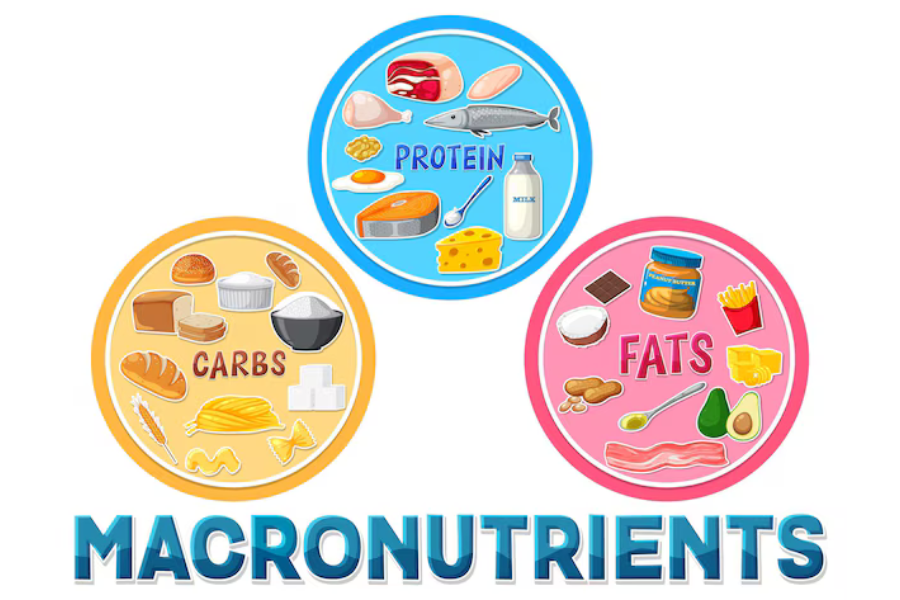
A macronutrient calculator for men can take a lot of the guesswork out of eating for energy, performance, and a healthier body. Instead of just counting calories, you focus on how much protein, carbs, and fat you eat each day and how that balance supports your goals.
Below, you will learn what a macronutrient calculator does, why it is especially helpful for men, and how to use one step by step so you can start eating with more intention and less confusion.
Understand what macronutrients actually are
Before you use a macronutrient calculator for men, it helps to understand what you are tracking.
Macronutrients are the three main nutrients that provide calories:
- Protein, 4 calories per gram
- Carbohydrates, 4 calories per gram
- Fat, 9 calories per gram
All three matter for your health and performance, but they affect your body in different ways. Protein supports muscle repair and growth, carbs fuel your brain and workouts, and fats help with hormone production, vitamin absorption, and cell health. Macronutrient counting means you track not just calories, but how many grams of each macro you eat to hit specific targets for your body and goals (Healthline).
See why men benefit from macro tracking
If you are like many men, your goals probably fall into one of three categories: lose fat, build muscle, or maintain your current weight while feeling better in your body. A macronutrient calculator for men helps with each of these.
Daily calorie needs for men typically land between 2,000 and 3,000 calories depending on your height, weight, age, activity level, and goals (Calculator.net). Within that calorie range, your macro split really shapes what happens to your body. For example:
- Higher protein helps you keep or build muscle, especially if you lift weights
- Controlled carbohydrates help you manage energy and appetite
- The right fats support hormones and long-term health
Tracking macros has been linked with modest weight loss and better cardiovascular markers within about six months, independent of the exact diet style you choose (Healthline). In other words, paying attention to macro balance can help you get leaner and healthier without committing to a single trendy diet.
Learn how a macro calculator works
A macro calculator for men does a few key things behind the scenes:
- It estimates your basal metabolic rate (BMR), which is how many calories your body uses at rest.
- It multiplies that by an activity factor to estimate your total daily energy expenditure (TDEE).
- It adjusts that number up or down based on whether you want to gain, lose, or maintain weight.
- It converts that final calorie target into grams of protein, carbs, and fat.
Many calculators use equations such as Harris Benedict or Mifflin St Jeor to estimate BMR from your age, height, weight, and sex (Calculator.net, Men’s Health UK). Then they apply an activity multiplier. For example, if you exercise around three times per week, a typical activity factor is about 1.55 (Men’s Health UK).
From there the calculator applies a macro ratio that fits your goal, such as a higher protein and slightly lower carb approach for fat loss, or more carbs to support heavier training.
Choose macro ratios that match your goal
There is no single perfect macro split for every man. However, you can use researched ranges as a starting point and then fine tune based on how you feel and how your body responds.
The Dietary Guidelines for Americans suggest these broad ranges for adults (Healthline):
- Carbohydrates: 45 to 65 percent of daily calories
- Fat: 20 to 35 percent of daily calories
- Protein: 10 to 35 percent of daily calories
For men who specifically want to lose weight, staying in a calorie deficit is the most important piece. You might create that deficit by reducing 300 to 500 calories from your maintenance level (Healthline). Within that, many men do well with relatively higher protein to support muscle and control hunger.
Here is an example split you might see:
For a 2,000 calorie diet with 40 percent carbs, 30 percent protein, and 30 percent fat, you would eat about 200 grams of carbs, 150 grams of protein, and 67 grams of fat per day (Healthline).
Some men prefer a ratio around 40 percent protein, 40 percent carbs, and 20 percent fat for balanced nutrition that emphasizes muscle growth and body composition (Men’s Health UK). You can treat these as starting points and adjust over time.
Estimate your protein needs more precisely
Protein is usually the first macro to set when you use a macronutrient calculator for men, because it plays such a big role in muscle and appetite.
The general minimum recommendation for adult men is at least 56 grams of protein per day. For better weight loss and muscle retention, research suggests aiming for about 1.2 to 2 grams of protein per kilogram of body weight (Healthline). If you are resistance trained and focused on building muscle, your needs may rise even more, with some athletes using up to about 1.4 grams of protein per pound of body weight (Healthline).
When you plug your details into a macro calculator, it will translate that into a daily protein target. From there, you can spread your protein across meals and snacks with foods like meat, fish, eggs, dairy, beans, and nuts (Calculator.net).
Set smart targets for fats and carbs
After protein, your macro calculator will divide your remaining calories between fats and carbohydrates.
For fat, guidelines typically suggest 20 to 35 percent of daily calories, with a focus on healthier fat sources. Limiting saturated fat to under 10 percent of total calories and avoiding trans fats supports heart health (Calculator.net). Mono and polyunsaturated fats from foods like olive oil, avocados, nuts, seeds, and fatty fish are better everyday choices. A 2024 meta analysis found that choosing healthy fats and minimally processed protein sources like nuts, seeds, fish, and legumes, rather than refined carbs and processed meats, is linked with a lower overall risk of death (Healthline).
For carbohydrates, most men will land somewhere between 45 and 65 percent of total calories. Prioritize whole food carbs such as vegetables, fruits, legumes, and whole grains instead of refined sugars and white flour products (Healthline). You can shift carb intake higher on heavy training days or slightly lower on rest days if you like a more performance focused approach.
Use a macro calculator step by step
You do not have to calculate everything by hand. A macro calculator for men walks you through the process in a few minutes. Here is how it typically works:
-
Enter your personal details
You add your age, sex, height, current weight, and sometimes body fat percentage. -
Choose your activity level
You select a category that matches how often and how hard you move, for example light, moderate, or very active. The calculator uses this to estimate your TDEE (Calculator.net). -
Set your goal
You indicate whether you want to lose, maintain, or gain weight. Many tools then subtract or add around 15 percent of your maintenance calories to create a deficit or surplus (Men’s Health UK). -
Pick or accept a macro ratio
The calculator may offer presets for fat loss, maintenance, or muscle gain, such as higher protein and moderate fat for weight loss, or higher carbs to fuel muscle growth (MyFitnessPal Blog). -
Review your daily macro targets
Your results will show grams of protein, carbs, and fat per day. Some calculators also show calories and grams per meal for extra clarity (Calculator.net).
Tools like the free macro calculator from MyFitnessPal turn these numbers into practical targets you can track in an app, using your usual meals and snacks as a base (MyFitnessPal Blog).
Track your macros without overcomplicating things
Once you have your numbers, the next step is putting them into practice. You do not need to aim for perfection from day one. Aim for consistency instead.
You can use a food tracking app such as MyFitnessPal to log what you eat and compare it to your macro targets. This helps you see patterns, such as days when you consistently fall short on protein or go heavy on fats. Men who plan three or four dinners each week and build them around their macro goals often find it easier to stay on track long term (Men’s Health UK).
Flexible dieting principles can also help. If you mostly hit your targets and choose quality foods, you can still enjoy favorite treats in moderation without derailing your progress (Men’s Health UK). The goal is a sustainable way of eating, not a short term crash plan.
Adjust your macros as your body changes
Your first macro calculation is a starting point, not a final answer. As you lose weight, gain muscle, or change your activity level, your calorie and macro needs will shift.
It can help to:
- Rerun your macro calculation every 4 to 8 weeks
- Monitor your weight, strength, and how your clothes fit
- Note your energy, hunger, and workout performance
If your weight has stalled for several weeks and your goal is fat loss, you might slightly lower your calories or increase activity. If you feel exhausted and your workouts are suffering, you might need more calories or a higher carb intake. A macro calculator for men gives you a framework, and your feedback from the real world helps you fine tune it (Healthline).
Focus on food quality, not just numbers
Hitting your macros with fast food and processed snacks will not give you the same results as meeting them with lean proteins, whole grains, fruits, vegetables, and healthy fats. That 2024 meta analysis that linked healthy, minimally processed proteins and fats to lower mortality risk is a good reminder that quality counts alongside quantity (Healthline).
As you use a macronutrient calculator for men, aim to:
- Get most of your protein from lean meats, fish, dairy, eggs, beans, nuts, and seeds
- Choose whole food carbs like oats, brown rice, potatoes, and fruit
- Favor fats from olive oil, avocados, nuts, seeds, and fish while limiting saturated and avoiding trans fats (Calculator.net)
When you combine well chosen foods with personalized macro targets, you get a clear, practical way to eat that supports your health, physique, and performance.
Start by calculating your macros once and tracking them for a week. You will quickly see where a few small changes, such as adding more protein to breakfast or swapping sugary snacks for nuts and fruit, can make a noticeable difference.
About the Author