What sleep apnea in men actually is
If you wake up tired no matter how early you go to bed, sleep apnea in men could be part of the story. Obstructive sleep apnea (OSA) is the most common type, and it happens when the muscles that support the soft tissues in your throat relax during sleep. This narrows or closes your airway and briefly cuts off breathing, which lowers your blood oxygen level and forces your brain to jolt you awake so you can breathe again (Mayo Clinic).
These breathing pauses can happen 5 to 30 times or more every hour. You usually do not remember them, but your body feels the impact the next day. OSA is about twice as common in men, and it affects around 30% of men aged 30 to 49 and 40% of men aged 50 to 70 in the United States (AUANews).
Males are more likely to be diagnosed before age 50, so this is not only a “later in life” issue (Cleveland Clinic). Even if you are younger or not overweight, you can still have sleep apnea.
Why men are at higher risk
Sleep apnea in men is influenced by anatomy, hormones, and lifestyle habits. OSA often occurs when the tongue or soft palate falls back and blocks the airway during sleep (NHLBI). If you have a thicker neck, a larger tongue, or a naturally narrow throat, you are more prone to this blockage.
Age and family history matter too. Your risk rises as you get older, and if close relatives have sleep apnea, your chances increase as well (NHLBI). Men are diagnosed more often before 50, which suggests something about male anatomy and hormones raises risk earlier in life (Cleveland Clinic).
Lifestyle plays a big role. Unhealthy habits such as smoking, heavy alcohol use, and a poor diet that leads to weight gain all increase the odds of obstructive sleep apnea, but they are also modifiable, which means you can lower your risk by changing them (NHLBI). Although obesity is a known risk factor, sleep apnea can develop in men of any body size, so a lean build does not automatically protect you (Cleveland Clinic).
Common symptoms you might notice
Sleep apnea symptoms in men can be loud and obvious at night, or subtle and easy to misread during the day. Often, a partner notices the nighttime signs first.
Typical night-time signs include:
- Loud, chronic snoring
- Pauses in breathing that others notice
- Gasping, choking, or snorting during sleep
- Restless sleep or frequent awakenings
During the day, the picture can look different. Men with obstructive sleep apnea often experience:
- Excessive daytime sleepiness, even if you believe you slept enough
- Nodding off at work, while watching TV, or in serious situations like driving
- Trouble focusing or remembering things
- Irritability, a quick temper, or low mood and depression
- Morning headaches and dry mouth (Mayo Clinic)
Because these symptoms are easy to blame on stress, parenting, or a busy schedule, many men live with sleep apnea for years without realizing it. If you recognize more than one of these signs, it is worth talking with a healthcare professional.
How sleep apnea affects your health
Untreated sleep apnea in men does far more than make you tired. Every time your breathing stops, your oxygen level drops and your body releases a stress response. Over time, this repeated strain affects multiple systems in your body.
Sleep apnea impacts:
- Your heart and blood vessels. The condition significantly increases your risk of high blood pressure, heart disease, recurrent heart attack, stroke, and abnormal heart rhythms such as atrial fibrillation (Mayo Clinic). Sleep apnea related stress on the heart can even become life threatening if left untreated (Cleveland Clinic).
- Your brain and nervous system. Poor sleep quality harms focus, reaction time, and mood. Sleep apnea affects the nervous system and can contribute to serious complications if not addressed (Cleveland Clinic).
- Your metabolism. Research shows sleep apnea raises your risk of high blood pressure, diabetes, heart disease, and stroke, all of which are major men’s health concerns (NHLBI).
In short, this is not just “snoring” or being a bit tired. It is a whole body issue that can quietly push your health in the wrong direction.
Links to testosterone, ED, and sexual health
Sleep apnea in men reaches into hormonal and sexual health as well. Men with obstructive sleep apnea often have lower testosterone levels, and the severity of OSA tends to be inversely correlated with testosterone. More severe apnea is more likely to come with low testosterone and polycythemia, especially in men who are also on testosterone therapy (AUANews).
Erectile dysfunction (ED) is very common among men with OSA. Studies report ED rates between 47% and 80% in men who have sleep apnea, and men with OSA have a higher risk of ED compared with those without sleep apnea (AUANews). That is a wide range, but it shows how often the two issues show up together.
There is a positive side here. When OSA is treated and nighttime breathing improves, erectile function scores often improve too, which suggests that getting sleep apnea under control can ease some ED symptoms (AUANews). If you are already on testosterone therapy and have OSA, your risk of polycythemia is almost doubled compared with men on testosterone who do not have OSA. Screening and treating sleep apnea helps reduce these blood related complications (AUANews).
Getting a diagnosis
If you suspect sleep apnea, the first step is to talk with your healthcare provider about your symptoms. Mention things like snoring, witnessed breathing pauses, morning headaches, and daytime sleepiness. If possible, ask a partner or family member to share what they see at night.
Your provider may refer you for a sleep study. This can be done in a sleep lab or sometimes at home with portable equipment. The test tracks your breathing, oxygen level, heart rate, and brain waves while you sleep. From there, a specialist can tell you if you have sleep apnea, how severe it is, and what type it is.
Obstructive sleep apnea is the most common type in men, caused by blocked airflow in the upper airway. Central sleep apnea is different and comes from how the brain controls breathing during sleep, rather than a physical blockage (NHLBI). Knowing the type matters because it guides your treatment plan.
Untreated sleep apnea rarely gets better on its own, but it often responds well to the right combination of lifestyle changes and medical treatment.
Treatment options that actually help
There is no one cure that works for every man, but there are proven treatments that reduce symptoms, protect your heart, and improve your energy. Often, you will use more than one approach at the same time.
Lifestyle changes you can start now
For mild obstructive sleep apnea in men, or as a foundation for any treatment plan, lifestyle changes make a real difference. Experts recommend:
- Losing excess weight if you need to, since this can reduce or even resolve OSA in some men (Cleveland Clinic)
- Being physically active on a regular basis
- Limiting alcohol and caffeine, especially in the evening
- Quitting smoking
- Sleeping on your side instead of your back
- Treating nasal congestion and managing allergies
These habits are part of standard sleep apnea care and can be very effective in both men and women (NHLBI). For men with milder OSA, losing weight, changing sleep position, quitting smoking, and treating allergies are often the first recommended steps before moving on to devices or surgery (Mayo Clinic).
CPAP and other positive airway pressure devices
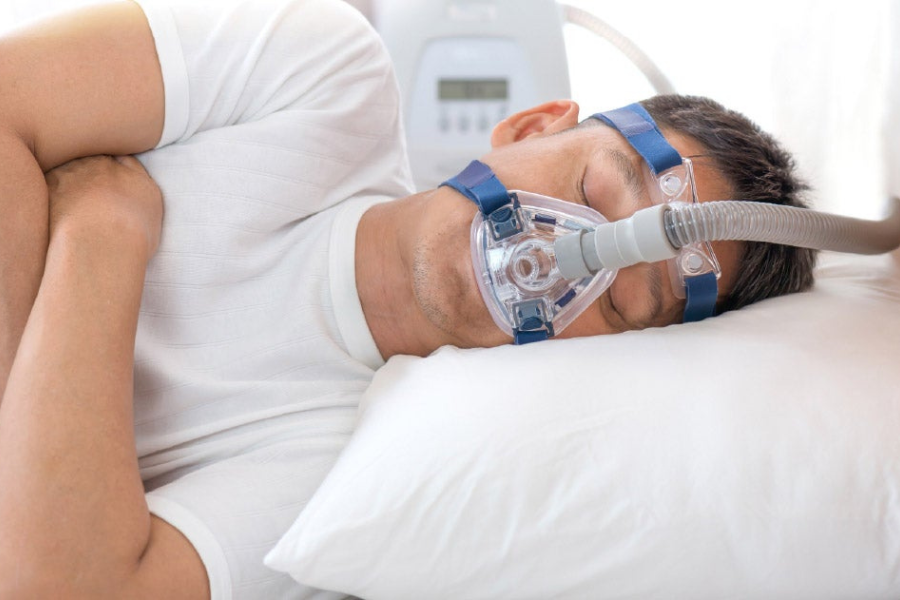
For many men, continuous positive airway pressure, or CPAP, is the main treatment. A CPAP machine delivers air through a mask to keep your upper airway open while you sleep, so you stop having apneas and loud snoring. It is considered the most common and reliable treatment for obstructive sleep apnea in men (Mayo Clinic).
Positive airway pressure machines work best when combined with healthy lifestyle changes (NHLBI). Side effects like a dry mouth, congestion, nosebleeds, or a runny nose sometimes show up, especially early on, but you should report these to your provider. Small adjustments in mask fit, humidity, or pressure settings often help.
Oral appliances and orofacial therapy
If you cannot tolerate CPAP, or you have mild sleep apnea, an oral appliance may be an option. These are custom fitted devices made by a dentist or orthodontist that keep your airway open by repositioning your jaw or tongue while you sleep. They can be easier to use than CPAP for some men and can help with mild OSA and snoring, but CPAP is still generally more effective overall. Regular dental follow up is important to make sure the device stays effective and comfortable (Mayo Clinic, NHLBI).
Orofacial therapy is another tool. It uses targeted exercises to strengthen and reposition the tongue and the muscles that control your lips, tongue, upper airway, and face. This can help keep your airway more stable and is an option for both children and adults with sleep apnea, including men (NHLBI).
Medication and surgery in select cases
For men with obesity related OSA, a newer option is an injectable weight loss medicine approved by the FDA for people with moderate to severe sleep apnea and obesity. It is combined with physical activity and a healthy eating plan. It can improve breathing pauses and oxygen levels, but it can also have serious side effects and is not safe for everyone, especially those with certain thyroid or endocrine conditions (NHLBI, Mayo Clinic).
Surgery is usually considered only after at least three months of trying other treatments without success. Procedures like uvulopalatopharyngoplasty remove tissue from the back of the throat to reduce snoring. This can help some symptoms but is less effective than CPAP at fully treating OSA. Other surgeries aim to clear or enlarge the airway in different ways, depending on your anatomy (Mayo Clinic).
When to talk to a doctor
You should reach out to a healthcare professional if:
- You snore loudly, especially if it disrupts others
- Someone notices you stop breathing or gasp in your sleep
- You feel exhausted during the day despite a full night in bed
- You have trouble concentrating, or your mood feels off most days
- You have ED, low libido, or low testosterone and suspect your sleep might be involved
Sleep apnea in men is common, treatable, and worth taking seriously. Getting evaluated is not about being “difficult” or “high maintenance.” It is about protecting your heart, brain, hormones, and quality of life.
If any of these signs sound familiar, consider this your cue to bring them up at your next appointment and ask directly about sleep apnea. The sooner you know what is happening at night, the sooner you can start waking up feeling like yourself again.
About the Author