Image by Flux
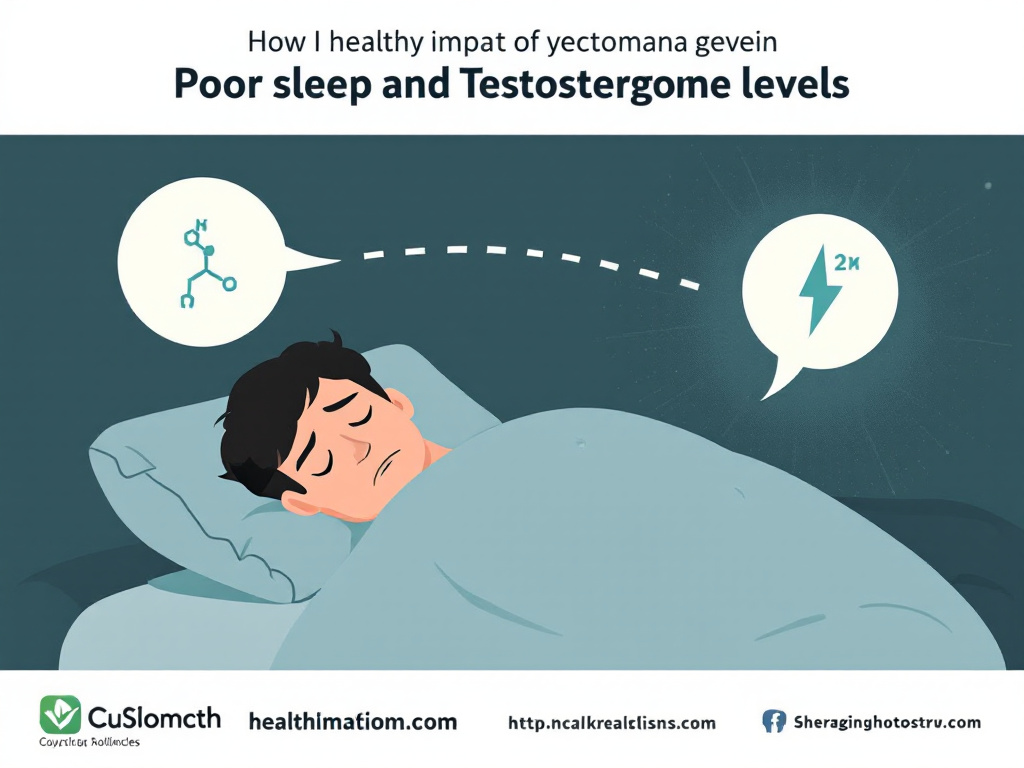
A few late nights might not seem like a big deal, but poor sleep and testosterone are more connected than you might think. If you feel more tired, less focused, or not quite like yourself lately, your sleep habits could be part of the reason.
In this guide, you will see what the research actually says about how sleep affects testosterone, what that means for your health, and how you can start improving both, without overhauling your entire life at once.
How testosterone and sleep work together
Testosterone is often linked to sex drive and muscle, but it affects far more than that. It supports your energy levels, mood, concentration, bone density, and overall sense of well‑being. Your body produces most of its daily testosterone while you sleep, especially during deeper stages of sleep.
Your testosterone naturally follows a 24 hour rhythm. Levels are usually highest in the morning around 8 a.m. and lowest in the evening around 8 p.m. Sleep helps maintain this normal cycle of production and release (Sleep Foundation). When you cut sleep short, or your sleep is broken up, you interfere with that rhythm.
Over time, that can leave you with lower average testosterone and more ups and downs throughout the day. You may not notice the drop immediately, but you often notice how you feel.
What the research says about poor sleep and testosterone
You do not have to be sleep deprived for months to see an effect. Several studies show that testosterone levels respond quickly to changes in sleep.
Short term sleep loss
In one University of Chicago study, young healthy men, average age 24, were restricted to 5 hours of sleep per night for 1 week. Their daytime testosterone levels dropped about 10 to 15 percent compared with when they had 10 hour bedtimes, going from 18.4 nmol/L down to 16.5 nmol/L between 8 a.m. and 10 p.m. (PMC).
These men also lost a lot of stage 2 sleep and REM sleep each night while gaining only a small amount of deep sleep stages 3 and 4. That shift in sleep stages contributed to changes in how testosterone was released during the day (PMC).
As their testosterone fell, their self reported vigor scores dropped too, from 28 after the first short night to 19 after the seventh. In other words, they felt less energetic and less well overall (PMC).
Interestingly, their cortisol, a stress hormone, did not increase. That suggests the drop in testosterone was driven by sleep restriction itself, not just by feeling more stressed (PMC).
Another report from the same research group, published in JAMA, found a similar 10 to 15 percent reduction in testosterone after only one week of sleeping less than five hours per night. The decline was roughly equal to what you might lose over 10 to 15 years of normal aging (University of Chicago Medicine). Testosterone levels were lowest in the afternoons between 2 p.m. and 10 p.m., which lined up with lower mood and reduced vigor the men reported.
At least 15 percent of the adult working population in the United States gets less than five hours of sleep a night, so this pattern is not rare (University of Chicago Medicine).
Longer term patterns by age and sex
Not everyone responds to sleep loss in exactly the same way. A large analysis using National Health and Nutrition Examination Survey data from 2011 to 2016 looked at sleep duration and testosterone in different age and sex groups.
Here is what it found (Healio):
- Middle aged men, 41 to 64 years, who slept 9 hours or more per night were more likely to have low testosterone than those who slept 7 to 8 hours, with an odds ratio of 2.03. Oversleeping in this age range seemed linked with lower levels.
- Middle aged women, 41 to 64 years, who slept 6 hours or fewer had higher odds of low testosterone, and women who slept 9 hours or more had an even higher risk compared with those sleeping 7 to 8 hours.
- Men aged 20 to 40 years who slept 6 hours or less per night were more likely to have high testosterone compared with those sleeping 7 to 8 hours, with an odds ratio of 3.62.
- In adults 65 and older, and in women 20 to 40 years, there was no clear association between sleep duration and testosterone.
- Reported sleep quality was not tied to testosterone in any group, so how long you sleep appeared more important than how good you feel your sleep is.
Taken together, the research suggests that both too little and too much sleep can be linked with hormone changes, especially in middle age. For young men, very short sleep in the short term can initially raise morning testosterone in some situations, but controlled lab studies still show average daytime levels fall when sleep is repeatedly restricted.
How low testosterone from poor sleep can feel
You might not connect your symptoms to your sleep right away. Many signs of low testosterone are vague and can have multiple causes. Poor sleep can also directly make you feel unwell, so the two often overlap.
Low testosterone related to poor sleep has been associated with (PMC, University of Chicago Medicine):
- Low energy and fatigue
- Reduced sense of well being or vigor
- Lower sex drive
- Trouble concentrating or staying focused
- Irritability or low mood
- Changes in muscle mass and strength
- Over time, lower bone density
You might notice that late nights and fragmented sleep leave you dragging through the afternoon, less interested in sex, or less motivated to work out. If that pattern becomes your normal week after week, it is worth paying attention.
The two way link between sleep and testosterone
The relationship between poor sleep and testosterone is not a one way street. Each one can make the other worse.
On one side, not getting enough sleep or having a sleep disorder like sleep apnea can reduce testosterone levels (Sleep Foundation). When your sleep is short or fractured, your body simply has less time in the right sleep stages to produce and release testosterone.
On the other side, low testosterone itself may lead to sleep problems. In men and people assigned male at birth, low testosterone has been linked with insomnia like symptoms. That can include difficulty falling asleep, waking up often, or waking up earlier than you want and being unable to fall back asleep (Sleep Foundation).
This kind of feedback loop can leave you stuck. You sleep poorly, your testosterone drops, your sleep gets worse, and round it goes. Recognizing that loop is an important first step in breaking it.
Testosterone therapy can sometimes help men whose low testosterone is clearly contributing to poor sleep. However, high dose testosterone treatment can also disrupt sleep and may worsen obstructive sleep apnea in some men, which can fragment sleep even more. That is why any hormone therapy needs to be managed carefully by a health professional, not self prescribed (Sleep Foundation).
How much sleep you should aim for
Most healthy adults do best with about 7 to 9 hours of sleep per night. The research suggests that a middle ground is usually better for testosterone than either extreme.
In middle aged men and women, sleeping 7 to 8 hours seems to be the sweet spot for supporting normal hormone levels. Less than 6 hours or more than 9 hours was linked with a higher chance of low testosterone in that large survey study (Healio).
If you are younger, your day to day testosterone may be more resilient, but controlled lab studies still show that repeatedly cutting your sleep down to 5 hours can reduce your daytime levels by 10 to 15 percent in only a week (PMC).
You do not need perfect sleep every night. What matters is your typical pattern. If your average week is full of late nights and early alarms, it is worth looking at what you can realistically adjust.
Daily habits to improve sleep and protect testosterone
You do not have to overhaul your entire routine to give your sleep, and your testosterone, a better shot. Small consistent changes are more useful than a complete reset that you cannot maintain.
Here are practical steps you can start with:
-
Protect a sleep window
Choose a realistic 7 to 8.5 hour window that fits your life. Try to go to bed and get up at roughly the same times every day, including weekends. This helps your internal clock stabilize, which supports both sleep and hormone rhythms. -
Give yourself a wind down period
For the last 30 to 60 minutes before bed, shift toward quieter, lower light activities. Read a book, stretch lightly, or listen to calm music. Try to keep bright screens, intense work, and stimulating games out of this window so your brain has time to slow down. -
Keep your sleep environment simple
A dark, cool, quiet room makes it easier to move through normal sleep stages. Block external light, lower the bedroom temperature a bit, and reduce noise as much as you can. If you share a space, even small tweaks like heavier curtains or a fan for white noise can help. -
Watch late night stimulants and heavy meals
Caffeine, nicotine, and large meals close to bedtime can delay sleep or fragment it. Try cutting off caffeine in the afternoon and keeping late night food lighter. Alcohol might make you sleepy at first, but it tends to break up sleep later in the night. -
Move your body, but time it well
Regular physical activity supports deeper sleep and healthier testosterone levels. Intense workouts right before bed can be too stimulating for some people though. If that sounds like you, aim to finish harder sessions at least a few hours before you plan to sleep.
These changes will not flip a switch overnight, but over a few weeks they often make a real difference in how rested you feel and how stable your energy is throughout the day.
When to talk to a doctor about poor sleep and testosterone
You do not need to diagnose yourself. There are a few clear signs that it is time to get professional input.
Consider seeing a doctor if you notice:
- Ongoing low energy, low sex drive, or low mood that lasts for months
- Significant trouble falling or staying asleep most nights
- Loud snoring, gasping, or pauses in breathing reported by a partner
- Morning headaches, dry mouth, or waking up unrefreshed even after a full night in bed
- Difficulty building or maintaining muscle despite regular training and adequate food
Your doctor can discuss your symptoms, check for possible sleep disorders such as obstructive sleep apnea, and order blood tests to look at testosterone levels and other hormones.
If low testosterone is confirmed, treatment might include lifestyle changes focused on sleep, stress, weight, and exercise. In some cases, testosterone replacement therapy is considered, but it needs careful monitoring since high doses can worsen sleep apnea and disrupt sleep structure (Sleep Foundation).
You do not have to choose between better sleep and better hormone health. Improving one usually supports the other.
Key takeaways
Poor sleep and testosterone are closely linked. Even one week of sleeping only 5 hours per night can lower your daytime testosterone by 10 to 15 percent and reduce your sense of vigor and well being (PMC, University of Chicago Medicine). Over the long term, regularly sleeping much less or much more than 7 to 8 hours can also be tied to hormone changes, especially in middle age (Healio).
If you are feeling tired, less focused, or not yourself, start with one small sleep change tonight. Protect an extra 30 minutes, dim the lights earlier, or move your phone out of arm’s reach. Then, pay attention to how your body responds over the next few weeks. If your symptoms persist or you are concerned, reach out to a health professional so you can explore both your sleep and your hormone health together.
About the Author