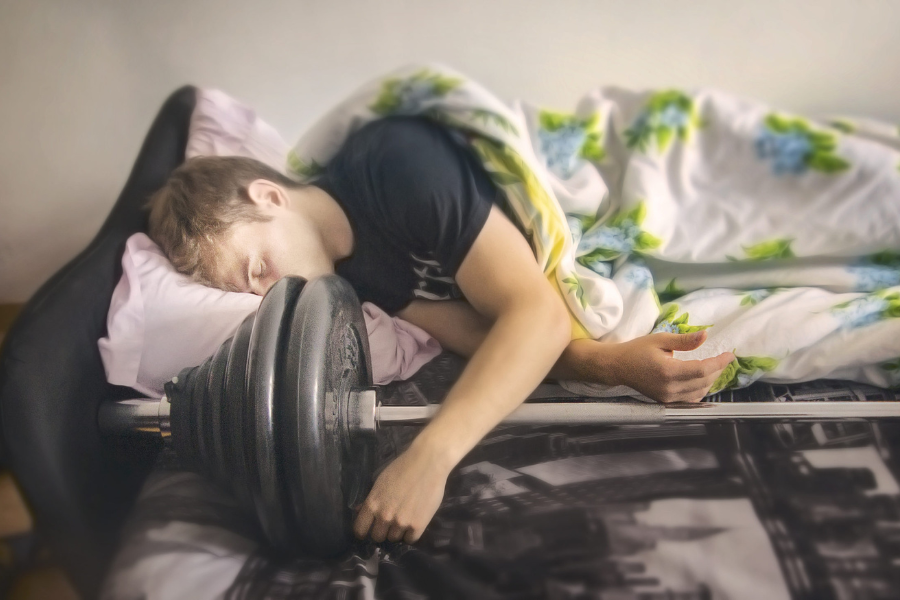
If you care about lifting heavier, building more muscle, and staying injury free, your sleep habits matter as much as your time under the bar. The right sleep habits for men who lift weights can boost recovery, hormone balance, and training performance, while poor sleep can quietly stall your progress.
Below, you will find practical, science backed ways to sleep better so your training pays off.
Why sleep matters for lifters
Every hard session in the gym creates tiny tears in your muscle fibers. You get stronger when your body repairs those fibers, not while you are lifting. A big part of this repair happens while you sleep, especially during the deeper stages of the night.
During sleep your body releases growth hormone, which helps repair those micro tears from resistance training and supports muscle growth and recovery (MuscleSquad). Wellness expert Dr. Felecia Stoler notes that deep sleep is when growth hormone production climbs, giving your muscles a chance to recharge and regrow (Muscle & Fitness).
When you cut your sleep short, you do not only feel tired. Lack of sleep reduces testosterone, which you need for building muscle, and increases cortisol, a hormone that breaks down muscle tissue and slows your progress in the gym (MuscleSquad).
On top of that, proper sleep sharpens your focus and concentration, which you need for heavy, technical lifts. Sleep loss makes you less mentally sharp and can hurt gym performance (MuscleSquad).
How much sleep you actually need
You have probably heard that you should aim for about 7 to 9 hours of sleep. That is a useful range, but as someone who lifts, you might benefit from the higher end.
For men doing light weight training, research based advice suggests targeting 7 to 8 hours per night. If you lift heavy or train multiple times a day, 9 to 10 hours can support better recovery and performance (HardToKillFitness).
At the same time, there is no single magical number that works for every man. A study highlighted in 2026 found that cutting habitual sleep by one to two hours below the recommended seven did not prevent non trained men from gaining muscle and strength from resistance band workouts over five weeks (Men’s Health UK). Researcher Brad Schoenfeld, PhD, pointed out that there may not be one ideal sleep duration for muscle growth and that some people adapt to slightly shorter sleep, within limits (Men’s Health UK).
So how do you use this in real life? Start here:
- If you usually sleep 5 to 6 hours and feel drained, work toward 7.
- If you are already at 7 and still sore, unmotivated, or stuck on your lifts, experiment with 8 to 9.
- Track how you feel in your workouts, not just the hours on the clock.
Remember that quality matters as much as quantity. You want a healthy mix of light, deep, and REM sleep, because all three phases support recovery and muscle building in different ways (Men’s Health UK).
What happens to your muscles when you do not sleep enough
Skipping sleep affects more than your mood. It changes how your body handles muscle repair and growth.
A 2021 randomized crossover study found that just one night of total sleep deprivation reduced muscle protein synthesis after eating by about 18 percent in healthy young adults, showing that sleep loss can create short term resistance to muscle building (PMC). In the same study, cortisol rose by 21 percent and testosterone dropped by 24 percent the next day, which is not the hormonal environment you want for building muscle (PMC).
Interestingly, this study did not see an increase in genes linked with muscle breakdown, which suggests that sleep loss mostly hurts the building side of the equation rather than cranking up the breakdown side (PMC).
Other research has shown that sleep deprivation can increase protein breakdown and impair protein synthesis over time, which may lead to muscle loss if poor sleep becomes a pattern (CISS Journal). Studies also show that slow wave sleep, the deepest stage, is especially important for body restoration and growth hormone release after intense training (CISS Journal).
For you, the takeaway is simple. One bad night will not erase your gains, but repeated short or poor quality nights can blunt how much muscle you add and how quickly you recover.
Build a consistent sleep schedule
One of the most powerful sleep habits for men who lift weights is also one of the most boring. Go to bed and wake up at the same time every day.
A consistent schedule helps regulate your internal clock, which makes it easier to fall asleep, stay asleep, and wake up feeling rested. It also improves sleep efficiency, which means more of your time in bed is spent actually sleeping, not tossing around (MuscleSquad).
Several fitness focused sources emphasize that aligning your sleep schedule with your natural rhythms is one of the most effective ways to upgrade sleep quality and maximize training results (HardToKillFitness).
You can start by setting a sleep and wake window you can realistically stick to most days of the week. Even a one hour range is better than random bedtimes.
If you change nothing else, locking in a consistent sleep and wake time can noticeably improve your recovery within a couple of weeks.
Time your workouts for better sleep
Your training time can make falling asleep easier or harder. Exercise raises body temperature and stimulates your nervous system. That is great in the afternoon but not so helpful right before bed.
Experts recommend finishing your training sessions about three to four hours before your planned bedtime. This gives your body time to cool down and your mind time to wind down, which makes it easier to drift off when you get in bed (Muscle & Fitness).
If late night workouts are your only option, try these adjustments instead of dropping training altogether:
- Reduce heavy compound lifts at night and move them earlier in the day when possible.
- Add a longer cool down with light cardio and stretching so your heart rate and temperature fall before you leave the gym.
- Finish the session with calm breathing drills, so your nervous system is not stuck in high gear when you get home.
The goal is to avoid going from last heavy set to bed in under an hour. Your body needs a buffer.
Create a lifter friendly sleep environment
Your bedroom should be set up like a recovery room, not a second office or entertainment center. Conditions that help most lifters sleep deeper include darkness, quiet, and a slightly cool temperature.
Keeping the room dark and quiet supports natural melatonin release and makes it easier to stay asleep. Cooler temperatures also line up with how your body temperature normally drops at night, which helps you fall asleep faster (MuscleSquad).
A few practical tweaks:
- Use blackout curtains or an eye mask if streetlights or early sun sneak into your room.
- Try earplugs or a white noise machine if you live in a noisy area.
- Invest in a comfortable mattress and pillows, especially if you often wake up with aches that are not from training.
Your bedding and room setup may not seem as important as your training shoes or lifting belt, but both directly affect how well you recover at night.
Cut blue light and late night scrolling
Screens are a sneaky sleep killer. The blue light from phones, tablets, and laptops suppresses melatonin and disrupts your circadian rhythm. This makes your brain feel like it is still daytime, even when the clock says midnight.
Men who lift weights are advised to switch off these devices about 30 minutes before bed to support better sleep quality (Muscle & Fitness). That half hour is a great time for low tech wind down habits such as reading a book, stretching, or planning the next day’s workout on paper.
If you absolutely must use screens close to bedtime, at least use night mode or blue light filters. Still, your best bet for deep sleep is a true screen break before bed.
Build a simple pre sleep routine
A relaxing bedtime routine signals to your body that it is time to shift out of training mode and into recovery mode. The goal is consistency, not complexity.
You might include habits like:
- A warm shower to help your body cool slightly afterward
- Light mobility work or foam rolling, focusing on sore areas
- A few minutes of quiet breathing or meditation
- Reading something non work related
Creating a wind down routine, along with a dark, quiet, cool bedroom and limited screen time, has been shown to improve sleep quality and, in turn, muscle recovery and training outcomes (MuscleSquad).
Think of this as the last 15 to 30 minutes of each day that you dedicate to ticking the final box of your training plan: recovery.
Be smart about alcohol and supplements
Even a couple of drinks in the evening can hurt your sleep more than you might expect. Alcohol disrupts your circadian rhythms, dehydrates you, fragments your sleep cycles, and lowers overall sleep quality. For lifters, cutting out or reducing nighttime alcohol can noticeably improve rest and muscle recovery (Muscle & Fitness).
If you struggle to fall asleep, low dose supplements can sometimes help, but they are not magic. For example, a small dose of melatonin, about 0.3 to 1 milligram, taken 60 to 90 minutes before bed in a dark, quiet environment may help you fall asleep faster (Muscle & Fitness). Some lifters also use ingredients like Suntheanine to promote relaxation without feeling groggy the next day (Muscle & Fitness).
Always talk with a healthcare professional if you have ongoing sleep problems, or before adding supplements, especially if you take other medications.
Watch for warning signs of poor sleep
Lastly, it helps to know what poor sleep looks like in your training life, so you can adjust before you hit a wall.
You might be under sleeping if you notice:
- You need more caffeine just to get through your usual workout.
- Your numbers in the gym are flat or dropping for weeks, even though your program and diet are on point.
- You feel unusually sore for longer than expected after regular sessions.
- Your motivation is low and small setbacks feel much bigger than they should.
Some research in older adults with obesity has linked poor sleep quality to lower muscle mass, lower strength relative to body size, higher body fat percentage, and worse mental and physical quality of life (Scientific Reports). In that same study, poor sleepers also had higher anxiety and depression scores, and sleep quality independently predicted lean mass and quality of life even after adjusting for age, sex, BMI, and other factors (Scientific Reports).
While you might not fit that exact profile, it shows how deeply sleep affects both your body composition and mental health over time.
Putting it all together
If you want better results from your lifting, treat sleep like a core part of your training program, not an afterthought. To recap, focus on:
- A consistent sleep and wake time that you can stick with most days.
- Enough sleep each night, with most lifters landing between 7 and 9 hours.
- Workouts scheduled 3 to 4 hours before bed when possible.
- A dark, cool, quiet bedroom that is built for rest.
- A screen free, relaxing routine in the 30 minutes before lights out.
- Limited evening alcohol and careful, informed use of any sleep aids.
Pick one or two habits from this list to start this week. After a couple of weeks, check in with your strength, soreness, and motivation. When you notice you are recovering faster and pushing more weight, you will see why your nights in bed are just as important as your hours in the gym.
About the Author