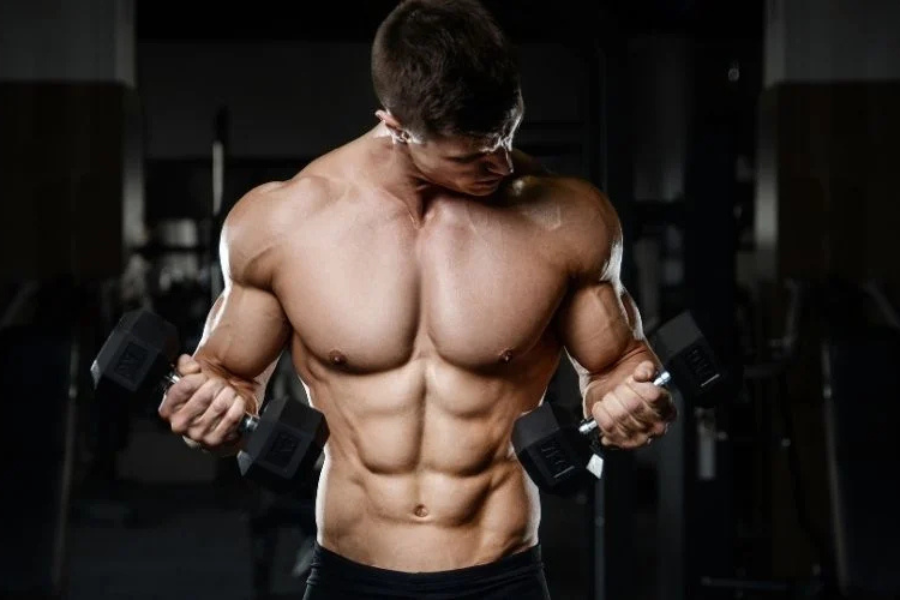
A pair of dumbbells is all you need for effective, enjoyable arm training. With the right dumbbell arm workouts, you can build stronger biceps, thicker triceps, and solid shoulders at home or in the gym, without a lot of equipment or time.
Below, you will find simple routines you can actually stick with, plus clear form cues so every rep counts.
Understand your arm muscles
Before you start, it helps to know what you are targeting. Your arm is not just “biceps.”
You are mainly working three areas:
- Biceps on the front of your upper arm
- Triceps on the back of your upper arm
- Forearms which control your grip and wrist
Your triceps are especially important. They have three heads, long, lateral, and medial, and make up roughly two thirds of your upper arm size. That means if you want bigger looking arms, prioritizing tricep work is essential, not optional.
Dumbbells are ideal for this. Compared with barbells or machines, they let each arm move on its own, which helps fix strength imbalances and gives you a greater range of motion. A 2017 study in the Journal of Strength and Conditioning Research found that dumbbell tricep exercises can lead to higher muscle activation and more total reps than barbells or Smith machines, which makes them a smart choice for arm growth and strength.
Why dumbbell arm workouts work so well
Dumbbells make arm training flexible and joint friendly. You can rotate your wrists into positions that feel natural, adjust the path of the weight, and stop a set if one side is fatiguing faster than the other.
Research and coaching guidance highlight a few key advantages:
- You can train the triceps through presses, extensions, and kickbacks to hit all three heads, which supports muscle growth and pressing strength for push ups and bench press.
- Shoulder angle changes which head of the triceps you emphasize. One 2018 study found the long head works harder with the arm down at your side, around 0 degrees, while the medial head works more when your arm is raised at 90, 135, or 180 degrees.
- Smaller muscles like your biceps and triceps respond well to lighter dumbbells used with control, rather than heavy cheating reps. This was highlighted in several coaching guides that recommend lighter loads and higher rep ranges for arms.
- You can train almost anywhere. A bench helps, but you can do most movements standing or on the floor.
If you tend to rush through arm day with random curls, a simple structure will help you build size and strength faster, with fewer wasted reps.
How to pick the right weight and reps
You do not need heavy dumbbells to get results, especially if you are newer to lifting. Because arm muscles are relatively small compared to your chest or back, lighter loads can take them to fatigue quickly.
A practical starting point:
- Do 2 or 3 sets of 10 to 15 repetitions for most arm exercises.
- Choose a weight that makes the last 2 or 3 reps challenging, but still allows clean form.
- When 15 reps feel easy and controlled, move up one weight level.
Some moves, like hammer curls or close grip pressing, involve more muscle and can usually be done with slightly heavier dumbbells. Others, such as lateral raises or kickbacks, often need lighter weights, even as low as 5 pounds, so your shoulders and elbows stay happy.
If you have any history of shoulder, elbow, or back issues, keep your form tight and stop if you feel sharp or unusual pain. Many coaches recommend focusing on smooth, controlled reps first and only then increasing load.
A 15 minute dumbbell arm workout you can repeat
If you want a quick routine that hits your whole upper arm, try this circuit style workout based on guidance from a 2024 Men’s Health piece on short, effective dumbbell sessions.
You will move through 6 exercises back to back, then rest and repeat:
- Bicep curl, 8 to 12 reps
- Incline tricep extension, 8 to 12 reps
- Strict press, 8 to 12 reps
- Hammer curl, 10 to 20 reps
- Overhead tricep extension, 10 to 15 reps
- Lateral raise, 10 to 15 reps
Do 2 or 3 rounds. Rest briefly between exercises only as needed, then rest about 2 minutes after exercise 6 before starting the next round.
Quick form cues
- For curls, keep your elbows close to your sides and avoid rocking your torso.
- For tricep extensions, move only at the elbow, not the shoulder, so your triceps do the work.
- For strict presses and lateral raises, brace your core and keep ribs down so you are not leaning back.
Once this feels comfortable, you can mix in some of the more focused exercises below.
Best dumbbell bicep exercises
Biceps look simple, but small adjustments in grip and body position change how they feel. These moves give you options even if you just have one pair of dumbbells.
Standing dumbbell curl
This is your classic bicep builder.
- Stand tall, dumbbells at your sides, palms facing forward.
- Keep shoulders back and still, elbows close to your ribs.
- Curl both dumbbells up toward your shoulders, then lower slowly.
You can curl both arms together or alternate one at a time. Alternating lets each arm get a tiny rest between reps and helps you focus on technique.
Aim for 10 to 15 reps. If you feel your body swinging to get the weight up, lighten the load and rebuild strict form first.
Hammer curl to twist
Hammer curls hit both the biceps and the brachialis, a muscle underneath that helps push your arm size outwards.
One variation recommended in coaching guides is the “Hammer Curl to Pause, Twist, and Supinated Lower”:
- Start with dumbbells at your sides, palms facing each other.
- Curl up in that neutral position.
- Pause at the top, twist your palms up so they face you, then slowly lower in that position.
This keeps tension on the muscle through a long range of motion, which is great for growth if you keep the movement controlled.
Concentration curl
If you want to really isolate the biceps, the concentration curl is your go to. A 2014 American Council on Exercise study found it produced the highest bicep activation compared to several other curl variations.
- Sit on a bench, feet wide, dumbbell in one hand.
- Rest that elbow on the inside of your thigh.
- Curl the weight up toward your shoulder, then lower under control.
Because your arm is braced, you cannot cheat with momentum, so choose a lighter weight and focus on a strong squeeze at the top.
Best dumbbell tricep exercises
If you want thicker arms and stronger presses, triceps deserve at least as much attention as your biceps. These exercises train them from different angles to hit all three heads.
Overhead tricep extension
You can do this seated or standing. Both are effective, and an expert review in 2023 listed overhead extensions among the top dumbbell options for building triceps.
- Hold one dumbbell with both hands, or one in each hand.
- Raise the weight overhead, arms straight but not locked.
- Keeping your elbows pointed mostly forward or slightly in, bend your elbows to lower the weight behind your head.
- Extend your arms again, squeezing your triceps at the top.
Keep your ribs down and core braced so you are not arching your lower back. Aim for 10 to 15 smooth reps.
Lying tricep extension, dumbbell skullcrusher
The skullcrusher is a classic tricep builder that works well with dumbbells.
- Lie on a bench or the floor, dumbbells held above your chest, palms facing each other.
- Keep your upper arms still and bend only at the elbow to lower the weights toward your temples or just above your forehead.
- Press back up by straightening your elbows.
Use a controlled tempo. Many coaches advise 3 to 4 sets of 10 to 12 reps with a weight that you can move without your elbows flaring out too wide.
Close grip dumbbell bench or floor press
This is a compound movement that hits your triceps and chest while also building pressing strength for push ups.
- Lie on a bench or floor with dumbbells above your chest, palms facing each other.
- Keep the dumbbells fairly close together, elbows tucked about 45 degrees from your body.
- Lower until your elbows are just below the bench or touch the floor, then press back up.
Because more muscles are involved, you can usually go heavier on this exercise than on extensions or kickbacks.
Tricep kickback
Kickbacks are often done too fast. Slow them down and they become a powerful isolation move.
- Hinge at the hips with a flat back, one knee on a bench or both feet on the floor.
- Start with your upper arm close to your torso and elbow bent at 90 degrees.
- Extend your elbow to “kick” the dumbbell back until your arm is straight.
- Pause briefly, then return to the starting position.
Keep your upper arm still and only move at the elbow. If you feel your shoulder rocking, go lighter.
Do not forget your forearms and grip
Stronger forearms make everything from curls to deadlifts easier. They also protect your wrists.
Simple dumbbell options:
- Palms up wrist curl. Sit, rest your forearms on your thighs, palms up, and curl the weight toward you.
- Palms down wrist curl. Same setup, but palms face down to hit the other side of your forearms.
These movements can improve wrist stability and motor control, which helps whether you are lifting, typing, or carrying groceries.
How often to train your arms
You can train arms on their own or after bigger lifts like rows and presses. What matters more is recovery.
Triceps in particular need time to bounce back. One study in Muscle & Nerve found it takes about 48 hours for tricep strength to fully recover after training. A simple guideline is to leave at least one full day between direct arm workouts, and about three days before repeating a heavy tricep focused session.
A few ways to structure your week:
- 2 short dumbbell arm workouts per week on non consecutive days
- 1 short arm finisher after your upper body days
- A 15 minute arm circuit when you are short on time but still want a solid pump
Focus on progressive overload over time. That might mean:
- Adding 2 to 4 reps per set before increasing weight
- Pausing for 1 second at the top of curls or extensions
- Slowing down the lowering portion of the lift
These small changes keep your muscles challenged even with the same set of dumbbells.
If you consistently reach near fatigue in the 10 to 15 rep range, use good form, and give yourself time to recover, you will see and feel a difference in your arms.
Putting it all together
You do not need a complicated plan or a full rack of weights. A simple mix of curls, presses, and extensions can build bigger, stronger arms as long as you train them with intent and consistency.
Here is a quick way to get started this week:
- Choose 1 or 2 bicep moves from above.
- Choose 2 tricep moves, ideally one overhead or lying extension and one press.
- Add 1 shoulder or forearm exercise if you have time.
- Do 2 to 3 sets of each, 10 to 15 reps, and focus on clean, controlled movement.
Stick with that for a few weeks, then swap in different variations to keep your dumbbell arm workouts fresh and enjoyable.
About the Author