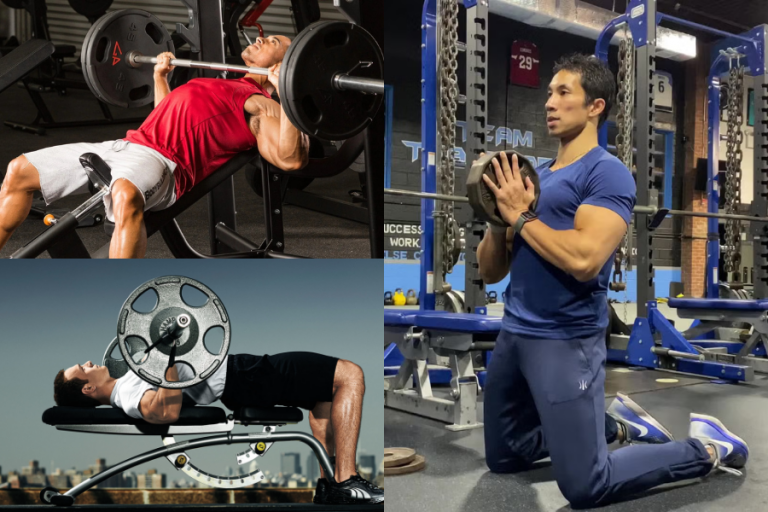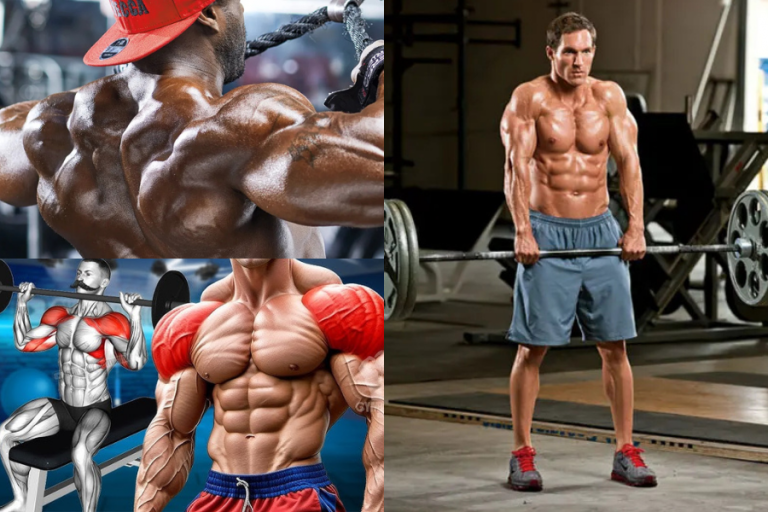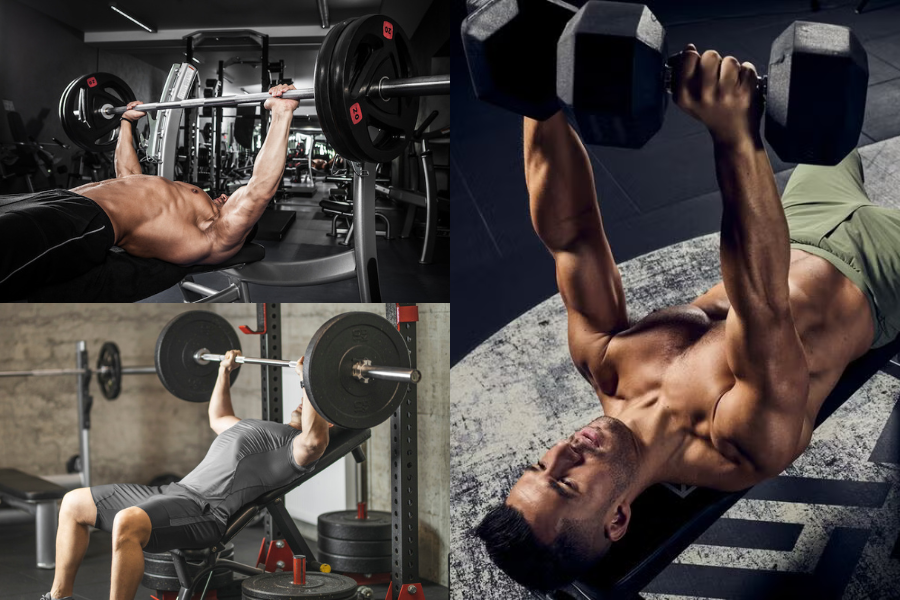
A good chest workout for men does more than add size to your T‑shirt. It improves posture, pushing strength, and overall upper body balance. When you train your chest with a clear plan, you can build muscle faster, stay safer, and actually see progress from week to week.
Below, you will find how to structure a good chest workout for men, whether you train in a gym or at home, and how to support that work with smart technique and nutrition.
Understand what a “good” chest workout really is
A good chest workout for men does three important things at the same time:
- Trains all areas of your chest
- Uses a mix of heavy and moderate work
- Fits into a realistic weekly routine
Your main chest muscle, the pectoralis major, has three regions. You feel them most when you flex your chest in different angles:
- Upper chest, near your collarbone
- Mid chest, across the front of your ribcage
- Lower chest, closer to your upper abs
You get better results when your workouts include:
- A horizontal press for overall size, like the barbell bench press
- An incline press that hits the upper chest
- A movement that targets the lower chest, often a dip variation
- At least one isolation exercise like a fly or cable crossover
Experts like Dr. Mike Israetel suggest 2 to 5 chest exercises per week, with 1 to 3 per session, so you can train hard without repeating the same move too often and risk overuse or boredom.
Use a two‑session weekly structure
Instead of guessing each time you walk into the gym, plan around two dedicated chest sessions each week. A scientifically tested approach uses two distinct workouts that you alternate over 28 days to build strength, volume, and muscle size more efficiently than just repeating basic bench press sessions.
Session 1: Strength and volume focus
This day focuses on heavy work and high total volume to overload your chest and drive growth.
Main exercise: Barbell bench press
- 10 sets of 6 reps
- Rest 60 seconds between sets
This looks like a lot at first, but shorter rests keep the total workout time reasonable while pumping plenty of blood into the pecs. The goal is to work with a weight you can control for all sets, not your one rep max.
Follow up with push‑up variations
After bench, you move into bodyweight pressing to hit the chest from slightly different angles and improve endurance:
- Reverse grip press‑ups
- Standard press‑ups
- Incline press‑ups
- Clap press‑ups
You can rotate through these for 3 to 4 sets each, 8 to 15 reps per set, resting about 45 to 60 seconds. Explosive options like clap press‑ups help with power, while incline and standard push ups keep tension on the chest through a full range of motion.
Session 2: Stretch and muscle expansion
Your second chest day focuses on deep stretches and controlled movements. This kind of training helps your chest expand in all directions and can reduce plateaus.
Key parts of this session include:
- Pectoral stretches between sets to maintain mobility
- 45 degree incline dumbbell chest press
- Flat dumbbell flyes
- Dumbbell incline flyes
- Dips
You might use 3 to 4 sets of 12 reps for each movement, with around 60 seconds rest. The moderate weight and higher reps give you plenty of time under tension, which is important for hypertrophy.
Incline movements in particular are great for building the upper chest, and many lifters eventually make incline barbell or dumbbell press their main lift as their shoulders feel better and their chest development improves.
Choose the best chest exercises for growth
A good chest workout for men does not need dozens of moves. You just need a handful that you perform well and progress over time.
Core compound lifts
Compound exercises allow you to move heavy loads and recruit several muscles at once.
-
Barbell bench press
Classic mid chest builder that also trains shoulders and triceps. If you are a beginner, 3 sets of 6 to 12 repetitions is a solid starting point while you learn good form and control. -
Incline barbell or dumbbell press
Set the bench around 30 to 45 degrees. This angle shifts emphasis toward your upper chest. Many lifters report that dumbbell incline pressing gives a deeper stretch and feels easier on the shoulders, while still hitting the chest hard. -
Weighted dips
When you lean your torso slightly forward and let your elbows flare a bit, dips become a serious lower chest and overall pec builder, often with higher chest activation than bench press. If you are new to dips, start with bodyweight and focus on form before adding weight.
Isolation and angle work
Isolation moves finish the muscle off and help you feel the contraction in specific areas of your chest.
-
Cable flyes and cable crossovers
These give constant tension, so your chest does not get a break at the top like it can with dumbbells. By adjusting the cable height, you can target upper, middle, or lower fibers more precisely and improve definition. -
Dumbbell flyes
Better used later in the workout with moderate loads. Focus on a slow, controlled descent, a solid stretch, and then a squeeze at the top. You do not need heavy weight here, the goal is tension and control, not ego.
Train chest effectively at home
You can still follow the principles of a good chest workout for men at home, even without access to heavy barbells.
Use a mix of push ups, simple equipment, and smart variations to hit all three areas of your chest.
Bodyweight push‑up variations
Different push‑up styles emphasize different parts of your chest:
- Flat push ups for the mid chest
- Decline push ups, feet elevated on a chair or bench, for the upper chest
- Incline push ups, hands on a bench or step, for the lower chest
You can also use:
- Diamond push ups to challenge the chest, triceps, shoulders, and back
- Isometric push ups, where you hold the lowered position for about 15 seconds, to increase time under tension
- Explosive or plyometric push ups for advanced training, where you push off the floor so your hands leave the ground
A simple home chest session might include 3 to 4 sets of 8 to 15 reps for each variation, with 30 to 60 seconds rest, depending on your fitness level.
Add dumbbells or resistance bands
If you have a pair of dumbbells or a resistance band, you can recreate many classic gym movements:
- Dumbbell floor press or bench press
- Dumbbell incline press using a step or adjustable bench
- Dumbbell flyes on the floor for safer shoulders
- Band resisted push ups for extra load at the top
- Eccentric dips between sturdy surfaces to create metabolic overload
You can tilt your weekly training toward different goals. For example, you might use dumbbell weighted dips for strength, eccentric flyes for hypertrophy, and ladder style dumbbell bench press for a metabolic challenge.
Apply key training techniques for better results
Choosing the right exercises is only part of building a good chest workout for men. How you perform them matters just as much.
Prioritize form and full range of motion
For chest growth, presses that stretch your pecs under load are especially effective. That means:
- On barbell bench press, lowering the bar all the way to your chest with control
- On dumbbell presses and flyes, going slightly deeper than shoulder level for a full stretch if your shoulders are healthy
Avoid rushing through partial reps just to move more weight. That increases injury risk without giving you more muscle. Beginners should also consider using a spotter for heavy bench press work to stay safe.
Use progressive overload
Your chest will only grow if you gradually ask it to do more. You can increase:
- Weight on the bar or dumbbells
- Reps at the same weight
- Total sets per exercise
- Time under tension, especially on the lowering part of the movement
A useful structure is to divide your chest training sets across rep ranges:
- Around half of your sets in the 10 to 20 rep range, good for size and joint friendly work
- About a quarter in the heavier 5 to 10 rep range for strength
- The remaining sets in a lighter 20 to 30 rep range for extra volume and technique practice
This balance helps you build muscle while managing fatigue and keeping injury risk lower.
Find your ideal weekly frequency
Most men get good results training chest 1 to 2 times per week. More advanced lifters may go up to 3 or 4 sessions at higher volumes, as long as they can recover.
A helpful way to think about it:
- If your chest is still very sore and weak when you push again, you may need more rest
- If you never feel challenged or tired, you might benefit from more sets, more weight, or an extra session
Rotating similar but distinct exercises across your sessions, such as barbell flat press one day and dumbbell incline press on another, can reduce joint stress and keep progress moving.
Support your chest training with nutrition
A good chest workout for men depends on what you do in the kitchen as much as in the gym. You need both muscle gain and fat control if you want your chest to look bigger and more defined.
Some practical guidelines:
- Aim for sufficient protein intake, around 1 gram per pound of bodyweight per day, to support muscle repair and growth
- Eat a slight calorie surplus if your main goal is size, or a small deficit if you are focused on definition, while keeping protein high
- Spread protein intake across the day so your muscles get regular building blocks
- Stay hydrated so your performance stays consistent across sets and workouts
A well planned nutrition program paired with your two session chest plan is one of the quickest ways to see visible changes within about 28 days.
If you commit to two focused chest sessions each week, choose smart exercises, and support your training with solid nutrition, your chest will not just look bigger, it will also feel stronger and more athletic in everyday life.
Start by picking one structure from this guide and follow it for the next month. Track your weights, reps, and how your chest feels. Small, consistent improvements will do far more for you than chasing a new “magic” workout every week.
About the Author