If you are looking to strengthen your upper body and build an impressive physique, chest workouts for men are a great place to begin. A powerful chest not only enhances your appearance, it also improves your overall function and stability. Whether you are new to strength training or want to take your routine to the next level, the key is to target your chest muscles effectively, maintain proper technique, and progress safely. Below, you will find in-depth tips and guidance to help you get stronger and achieve a more defined chest.
Focus on your chest muscles
Your chest, or pectoral region, consists primarily of the pectoralis major and the smaller pectoralis minor. The pectoralis major, the larger of the two, is the muscle you notice most when you see a well-defined chest. It has two main sections: the clavicular (upper) head and the sternal (lower) head. The smaller pectoralis minor sits underneath and helps with shoulder stability.
Your goal is to train these areas in harmony. When you do so, you are more likely to see balanced strength gains, experience fewer injuries, and maintain proper posture. A common mistake is to work only the center of the chest with the flat bench press or standard push-ups. While these exercises are effective, mixing in movements that shift the angle of resistance helps to develop the upper and lower portions of your chest more comprehensively.
Master fundamental movements
Developing a strong foundation with core chest exercises sets you up for success. You might be tempted to jump directly to advanced workouts, but starting with basics ensures you have proper form before increasing weight or intensity. Two of the best foundational exercises are push-ups and the bench press.
Perfecting the push-up
Push-ups are a bodyweight exercise that engages your entire chest, shoulders, and triceps. They are also easy to modify if you need more or less resistance. To perform a basic push-up, get into a high plank position with your hands directly under your shoulders. Keep your body straight, engage your core, and lower your chest to just above the floor. Then press back up, keeping your elbows close to your torso.
If you need a bit of help starting out, try doing push-ups on your knees or with your hands elevated on a bench or sturdy chair. If you want an extra challenge, place your feet on a stable elevated surface. Proper form on push-ups goes a long way toward building muscle endurance in your chest and arms.
Bench press basics
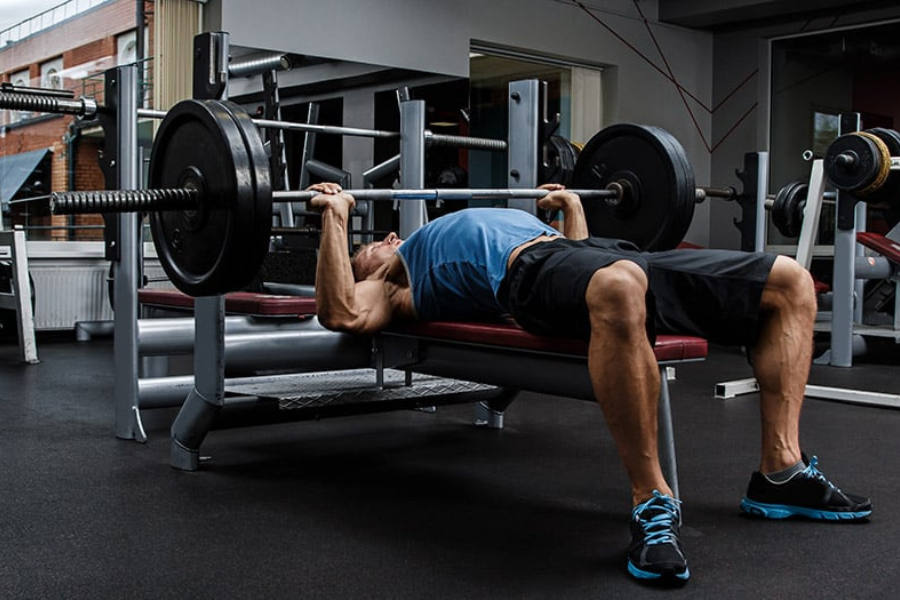
The bench press is a staple for many chest workouts for men. Using a barbell or dumbbells, you can adjust weight to suit your current strength level. If you are a beginner, starting with light dumbbells is a good way to learn proper positioning before moving on to heavier loads.
- Lie flat on the bench, with your feet set firmly on the floor.
- Grip the bar (or hold dumbbells) slightly wider than shoulder-width apart.
- Lower the weight slowly to about mid-chest level.
- Press up explosively, exhaling as you straighten your arms.
Maintaining a controlled tempo is key. Rushing through reps often leads to sloppy form and increases the chance of injury. Think “quality over quantity” for each repetition. With these essentials in place, you can feel confident about progressing to more complex moves.
Add variety with different equipment
Relying on just push-ups or the bench press can plateau your progress over time. Adding new tools to your workouts challenges your chest from multiple angles and keeps you motivated. Dumbbells, cables, and resistance bands each have unique benefits, so trying them out helps you discover which style best suits your goals.
Dumbbells for balance
Dumbbell chest exercises give each arm an independent workload, which evens out muscle imbalances. If you are accustomed to using only a barbell, dumbbells can be transformative. Movements such as the dumbbell press and dumbbell fly require you to stabilize the weight, which adds engagement for your smaller muscles as well. This helps ensure balanced strength in both sides of your body.
Cables for constant tension
Cable machines keep tension on your chest throughout the entire range of motion. Consider a cable fly, in which you pull two cable handles together in front of your torso, focusing on squeezing your pecs at the midpoint. This exercise isolates the chest effectively and allows you to adjust the angle of the pulleys for upper, mid, or lower chest emphasis.
Resistance bands on the go
Resistance bands are portable, affordable, and ideal for chest workouts in small spaces. By anchoring the band to a stable fixture (like a door or railing), you can perform standing chest presses, flies, and other variations with significantly less equipment than you would need at a gym. Another plus is that you can easily adjust tension by stepping closer or farther from the anchor point.
Progress with overload methods
Steady improvement comes from increasing the demand you place on your chest muscles. This can be done in several ways:
- Gradually add weight: Once you can handle your current load comfortably for all recommended reps, it is time to move up in weight.
- Increase your reps or sets: If you prefer to keep the same load, try adding an extra set or two each week.
- Change tempo: Slowing down the lowering phase (eccentric) or the pressing phase (concentric) can make each rep harder.
Keep track of your workouts in a log or app, noting the weight used, sets, and reps performed. This helps you identify patterns, detect plateaus, and stay motivated as you see how far you have come.
Use proper rest and recovery
Devoting time to rest might feel counterproductive, but it is essential for muscle growth. When you challenge your chest muscles, you are effectively creating tiny tears in the muscle fibers. Your body repairs and strengthens these fibers after your workout, leading to growth and increased power. Getting enough sleep, hydrating well, and feeding your body the nutrients it needs support these processes.
Aim for at least one rest day between intense chest workouts. If you feel especially sore, an active recovery day with light cardio or gentle stretching helps circulation without overtaxing your muscles. Combining smart rest with quality nutrition intensifies your results in a positive way.
Avoid common mistakes
Though chest workouts for men can be rewarding, pitfalls arise if you rush or skip fundamental steps. Here are a few mistakes that might keep you from meeting your goals:
- Neglecting warm-ups: Going straight into pressing heavy weight can strain your muscles or joints. A few minutes of dynamic movements, like arm circles or light band work, primes your body for the main workout.
- Overtraining one region: Too much focus on the middle chest without mixing incline and decline techniques can lead to imbalances. Vary the angles to engage all areas of your pectoral muscles.
- Choosing weight too heavy: Struggling to maintain form is a strong sign you might need to reduce the weight. Proper technique targets your chest more effectively than heaving a weight you cannot control.
- Not listening to your body: Soreness is normal, but sharp or lingering pain is not. Recognize the difference and rest until you recover.
Maintaining good habits, such as consistent warming up and monitoring your form, goes a long way toward getting the results you want without injury.
See lasting results with consistency
In workouts and in life, consistency is the foundation of lasting change. Rather than switching up your program every few days, give each approach time to work. Stick to a routine for four to six weeks, track your progress, and evaluate your strength gains. If you find yourself at a plateau, switch up angles, try advanced variations, or adjust rest times to spark new results.
One strategy is to select a few exercises that you enjoy and that you can handle pain-free. This helps you keep up your workouts even on busy days and makes it easier to return after breaks. Over time, you will notice real progress, greater resilience, and a healthier overall body composition.
Chest Workout Routine for Men (2 Days Per Week)
Weekly Structure:
- Day 1: Strength and overall chest development
- Day 2: Upper chest, control, and endurance
Rest Between Sets: 60–90 seconds
Session Length: 45–60 minutes
Weekly Goal: Build strength, size, and balanced chest definition
Day 1 – Strength and Mass Focus
Warm-Up (5–8 Minutes)
- Arm circles and band pull-aparts
- Incline or wall push-ups: 2 sets of 10–12 reps
- Light bench press warm-up sets
Main Workout
1. Barbell Bench Press
- Sets: 4
- Reps: 5–6
- Focus: Heavy pressing with strict form
2. Flat Dumbbell Press
- Sets: 3
- Reps: 8–10
- Focus: Independent arm strength and stability
3. Standard Push-Ups
- Sets: 3
- Reps: 12–20
- Focus: Chest endurance and full-range control
Cool Down
- Chest and shoulder stretches
- Slow breathing to reduce heart rate
Day 2 – Upper Chest and Muscle Control
Warm-Up (5–8 Minutes)
- Light band chest presses
- Incline push-ups: 2 sets of 10 reps
Main Workout
1. Incline Dumbbell Press
- Sets: 4
- Reps: 8–10
- Focus: Upper chest emphasis
2. Cable Chest Fly (Low to High)
- Sets: 3
- Reps: 10–12
- Focus: Constant tension and controlled squeeze
3. Resistance Band Chest Press
- Sets: 3
- Reps: 12–15
- Focus: Time under tension and clean technique
Optional Finisher
- Slow-tempo push-ups: 2 sets to near fatigue
Cool Down
- Doorway chest stretch
- Shoulder mobility work
Weekly Progression Guidelines
- Add weight to pressing exercises once all reps feel controlled
- Increase reps before adding load to fly and band movements
- Keep at least 48 hours between chest sessions
- Run this routine for 4–6 weeks before adjusting volume or exercise selection
Final thoughts
Developing a strong and sculpted chest begins with understanding your muscle structure, starting with solid basics, and then gradually advancing your training. Using a variety of equipment and techniques adds challenge and keeps your motivation high. Just as importantly, rest days and proper recovery are vital for muscle growth. By combining these steps with consistent effort, you will find yourself benching heavier, feeling more powerful, and growing your confidence in and out of the gym.
Above all, keep your focus on form and safety. Each rep should be intentional, rather than forced or rushed. If you stay patient, celebrate small wins, and steadily progress your training, you will see real results from your chest workouts for men. Over time, those well-developed pectoral muscles will help you look and feel your best, making all the effort more than worthwhile.
About the Author