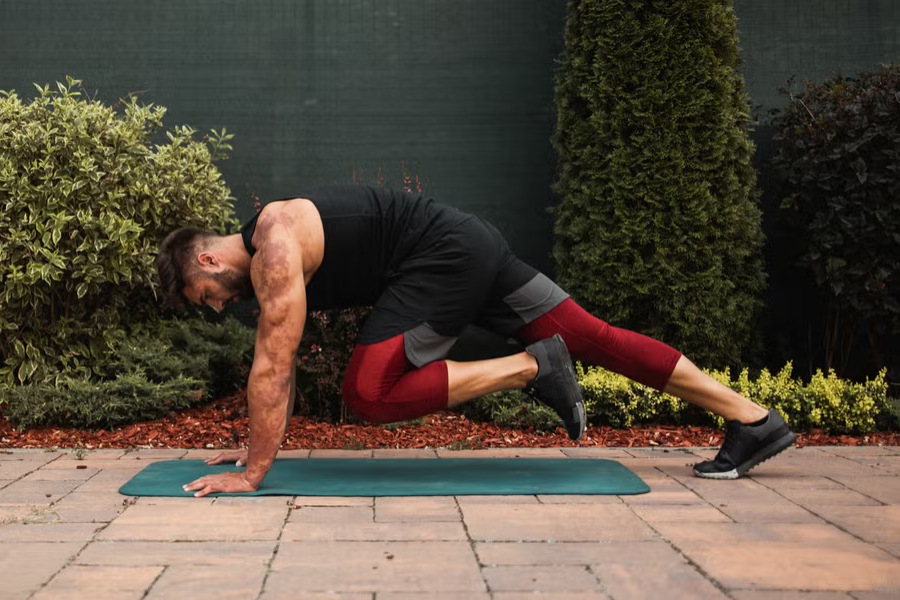
A good exercise routine for beginners does not need a gym membership, fancy gear, or an hour of free time every day. You can start with your own body weight, a small patch of floor, and simple moves you can learn in minutes.
Below you will find a beginner friendly plan that shows you how to warm up, which exercises to do, how often to work out, and when to rest so you stay safe and build strength steadily.
Know your starting point
Before you begin any exercise routine for beginners, it helps to be honest about where you are right now.
If you answer “yes” to any of these, talk with your doctor before you ramp up activity:
- You have chest pain, shortness of breath, or dizzy spells
- You have heart disease, diabetes, or joint problems
- You are over 45 and have been mostly inactive for months
Even if you feel healthy, starting slowly is still the smartest move. Your joints, tendons, and muscles need time to adapt to new stress. When you ease in, you are much less likely to get injured or so sore that you stop after a week.
Warm up the right way
A warmup is not optional, especially if you sit a lot or you are over 40. When you warm up properly you increase blood flow, heat, and oxygen to your muscles which makes them more flexible and less likely to tear.
Harvard affiliated physical therapist Clare Safran Norton recommends a few minutes of repetitive motion like marching in place or arm circles as a simple way to prepare your body for exercise in 2024 guidance from Brigham and Women’s Hospital.
5 minute beginner warmup
Spend about 30 to 45 seconds on each move with light effort:
- March in place, swing your arms gently
- Arm circles, small to large, forward and backward
- Side steps, step side to side and sweep your arms in front of you
- Hip circles, hands on hips, rotate slowly in each direction
- Easy bodyweight squats, partial range, sit back slightly and stand up
By the end of the warmup you should feel warmer and a little more alert but not tired. If you are breathing hard, ease off a bit before starting your main workout.
Learn the key beginner exercises
The best exercise routine for beginners uses full body movements so you get stronger, burn more calories, and build coordination in one short session.
Body weight exercises are ideal when you are starting out. Research in 2024 on beginner workouts shows that you can build muscle with bodyweight as long as you apply progressive overload, which simply means you keep challenging your muscles a little more over time.
Here are foundational moves you can use to build your routine.
Lower body moves
These exercises target your legs, hips, and glutes, which are some of the largest muscles in your body.
Chair squats
Sit down and stand up from a chair in a controlled way.
- Start seated, feet about hip width apart
- Lean slightly forward, push through your heels, and stand tall
- Lower yourself back to the chair without dropping down
Chair squats improve lower body strength and bone health and they teach good form before you try deeper squats.
Stationary lunges
- Stand tall, take a step forward so your feet are staggered
- Bend both knees until your back knee moves toward the floor
- Push through your front heel to return to standing
Keep your chest up and your front knee stacked over your ankle. If balance is hard, hold the back of a chair.
Bridge
- Lie on your back with knees bent and feet flat
- Press your lower back gently into the floor
- Squeeze your glutes and lift your hips until your body forms a straight line from shoulders to knees
The bridge activates your core and posterior chain, your glutes, hamstrings, and lower back, which can help ease tight hips from long hours of sitting.
Upper body moves
You can hit your chest, shoulders, and arms without a single weight.
Wall pushups
- Stand facing a wall, arms straight, hands on the wall at chest height
- Step back so your body is at a slight angle
- Bend your elbows and lean toward the wall, then push back to the starting position
Wall pushups are easier than floor pushups and help you build strength safely.
Knee pushups
When wall pushups are easy, move to the floor.
- Start on your hands and knees, hands a bit wider than shoulders
- Walk your hands forward, shift your weight so your body forms a straight line from shoulders to knees
- Bend your elbows and lower your chest toward the floor, then push back up
Knee pushups build upper body strength in your chest, shoulders, and triceps.
Core and stability moves
A strong core supports your posture, reduces back pain risk, and improves your performance in every other exercise.
Plank
- Start on your elbows and knees
- Walk your feet back until your body forms a straight line from head to heels or head to knees if you are modifying
- Keep your core tight, do not let your hips sag
Holding a plank for 30 seconds to 1 minute counts as one set. According to 2024 beginner routines, doing 2 sets of planks helps improve strength, stability, and athletic performance while reducing injury risk.
Bird dog
- Start on hands and knees, hands under shoulders and knees under hips
- Extend your right arm forward and your left leg back
- Pause, then return to the starting position and repeat on the other side
Move slowly and focus on balance. This exercise trains your core, back, and glutes without stressing your joints.
Plank to downward dog
- Start in a plank position on your hands
- Push your hips back and up so your body forms an upside down V
- Pause, then shift forward back into plank
This move builds core strength, stretches your hamstrings and calves, and trains your shoulders.
Follow a simple 20 minute beginner workout
You can turn the moves above into a short, full body exercise routine for beginners that fits into any schedule. In 2024, health resources describe a 10 exercise home routine that takes about 15 to 20 minutes when you do 2 sets of each move and rest 30 seconds to 1 minute between them.
Here is a sample you can try:
- Chair squats, 2 sets of 10 to 15 reps
- Stationary lunges, 2 sets of 8 to 10 reps per leg
- Bridge, 2 sets of 10 to 15 reps
- Wall or knee pushups, 2 sets of 8 to 12 reps
- Bird dog, 2 sets of 8 to 10 reps per side
- Plank, 2 sets of 30 to 60 seconds
- Plank to downward dog, 2 sets of 8 to 10 reps
Rest 30 to 60 seconds between exercises as needed. If you are very new to exercise, start with one set of each move and build up over a few weeks.
Another option is a 20 minute Beginner Bodyweight Workout that uses 3 circuits of bodyweight exercises in a row with minimal breaks. This approach helps build strength and cardio fitness at the same time and according to 2024 guidance, it includes up to 17 foundational moves like wall pushups, assisted squats, lunges, planks, and modified jumping jacks with variations to match different fitness levels.
Decide how often to work out
Consistency is more important than intensity. Inconsistent exercise does less for your health and can raise your injury risk.
Harvard Health in 2024 recommends that beginners aim for:
- About 150 minutes per week of moderate intensity aerobic activity
- Strength training at least 2 days per week
You do not have to hit those numbers immediately. You can break them into smaller chunks such as:
- 20 to 30 minutes of walking most days of the week
- Your 15 to 20 minute strength routine 2 or 3 times per week
If you use the Beginner Bodyweight Workout, the 2024 guidelines suggest doing it 2 to 4 times per week and leaving at least 48 hours between sessions so your muscles can recover.
Use light weights and more reps
If you want to add dumbbells, start light. New exercisers often grab heavy weights too soon and this increases the chances of muscle strains or tears.
Clare Safran Norton advises beginners to use lighter weights with more repetitions. For example, do 2 or 3 sets of 20 lifts with 2 pound weights instead of a few heavy reps. This lets your muscles, joints, and connective tissue adapt safely.
You can also follow this same idea with bodyweight:
- Start with partial range of motion, half squats instead of full squats
- Do fewer reps with perfect form
- Add reps slowly each week as the moves get easier
Respect recovery and rest days
Rest is part of your exercise routine for beginners, not a sign that you are slacking.
Experts from Harvard Health recommend you give each muscle group at least 48 hours of rest after a strength training session. That means you should avoid training the same muscles on back to back days.
You can set up your week like this:
- Monday, full body strength
- Tuesday, light walk or bike ride
- Wednesday, full body strength
- Thursday, rest or gentle stretching
- Friday, light activity
- Saturday or Sunday, optional third strength session if you feel ready
If you prefer to split muscle groups, you might do arms and shoulders on Tuesday and Thursday and legs and core on Monday and Friday. The key is to let each area recover for at least 2 days before you work it hard again.
Signs you may need more rest:
- You feel unusually sore for more than 48 hours
- Your performance drops from one workout to the next
- You feel drained or irritable instead of energized
Listen to those signals and take an extra easy day when you need it.
Stay hydrated while you train
Water supports your joints, regulates your temperature, and helps prevent muscle cramps. In 2024, Harvard Health experts suggested most people aim for about 6 to 8 cups of fluid per day and more when they exercise.
A simple plan:
- Drink a glass of water an hour or two before your workout
- Sip during exercise, especially if you sweat a lot
- Have another glass afterward
Some people do fine with water alone. If you sweat heavily or work out longer, you might benefit from a sports drink to replace electrolytes. Pay attention to how you feel. Headaches, dark urine, and cramps can all be signs that you need more fluids.
Progress at your own pace
You do not move from beginner to advanced overnight. The goal is steady, manageable progress over several months.
You can apply progressive overload in simple ways:
- Add 1 or 2 reps to an exercise each week
- Add a third set once 2 sets feel easy
- Reduce rest time slightly between exercises
- Move from wall pushups to knee pushups, then to full pushups
- Hold planks a little longer, then try more challenging variations
In 2024, beginner workout plans encouraged you to gradually increase reps or difficulty to move from beginner toward intermediate and advanced levels. Most men see real gains in strength, energy, and confidence when they stick with this approach for 3 to 6 months.
If you are unsure where to begin, pick three moves, squats, pushups against a wall, and a plank, and do one set of each today. Small, repeatable efforts beat perfect plans that you never start.
Start with what feels doable now. As you build the habit and your body adapts, you can layer in more exercises, sets, or days. Your exercise routine for beginners is not just about this week. It is about creating a practical, enjoyable way to stay strong and active for the long term.
About the Author